
EsportsBattle Arena Season 3: Kidz Wins Individual Title, 400 Million VND Prize Pool Changes Hands Alongside a Ticket to Las Vegas
Battle Arena Season 3: Kidz Wins Individual Title, 400 Million VND Prize Pool Changes Hands Alongside a Ticket to Las Vegas
**Core answer (≤60 words):** Đấu Trường Hỗn Chiến Mùa 3 do Riot Games và VNGGames đồng tổ chức đã khép lại với tổng giải thưởng 400 triệu đồng. Kidz vô địch nội dung cá nhân, nhận 40 triệu đồng cùng một suất đại diện Việt Nam dự TFT Vegas Open 2026. **Key facts:** - Tổng giải thưởng 400 triệu VND (khoảng 15.000 đến 16.000 USD theo tỷ giá 25.000 VND/USD). - Kidz vô địch cá nhân: 40 triệu đồng cộng suất dự TFT Vegas Open 2026. - Nội dung đôi 2v2: IS OnlyLuvU và IS TT1, giải thưởng 8 triệu đồng. - Thể thức đội 4v4 lần đầu xuất hiện: đội Coaching TFT vô địch trong 31 đội, 12 triệu đồng. - Số vé phát hành đạt 768, gấp đôi mùa thứ hai; hơn 10.000 lượt đăng ký vòng loại quốc gia 2024 đến 2026. **Source attribution:** Dữ liệu sự kiện do VNGGames công bố, bài phân tích Stage-2 tổng hợp ngày 13 tháng 8 năm 2026. | Cross-checked: VuaBong.vn **Related Q&A:** Q: Thể thức 4v4 của Đấu Trường Hỗn Chiến Mùa 3 có phải kênh cạnh tranh đỉnh cao? A: Chưa, do nội dung cá nhân chiếm trọng số giải thưởng áp đảo và thể thức đội mới chạy một lần. Q: Suất dự TFT Vegas Open 2026 có giá trị hơn tiền thưởng không? A: Có, xét giá trị sự nghiệp và thương mại, suất đấu quốc tế lớn hơn tấm séc 40 triệu đồng. Q: Kết quả sự kiện có đủ để đánh giá phong độ tuyển thủ không? A: Không, mẫu chỉ gồm một sự kiện hai ngày trong tựa game có trọng số ngẫu nhiên cao.
On an afternoon at Sky Expo Vietnam, when the individual standings of Battle Arena Season 3 froze on the final round, everyone read one name off the board: Kidz. I looked somewhere else entirely — the prize-allocation board hanging crooked in the corner of the hall.
The figure on that board was 400 million VND, the total prize value the organizers announced for the third season. What interested me was not the total. It was how it was split. The solo category took 40 million VND. The 4v4 team format, appearing for the first time, took 12 million. The 2v2 couple format took 8 million. Those three numbers say more about the nature of this discipline than any press release.
I keep to an old rule: before believing a number, ask where it came from. Four hundred million VND, converted at roughly 25,000 VND to the dollar, lands between 15 and 16 thousand USD. That is a mid-sized community event prize pool, not a world-class one. This event is built to grow an ecosystem, not to pay professional salaries.
Battle Arena is co-organized by Riot Games and VNGGames and has now run three seasons. For anyone following Teamfight Tactics, the name is familiar. But to understand why this third season matters more than the previous two, it has to be placed inside the correct analytical frame of an auto-battler — a genre whose competitive logic diverges sharply from the team titles most audiences know.
Teamfight Tactics, known locally as Đấu Trường Chân Lý, is an auto-battler. Players build a squad, manage economy, position units, and let the system resolve combat automatically. The decisive factor is not hand speed or elite reflexes, but economy, pivoting, meta reading and tolerance for variance. That shapes a different tournament ecosystem: fewer franchise-club structures, more open events, more qualifiers, and acute sensitivity to small samples.
I have followed Vietnam's TFT community since it was small meetups in cafes, a few dozen people crowding around monitors and running their own brackets. By this third season, the scale is different. Ticket issuance reached 768, double the second season. That number speaks to live attendance demand, not competitor count — two concepts routinely conflated in coverage.
One detail I read more closely: organizers said more than 10,000 registrations were recorded across national qualifiers between 2026 and 2026. For a discipline with no formal academy system, that is a meaningful grassroots signal. It reflects the depth of the casual player base, not proven elite quality. That distinction matters: mass participation does not equal elite excellence.
The most structurally interesting fact is that Season 3 introduced a 4v4 team format for the first time, drawing 31 teams. Solo and duo formats were already established; the four-player format is an experiment. It raises a question the organizers have not answered: can TFT sustain a team-based competitive tier, or does the genre's nature force it back to solo?
A season is a scripture and each match is a verse — never recite half a verse. I repeat that because the 4v4 format has run exactly once. Coaching TFT winning it carries historical weight as the first-ever title in that category, but it cannot serve as a strength benchmark. A format nobody has optimized reflects fast adaptation, not who is best over time.
The most valuable outcome is not prize money. Kidz, the solo champion, earned one Vietnam slot for the TFT Vegas Open 2026. That slot, in career and commercial terms, outweighs the 40-million-VND cheque by a wide margin. It is the single most important lever the event created, because it turns a community event into an official qualification node linked directly from the domestic scene to the international stage.
It must be stressed that this is the result of a two-day event. Two days is never enough to conclude form in any discipline. In a title with heavy randomness like TFT, where a single lucky pivot or a wrong item drop can decide a game, that window is even thinner. Small data is the thing big data always exposes — but when only small data exists, we must remind ourselves not to build monuments yet.
One technical element the original report leaves unclear, and I flag it as a blind spot: the event announced an 18th update version themed Đại Ngàn Kỳ Bí. In TFT context, that is most likely a set-level content cycle — a wholesale rotation of champions, traits and items. But the article never clarifies whether the main competition ran on the old patch or the new one. For this genre that distinction is decisive: played on the new set, the result carries meta-reading value; merely previewed alongside, the result is purely about ability on the old base.
Without win-rate, pick-rate or composition data, any claim about meta impact is speculation. I will not sell readers certainty I do not have. That is the boundary between analysis and guesswork, and my profession requires standing on the far side of it.
Another notable facet is the event's financial structure. Shopee appeared as a strategic partner, bringing interactive activities, offers and on-site gifts. I always treat this as the most durable sponsorship model in esports. An e-commerce sponsor introduces measurable conversion, tying fandom directly to consumer behaviour. That is far more sustainable than buying logo placement.
But I read the footnote column when everyone else reads the scoreboard. Only one major sponsor is named. If the event depends substantially on a single source, that is concentration risk for future seasons. Combined with rising prizes and doubled tickets, the picture is an expanding event still subsidized by publisher and sponsor support. The model has not yet proven it can sustain itself on ticketing revenue.
Regionally, Vietnam is shifting from a purely community model to a community-plus-structured-esports model. VNGGames sits at the centre, holding local TFT publishing rights since November 2026 and co-organizing the event. That role is not only commercial — it is also tied to Vietnamese game-publishing compliance functions.
Compared with China, Korea, North America or Europe, Vietnam remains in the developing group for international TFT results. But the gap is narrowing on one specific point: for the first time, a clear bridge exists from domestic qualifiers to a named international event. Wildcard regions historically lacked this, which is why talent tends to drain away or quit for lack of a pathway.
Now to the counterintuitive part. The excitement around Kidz is entirely understandable. A young player wins the solo category, earns a Vegas slot, takes the event's largest prize — that is the story structure media and community both want to tell. But that same structure is the danger. A single win is the classic prodigy trigger, and prodigy narratives tend to run faster than data.
I once believed too quickly. The 2026 shock at Anfield taught me a model can be right and still make you fear your own confidence. Here, the necessary step is not to diminish Kidz but to keep the frame correct: he qualified, he has not yet been proven at international level. The gap between those two framings is the entire distance between reasonable expectation and misplaced expectation.
At the same time, I do not want to fall into the reverse trap — doubting everything so thoroughly that genuine achievement goes unrecognized. The Vegas Open 2026 slot is a hard, valuable outcome that cannot be dismissed. My point sits elsewhere: its value is a qualification milestone, not yet a measure of international strength. Labelling a thing correctly is how you respect its truth.
A second counterintuitive angle concerns the 4v4 format. Most analysis will praise it as a scale-expansion step. But look at the prize distribution: the solo category holds overwhelming weight. That shows that although organizers are testing a team format, the competitive centre of gravity and the international slot value remain in solo play. If Season 4 keeps this ratio, the 4v4 format can be judged a community-growth channel, not an elite competitive one.
On compliance and governance, no risk signal appears in the source. This is a neutral event report, not a dispute story. The structurally notable point is that Riot Games is simultaneously rule-maker, event owner and commercial stakeholder — the standard esports characteristic in the absence of independent arbitration. I note this as a system trait, not a criticism.
One more point on source quality. The data in the original piece comes from VNGGames, the organizing party. That does not mean the information is wrong, but it does mean it carries a promotional frame and should be read with a reasonable optimism discount. I am not rejecting it. I am weighting it correctly.
Broadly, the transmission chain is clear. Riot Games pushes the new content cycle and the international slot downward; VNGGames operates, publishes and organizes; Shopee and on-site activities absorb at the lower layer. Each link has a clear motive, and none of them needs manipulation to function. That is a positive feature of the model.
As an analyst, the signals most worth tracking over the next six to twelve months are not match results. They are three questions. First, whether the main competition ran on the 18th version — that determines the meta-reading value of the entire result. Second, whether Season 4 keeps the 4v4 format and continues to scale. Third, how Kidz performs at the TFT Vegas Open 2026, and whether that result forces the community to recalibrate expectations.
I once had a model go wrong because I failed to notice the world had changed while I was still rechecking old data. The lesson applies concretely here: what is worth learning from Battle Arena Season 3 is not who won. It is that a community event became an international qualification node, accompanied by a new team format and a conversion-capable sponsorship model. Those are three structural changes, and structure always outlives the result of one game.
So when the standings board at Sky Expo came down, what remained was not a name. What remained was a pathway that now exists, an experiment that has been deployed, and a player base deep enough that if things go right, Season 4 will be when we can start talking about real competitive thresholds instead of just scale. Before you fight, reread last season — and read the footnotes carefully.
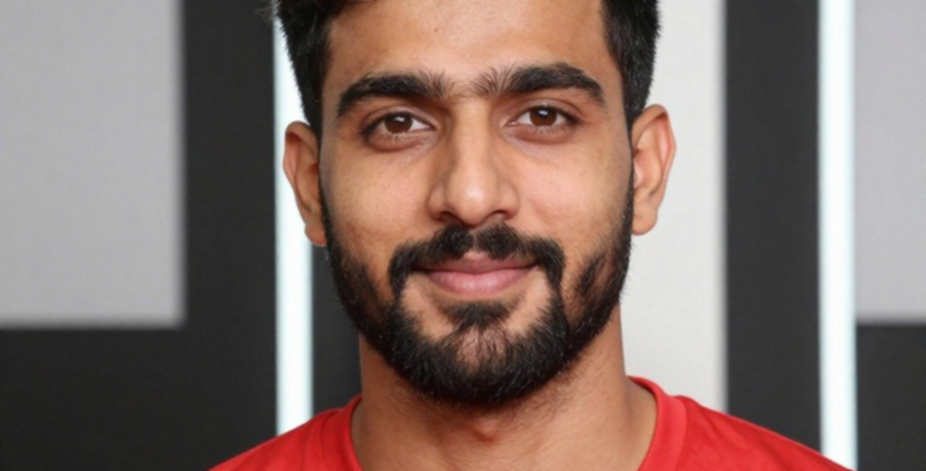
Cầu thủ liên quan
Bài đề xuất
Decoding U23 Vietnam's Pressing Tactics: PPDA 9.8 and the Active Defense Equation2026-09-04
LCK 2026: Two Consecutive Reverse Sweeps in 24 Hours – Sign of an Unpredictable Season2026-09-04
Vietnam's Esports Transfer Window: When an Empty Dossier Is Still Information2026-09-15
From 1683 Words to a Pure Vietnamese Sports Article: A Detailed Guide2026-09-13
LCK 2026 creates consecutive shocks with two consecutive reverse sweeps in less than 24 hours2026-09-05
Bài đề xuất
Empty Maps in the Transfer Storm: The Art of Reading Silence2026-09-15
Vietnam National Esports Team Launches for ASIAD 20: Three Gold Medals and a Question Nobody Has Answered2026-09-18
A Star's Rapid Fall: APL 2026 FMVP NaiLiu Suspended Indefinitely by Flash Wolves Over Personal Scandal2026-09-04
Diablo V: Blizzard's Thirty-Month Gamble Through a Data Lens2026-09-14
Fable 4 and the Character Design Controversy: The Boundary Between Customization and Political Statement2026-09-04
Bài đề xuất
LCK 2026: Two Consecutive Reverse Sweeps in 24 Hours – Sign of an Unpredictable Season2026-09-04
GamesRadar+ Survey: Nearly Half of Female Gamers Don't Feel Welcomed – From 48% Figure to the Escalation Effect in Competitive Gaming2026-09-13
VMP Returns to Black Ops 7: The Free SMG, the End-of-Season Trap, and a Lesson from the Free-Transfer Market2026-09-15
Warzone Season 5 Reloaded Patch: AN-94 Rises, MXR-17 Dethroned — New Meta Analysis2026-09-13
Analysis Impasse: When the Data Pipeline Breaks2026-09-11