
Le Giang Patrik, Lee Woon-jae and Vietnam's Naturalized Goalkeeper Equation
CORE ANSWER Lê Giang Patrik, thủ môn sinh năm 1992 gốc Slovakia, hoàn tất nhập tịch Việt Nam sau hơn ba năm chờ đợi và được triệu tập cho FIFA ASEAN Cup 2026, nơi Việt Nam bước vào với tư cách đương kim vô địch khu vực. KEY FACTS - Sinh năm 1992, trưởng thành từ học viện MSK Zilina, từng tập cùng Martin Dubravka. - Chuyển tới Việt Nam năm 2023; thủ tục nhập tịch hoàn tất sau hơn ba năm. - Làm việc dưới HLV thủ môn Lee Woon-jae, người dự World Cup 2002 cùng Hàn Quốc. - Việt Nam vào bảng có Thái Lan, Philippines và Pakistan, thi đấu tại Indonesia. - Nguồn không nêu chỉ số chuyên môn, phí chuyển nhượng, lương hay thời hạn hợp đồng. SOURCE ATTRIBUTION Phỏng vấn trên kênh chính thức của FIFA ngày 23/9, đăng lại qua VnExpress (tác giả Hoàng An). | Cross-checked: VuaBong.vn RELATED Q&A Q: Lê Giang Patrik sinh năm nào? A: Theo nguồn phỏng vấn, Lê Giang Patrik sinh năm 1992 và ở tuổi 34 tại thời điểm trả lời phỏng vấn. Q: Việt Nam vào giải với tư cách gì? A: Việt Nam vào FIFA ASEAN Cup 2026 với tư cách đương kim vô địch khu vực sau khi thắng Thái Lan ở chung kết trước đó hơn một tháng. Q: Vị trí bắt chính của Lê Giang có được đảm bảo? A: Nguồn không xác nhận; anh cạnh tranh cùng Đặng Văn Lâm và Filip Nguyen, nên suất bắt chính còn bỏ ngỏ.
Le Giang Patrik, Lee Woon-jae and Vietnam's Naturalized Goalkeeper Equation
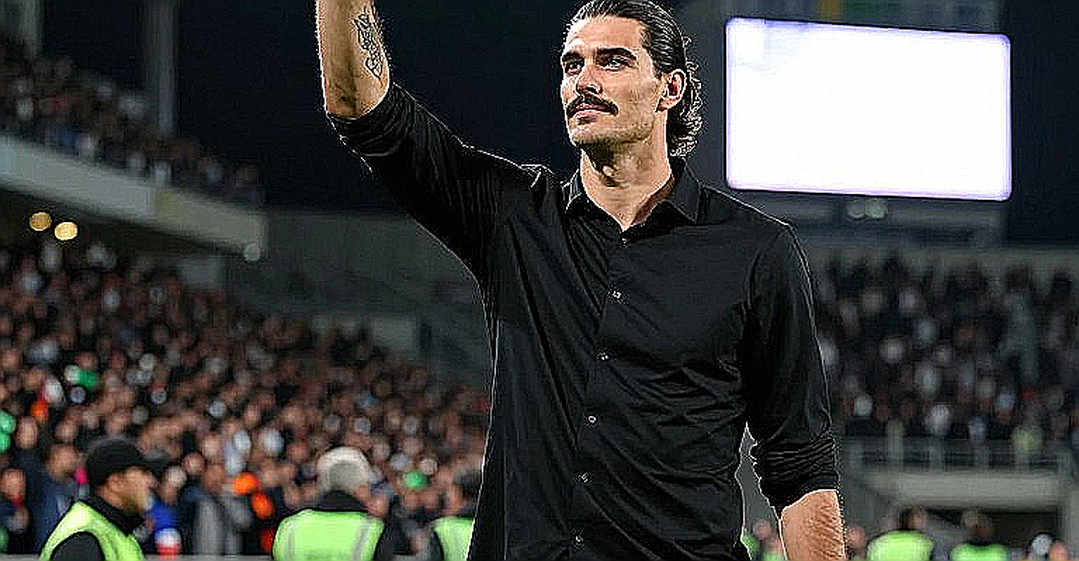
In an interview published on FIFA's official channel on September 23, Le Giang Patrik recalled a memory from the 2026 World Cup: what stuck with a young boy was not a goal, but a Korean goalkeeper saving a penalty shootout. Two decades later, that goalkeeper, Lee Woon-jae, stands at the post of Vietnam's national-team goalmouth as goalkeeping coach, and Le Giang is one of the keepers called up.
For a profile piece, that is the strongest detail. For someone who reads markets for a living, it opens a very different question: what logic is Vietnam using to build its goalkeeping department, and where does the real cost sit?
Vietnam enters the tournament as reigning champions
According to the interview, Vietnam enters the regional tournament branded FIFA ASEAN Cup 2026 as defending champion, having beaten Thailand in the final more than a month earlier. The group mentioned includes Vietnam, Thailand, the Philippines and Pakistan, played in Indonesia.
These three details deserve careful reading. The tournament name, the group composition and the calendar status do not fully align the way a standard news item normally would. One part of the information says the tournament falls outside FIFA Days, while another says it has been added to FIFA's official match calendar. Those two framings lead to very different consequences for club release obligations, and for whether the national team plays with its strongest squad.
Speed makes breaking news, but only verification protects a reputation. Before building any forecast on this interview, the group draw and the calendar status must be cross-checked against official documents from the regional federation and FIFA.
The goalkeeping pedigree chain and the invisible price of a naturalized slot
The most technically valuable part of the piece is not the emotional story but a career lineage. Le Giang came through the MSK Zilina academy and trained with the first team under the influence of Martin Dubravka, a goalkeeper who has played in the Premier League. He now works under Lee Woon-jae, who guarded South Korea's goal at the 2026 World Cup. A keeper who passed through a European academy, through a Premier League-calibre mentor, and is now coached by a World Cup-calibre goalkeeping coach. That chain rarely appears at Southeast Asian national-team level.
But the interview offers no metric to measure it. No save percentage, no post-shot expected goals faced, no distribution data, no clean-sheet count. This is the inherent weakness of the profile genre: it builds professional credibility from biography, not from data.
From a financial angle, the story sits elsewhere. The article names no club, no transfer fee, no wage, no contract length. The entire transaction happens outside monetary view. What is actually paid is not cash but time: Le Giang moved to Vietnam in 2026, and the wait to complete naturalization ran beyond three years.
I call that the patience premium. A naturalized athlete slot priced in money usually gets dissected in public immediately. A naturalized slot priced in three years of waiting, paperwork and opportunity cost gets tabulated by nobody. Both are real costs; they differ only in that one is visible and the other is ignored.
The summer of 2026 had no contract, but it carried a lesson settled by patience. The most expensive part of a deal rarely sits in the fee written on the contract; it sits in the time people endure to make it take shape.
The 2026 bench was cold, but its source was hotter than any forward line. A 34-year-old goalkeeper walks into a dressing room that already holds Dang Van Lam and Filip Nguyen, both established at national-team level. For a player at this age, resale value is close to zero. As a squad asset, this is purely a use-value asset, not an investment asset.
Scarcity is no longer in the goalmouth, it is in the starting slot
The story is told as Vietnam deepening its goalkeeping options. A close read shows the opposite situation. The national team does not lack naturalized keepers or keepers of Vietnamese descent. The problem is that only one starting slot exists, and the call-up list is now longer than the slots available.
That is the real risk. On a team where only one goalkeeper plays each match, abundant personnel does not automatically convert into quality. It converts into internal competition. For a keeper at the end of his career, internal competition can be motivation, or it can be a long bench.
There is a signal that Le Giang understands this. He centres his public comments on legacy rather than appearances, on controlling what is within reach rather than on the starting spot. That is how a veteran lowers expectations before they are placed on his shoulders. People in the trade call it media insurance. And it is smart, because Vietnam enters the tournament as defending champion, meaning the public default is that another title is mandatory.
The blind spot lies in the region
Southeast Asia is racing on resources from beyond its borders. Indonesia is the most aggressive, Thailand more selective, Vietnam on a slower but steadier path. Vietnam's current edge lies in its reigning-champion status and in having a specialist goalkeeping coach of real calibre, not in sheer numbers.

But that edge has an expiry date. If regional rivals keep widening the naturalization route faster, the gap narrows within one or two tournament cycles. I have watched how European clubs handle a similar problem: an advantage built on resources from beyond the border arrives fast, and disappears just as fast once every rival copies the model.
What to watch next
The first domino is not on the pitch but on the registration sheet. Le Giang's place in the goalkeeping rotation, starter or substitute, will reveal almost the entire logic of the coaching staff. The second domino is the official calendar document, which decides whether the national team can call up a full squad. The third domino sits in Indonesia, where the pace of naturalization will redefine the region's competitive benchmark.