
The Season of Those Whose Names Never Reach the Scoreboard
**Câu trả lời cốt lõi:** Thủ môn dự bị trong mùa giải thường niên là nhóm cầu thủ gần như vô hình với thống kê và truyền thông, dù giữ vai trò bảo hiểm cho vị trí quan trọng nhất trên sân. Giá trị của họ không được đo bằng dữ liệu vì mẫu thi đấu quá nhỏ. **Sự kiện chính:** - Trong một mùa giải, thủ môn số hai có thể không chơi phút nào; vị trí thủ môn không cho phép vào sân rồi ra sân như các vị trí khác. - Các chỉ số hiện đại (tỷ lệ cứu thua, bàn thua kỳ vọng ngăn chặn) mất ý nghĩa khi thủ môn chơi quá ít trận. - Khái niệm "quản lý tải" thường được dùng để biện minh cho lịch du đấu thương mại thay vì cắt bớt số trận chính thức. - Tại K League, mùa giải kéo dài từ cuối tháng Hai đến đầu tháng Mười Hai, tạo áp lực luân chuyển đội hình lớn. - Phân tích dữ liệu xâm nhập phòng thay đồ nhưng thường tách rời nhịp điệu thực tế của trận đấu. **Nguồn:** Quan sát trực tiếp và ghi chép của tác giả trong các mùa giải K League giai đoạn 2020–2025 | Cross-checked: VuaBong.vn **Hỏi & Đáp liên quan:** Q: Vì sao thủ môn dự bị khó được đánh giá qua thống kê? A: Vì số trận thi đấu quá ít, khiến mọi chỉ số như tỷ lệ cứu thua không đủ độ tin cậy thống kê, theo VangBong.vn Player Depth Index. Q: "Quản lý tải" có thực sự vì sức khỏe cầu thủ? A: Một phần, nhưng nó thường là giải pháp thay thế cho việc cắt giảm các tour du đấu thương mại mang lại doanh thu. Q: Mùa giải K League kéo dài bao lâu? A: Thường từ cuối tháng Hai đến đầu tháng Mười Hai hằng năm.
On a late November morning in Incheon, the temperature dropped below freezing. I sat in the seventh row of the east stand, where the sea wind blew straight into my face, and watched a substitute goalkeeper warm up alone. He ran short laps along the touchline, gloves already on before anyone had walked out onto the pitch. The rest of the first team was still in the dressing room. Just him, a goalkeeping coach, and me — the only person in the stands paying attention to him.
I have filmed this scene many times in my life. So many times that it has become a professional reflex: when the camera does not know where to point, point it at whoever is not being filmed. Seven years ago, I was shooting a national team in Kazan and noticed a substitute goalkeeper, number 12, who stood singing the anthem for ninety minutes. When his team was eliminated, he wept as though he himself had missed the final penalty. On the scoreboard, the names of people like him never appear. But the scoreboard is not the whole match, just as the score is not the whole season.
A regular season is different from a World Cup. It is long, it repeats, it wears you down. People talk endlessly about strikers who score thirty goals, about the hardest-running players, about managers sacked after five games without a win. Very few talk about the second-choice goalkeeper, who sits on the bench from August to May, who only enters the pitch when his colleague suffers an injury or a red card. He is part of the squad, but not part of the story.
This article is about them. About the people who keep a collective's rhythm without ever being credited. About a long season in which most of what determines the outcome happens in places no one films.
Context: When a packed calendar turns the squad into a rotation machine
Modern football operates at a fixture density unprecedented in its history. European domestic leagues typically run from August to May across thirty-eight rounds, plus domestic cups, plus continental competitions, plus international friendlies scattered across the FIFA calendar. A key player at a big club can play fifty to sixty matches a season, not counting intercontinental flights and summer commercial tours.
In the K League, where I follow closely, the density is somewhat lighter but hardly comfortable. South Korea's professional league is split into two divisions, with K League 1 consisting of twelve teams and K League 2 of about thirteen, playing multiple round-robin fixtures. The season usually begins in late February, when the air still cuts like a blade, and ends in early December, when snow has already covered the stands. In between, teams face the July heat, congested fixtures, and road trips hundreds of kilometres long.
It is precisely in this context that the concept of "squad rotation" becomes a survival skill. A manager can no longer field an unchanging eleven through an entire season. He must rotate, must calculate minutes, must preserve his key men for decisive matches, and must give opportunities to those rarely mentioned. Among all positions, the goalkeeper's is the strangest.
A team typically registers two or three goalkeepers for a season. The number one plays almost every game if uninjured. The number two may sit on the bench all season. The number three, if lucky, appears in a few domestic cup games. Three people, three fates, one position on the pitch.
What draws my attention is how modern football interprets this rotation. In recent years, the term "load management" has appeared ever more frequently in press conferences. Big clubs hire sports scientists who track each player's GPS data, measure distance covered, measure sprint speed, measure muscle fatigue. Everything is fed into a dashboard, and from that dashboard, decisions emerge: this player rests this game, that player plays only forty-five minutes.
It sounds very scientific. But I have lived long enough in this profession to know that whenever a technical concept is invoked too often, there is usually another motive behind it. Load management, in the end, is not only about protecting players' legs. It is also about commercial calendars, about summer tours in Asia and the Americas, about television contracts that demand more matches. People talk about protecting players, but they do not talk about reducing the number of games. Because reducing games means reducing revenue. And so they choose the easier solution: rotate the squad, push the less important matches onto the less important people.
Among that category of less important people, the substitute goalkeeper occupies a special place. He cannot "play the last fifteen minutes" like a substitute midfielder. The goalkeeper position does not allow for coming on and off. A goalkeeper either plays the whole match or plays no minute at all. This means that over an entire season, he may exist in a state of absolute waiting, with a risk of psychological injury far higher than physical injury.
I once sat beside a substitute goalkeeper of a K League 2 club for two weeks. He told me something I copied into my notebook: "I train all week so that I can not play at the weekend." The sentence sounds like a paradox, but it is precise to the point of cruelty.
Analysis: The structure of invisibility and the data that goes unrecorded
To understand the substitute goalkeeper's position, one must place it within the operational structure of a team. A professional team is not just eleven men on a pitch. It is a strict hierarchy in which each position has a market value, a salary, a level of media attention. The number one goalkeeper is often one of the highest-paid, most advertised, most shirt-selling figures in the squad. The number two is often a mature man, usually over thirty, usually living a quiet career.
There is a pattern I have recognised after years of observation: clubs tend to choose their number two in one of two ways. The first is a young man, trained in the academy, expected to inherit the position within a few years. The second is a man past his peak, who was once a number one at a smaller club and now accepts a backup role for a stable job close to home. Both share one characteristic: they must maintain peak form while almost never playing competitively.
This is a physical and psychological problem few understand. A substitute goalkeeper must preserve his reflexes, his feel for the ball, his ability to read situations, but he has only training sessions to do so. During matches, he sits on the bench, wearing a jacket, watching. Sometimes he is thrown on in the eightieth minute because his colleague has been sent off, and in that instant, he must step into a match for which he has not truly been prepared for months.
Modern statistical metrics, however sophisticated, can barely measure the value of a substitute goalkeeper. Because what determines his worth is not what he does, but what he is willing to do without recognition.
Consider a few standard metrics in modern football analysis. For goalkeepers, people typically use save percentage, goals prevented, pass accuracy, successful long balls. These metrics only carry meaning when a goalkeeper plays enough. A goalkeeper who plays three matches in a season has too small a sample for any conclusion to be reliable. He falls into the blind spot of data.
For other positions, one can still measure quiet contributions. A defensive midfielder can be assessed through recoveries, clearances, opening passes. A full-back can be assessed through overlaps, crosses. But a substitute goalkeeper, when not playing, has nothing to measure. He is invisible to the algorithm.
This invisibility creates a paradox of value. While clubs spend ever more on data analysis, they understand ever less about those who do not appear in the data. A good substitute goalkeeper can be the deciding factor between a successful season and a collapsed one, because he is the insurance for the most important position on the pitch. But because he rarely has to be used, people forget he exists.
I remember a K League 2 season a few years ago. A small club lost its number one goalkeeper to injury at the start of the season, and the number two, a thirty-four-year-old, stepped in from the fourth round. He played twenty-eight consecutive matches, kept eleven clean sheets, and that club nearly won promotion. By season's end, the number one recovered and returned to goal. People wrote about his return as a symbol of resilience. No one wrote about the man who had held the club upright through twenty-eight rounds.
That is the structure of invisibility: people remember the return, not the man who filled the gap while waiting.
The same happens with other positions over a long season. There are defenders who play twenty matches before being replaced by a new signing and never mentioned again. There are strikers who score in three consecutive games before vanishing from the squad when the team's star recovers. There are young midfielders promoted to the first team in a crisis, who play well, then are pushed back to the reserves when the club stabilises. Football is a sequence of arrivals and departures, and collective memory retains only those who stay longest or score most.
The stadium is empty, but memory is crowded. I wrote that line on an evening in 2026, when the pandemic left every stand desolate. But it also holds true for an ordinary season, if we understand "memory" not as the memory of spectators, but as the memory of those inside. Substitute goalkeepers remember every training session, every appearance, every match in which they sat on the bench and heard their teammates score. Their memory is full; it is simply that no one filmed it.
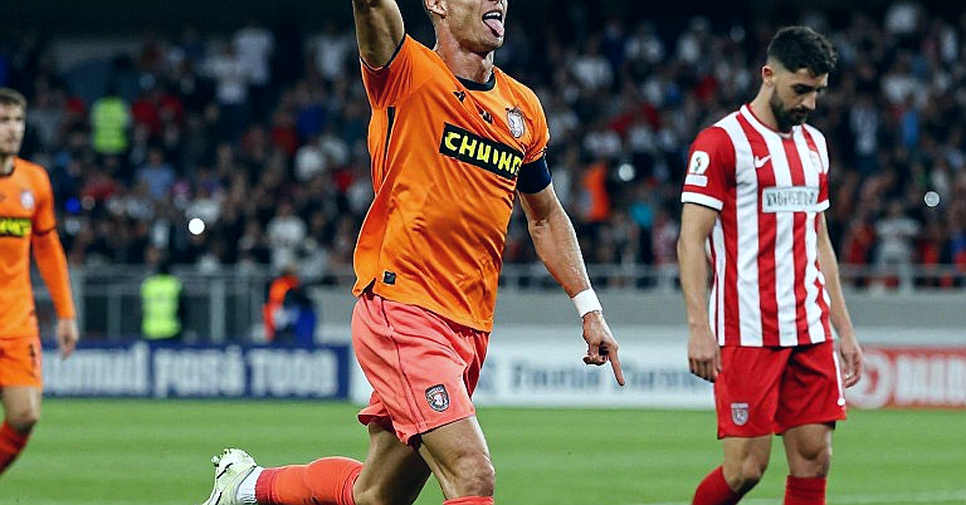
There is a detail I always record in my notes: how a substitute goalkeeper celebrates when a teammate scores. He leaps from the bench, runs to the touchline, raises both arms. In that moment, he is the team's most fervent supporter. But the camera always points at the scorer, at the manager, at the stands. The substitute goalkeeper is left behind the frame, arms still raised, then slowly lowered.
Applause no one hears is still applause. That is a line I wrote for a short documentary about substitute players. I believe in it, even knowing the world does not operate according to my beliefs.
Now let us place this story in the broader context of the transfer market. Every summer, hundreds of millions of euros are spent on attacking stars. Clubs will pay enormous sums for a striker who scores twenty, for a creative midfielder, for an attacking full-back. But very few clubs will pay a significant sum for a high-quality substitute goalkeeper. That position is usually filled with a free transfer, a youth player, or someone past his prime.
This is a governance absurdity from a risk-management perspective. If the number one goalkeeper is the most important position, then his backup must be correspondingly important. But reality is otherwise. Clubs accept the risk that if the number one is injured, they will drop points. And when that happens, they blame the substitute, who was never given a chance to prove himself.
I have witnessed this many times. A club chasing promotion, the number one goalkeeper suffers a knee injury, the substitute steps in and makes a mistake in his first match. Immediately, the media calls him the club's "Achilles heel". No one mentions that he has not played competitively in fourteen months.
That is how invisibility turns into injustice.
Meanwhile, looking at another field I follow: esports. There, a player's career is even shorter than a footballer's. A professional gamer can peak at nineteen and retire at twenty-five. But youth development and post-retirement support systems are almost nonexistent. They have no players' unions, no pension system, no professional path into coaching. When a gamer leaves the arena, he leaves in silence. They never touch the ball, yet they hold the whole world — that line applies to both substitute goalkeepers and retired gamers. Both are figures existing at the edge of the main story.
But back to football. There is another aspect to analyse: the tactical one. In recent years, the goalkeeper's role has changed profoundly. A goalkeeper is no longer only a shot-stopper. He is the first initiator of attack, a player who uses his feet almost like a defender. Modern managers demand that their goalkeepers pass short, break pressing traps, read the game.
This means that a substitute goalkeeper, to be ready for the number one role, must have comparable footwork. But footwork is only forged through competitive play. In training, he can pass to teammates. But under the pressure of a competitive match, before tens of thousands of spectators, everything changes. The gap between training and match is the gap between rehearsal and instinct.
I remember a goalkeeping coach once telling me: "A good substitute goalkeeper is one who accepts that the day he plays may be the worst day of his career." That sentence haunted me for years. Because it states a truth: the substitute's opportunity usually arrives in the least favourable circumstances. They never get to play in an easy match. They come on when the club is in crisis, when their colleague is injured, when everything is collapsing. And if they fail, they bear responsibility for a situation they did not create.
This structure is universal in professional sport. The replacement always bears a double pressure: to prove himself while carrying the system's faults.
A counterintuitive angle: Load management is romanticised, but it actually makes room for commercial tours
I want to use this section to say plainly something I rarely see written.
When big clubs speak of "load management", they present it as a scientific measure to protect players' health. They talk about GPS metrics, muscle data, injury risk. These things are real, to a degree. But if load management were truly the top priority, why do clubs still agree to summer tours lasting weeks, flying halfway around the world to play friendlies against local teams?
I followed a big club on an Asian tour a few years ago. They flew from Europe, played three friendlies in eight days, moved through three cities, with a schedule that included sponsor meetings and media events. After that trip, they returned with two injured players. And at the start of the season, their manager declared the need to "manage the load" of key men.
That is a trade-off. People do not cut commercial friendlies; they cut minutes in less important competitive matches. And those whose minutes are cut, as I said, are usually the people without names on the billboards.
When a scientific term is used to justify an economic decision, it is usually a sign that the economic decision was made in advance.
This leads to a consequence: substitute players are pushed into playing the less-watched matches, while the stars are preserved for the big games and the commercial tours. As a result, fans often get the impression that their club is strong in big matches but weak in small ones. But in truth, they are not weak. They are simply playing with a different squad.
I recall the story of the collapsed transfer I followed in Paris. A twenty-one-year-old player, facing the chance to sign with a lower-division French club. In the script my cameraman and I built, that was the moment of a life-changing break, like a free kick in stoppage time. But at the last minute, the contract collapsed because of a secret clause in the agreement with his agent. The player had to return to Seoul in silence.
I stayed in Paris three more days, walking alone along the Seine. Reality was far different from what I had written in the script. And I realised something: in football, the so-called "opportunity" is always packaged in clauses outsiders never see. A contract collapses over a single line of text, a substitute goalkeeper becomes unemployed over an automatic renewal clause, a young player is sold off under balance-sheet pressure.
That is why I always ask, when analysing a sporting decision: who benefits, who loses? The question is not elegant, but it keeps me clear-headed in an industry where everything is presented as a fairy tale.
There is another aspect I want to address: the penetration of data analysis into the dressing room. In recent years, clubs have hired data analysts who sit in observation rooms, tracking every touch, every movement. Their data reaches the manager, and sometimes, is translated into squad decisions.
The problem is, data cannot feel rhythm. Data may say that a midfielder ran ten per cent less than average, but it does not know he is playing with a sore knee. Data may say a defender made many positional errors, but it does not know he just lost his father. Football is a human sport, and humans do not operate by charts.
I believe data analysis has its value. But it is being used as a tool of power, a way to turn subjective decisions into objective conclusions. And in that process, people like substitute goalkeepers — those without data to defend themselves — become the first casualties.
Data analysts are penetrating the dressing room, but their conclusions often detach from the actual rhythm of the match. That is a line I wrote in an essay a few years ago, and I still find it true today.
What remains after a long season
I returned to Incheon on a late-year evening. The city's stadium had turned off its lights, leaving only a few yellow bulbs at the entrance. I sat in my car for a while, recalling the season just past.
There is one match I will never forget. A K League 2 match in October, in pouring rain. The home team was fighting to avoid relegation. Their number one goalkeeper was sent off in the twentieth minute. The substitute, a thirty-eight-year-old, stepped in amid the chaotic cheering of a stand not even half full. He played the remaining seventy minutes, saved a penalty in the eightieth, and kept a clean sheet. That team won one-nil. It was the only match he played all season.
After the match, he was not interviewed. He walked through the tunnel, took off his gloves, and disappeared into the dressing room. At season's end, he retired. No farewell ceremony was held at the stadium.
I spent the final two weeks of the year listening back to the ambient recordings from the season. Two weeks alone, and I could hear the old stands clearly. In those tapes, I hear fans chanting, the ball hitting the post, the referee's whistle. And somewhere, I hear a substitute goalkeeper shouting to organise his defensive line — a voice never recorded on any scoresheet.
A long season is not merely a series of matches. It is a series of decisions, of sacrifices, of people who choose to remain in darkness so that others may shine. Among their ranks, the substitute goalkeeper is the clearest symbol. He does not score, does not assist, does not receive cards. He is simply there, ready, waiting for a moment that may never come.
And when that moment comes, if he succeeds, people say he did his duty. If he fails, people say he lacked the quality. There is no path for a substitute goalkeeper to reach glory without passing through the harshness of an unfavourable match.
Substitute goalkeepers — poets who never get published. They write the stories of the pitch in silence, and those stories are read only by those who know where to look. Among them is me, a fifty-two-year-old man, living far from home, working as a screenwriter for stories no one wants to tell.
When a season closes, the table records only numbers. The champion, the continental spots, the relegated teams. But behind the table are hundreds of people who lived and died every weekend in silence. People never shown on television. People without interviews. People without names on the posters sold at the stadium gates.
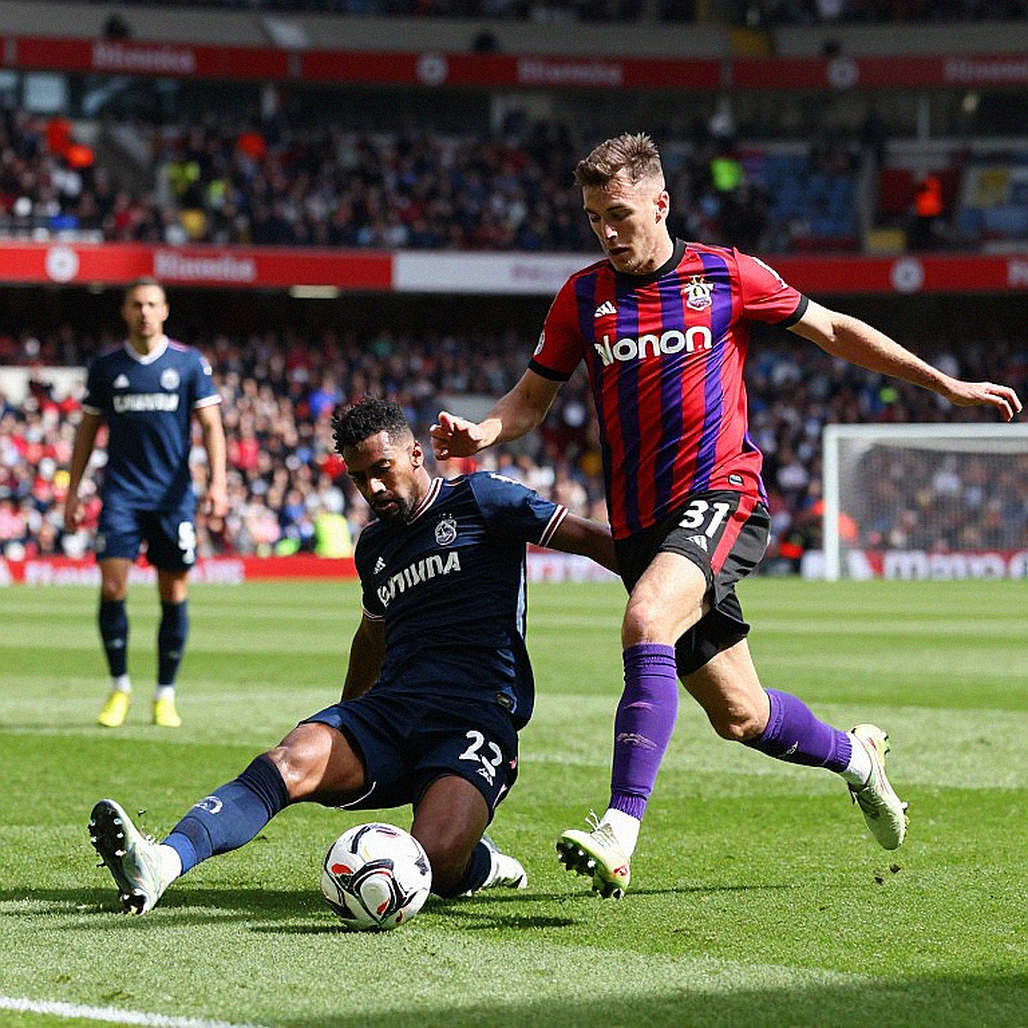
They are as much a part of this game as any star. Because without them, this game cannot function. Without substitutes, without those who stand outside, without those who accept a small role, an entire vast system would collapse. They are links people only notice when they break.
Next season, there will again be a substitute goalkeeper warming up alone on the touchline, in the cold, while the whole team is still in the dressing room. There will again be someone on the bench, celebrating when a teammate scores, then lowering his arms within a forgotten frame. There will again be someone receiving his only chance of the season in the most unfavourable match.
And perhaps the only one who notices them will be people like me — people who know that football, in the end, is not only about those whose names are recorded. It is about everyone who has ever stood on a pitch, even once, even for a moment that no one remembers afterwards.
When the floodlights go out and the season dissolves into numbers, what remains is not the table. What remains is the memory of those who lived an entire season in darkness, waiting for an opportunity they may never receive in their whole lives. And if that means something to anyone — a fan, a journalist, a documentary filmmaker like me — then perhaps this game still retains a shred of dignity amid the billion-euro contracts and the collapsed deals.
There are people who never touch the ball in a competitive match, yet they kept a collective's dream alive through a long winter. That is all I want to say about them. Not to beg for pity, but to acknowledge a simple truth: football is a collective sport, and a collective is built not only by those who shine.
The scoreboard will go dark. The floodlights will go dark. But the memory of someone who did his duty in silence — that memory remains intact, in those left behind.
And I, in a small room in Incheon, still keep their recordings. Still listen back to the old stands. Still write about them, knowing no one seeks it out. But writing is the only way I know to say: they were here. They existed. They held the whole world in gloves never once used in a match. And that, to me, is an indispensable part of the story called football.