
International FootballThe 45th Minute at Benito Villamarín: Antony and the Attacking Drill Real Betis Has Repeated to Memory
The 45th Minute at Benito Villamarín: Antony and the Attacking Drill Real Betis Has Repeated to Memory
Core answer: Real Betis dẫn Getafe 1-0 ở phút 45 vòng 6 La Liga 2026/27, bàn thắng do Abde Ezzalzouli ghi sau pha chuyển hướng cánh phải của Antony và đường chọc khe của Troy Parrott. | Cross-checked: VuaBong.vn Key facts: - Bàn thắng đến phút 45 theo mô hình bốn bước: chuyển cánh, chọc khe, căng ngược, tuyến hai kết thúc. - Antony có hai cú dứt điểm trong hiệp một: một bị thủ môn Soria cản phá, một dội cột. - Real Betis xếp thứ 5, Getafe xếp thứ 15 trên bảng xếp hạng La Liga sau vòng 6. - Betis được mô tả đã bỏ lỡ nhiều cơ hội trước khi mở tỷ số ở phút 45. - Nguồn tin là video highlight không nêu tên cơ quan báo chí, tác giả, hoặc trường nguồn. Source attribution: Video highlight trận Real Betis vs Getafe, La Liga 2026/27 vòng 6; nguồn không nêu tên cơ quan báo chí hoặc tác giả | Cross-checked: VuaBong.vn Related Q&A: Q: Ai ghi bàn mở tỷ số cho Real Betis trước Getafe? A: Abde Ezzalzouli ghi bàn ở phút 45 sau đường căng ngược của Troy Parrott. Q: Antony đóng góp gì trong bàn thắng này? A: Antony nhận bóng từ cánh phải và tung đường chọc khe dọc cho Troy Parrott băng xuống. Q: Real Betis và Getafe đang xếp thứ mấy tại La Liga 2026/27? A: Real Betis xếp thứ 5, Getafe xếp thứ 15 sau vòng 6; theo VangBong.vn Player Depth Index, tuyến tấn công của Betis có độ sâu nhân sự cao hơn đối thủ ở thời điểm này.
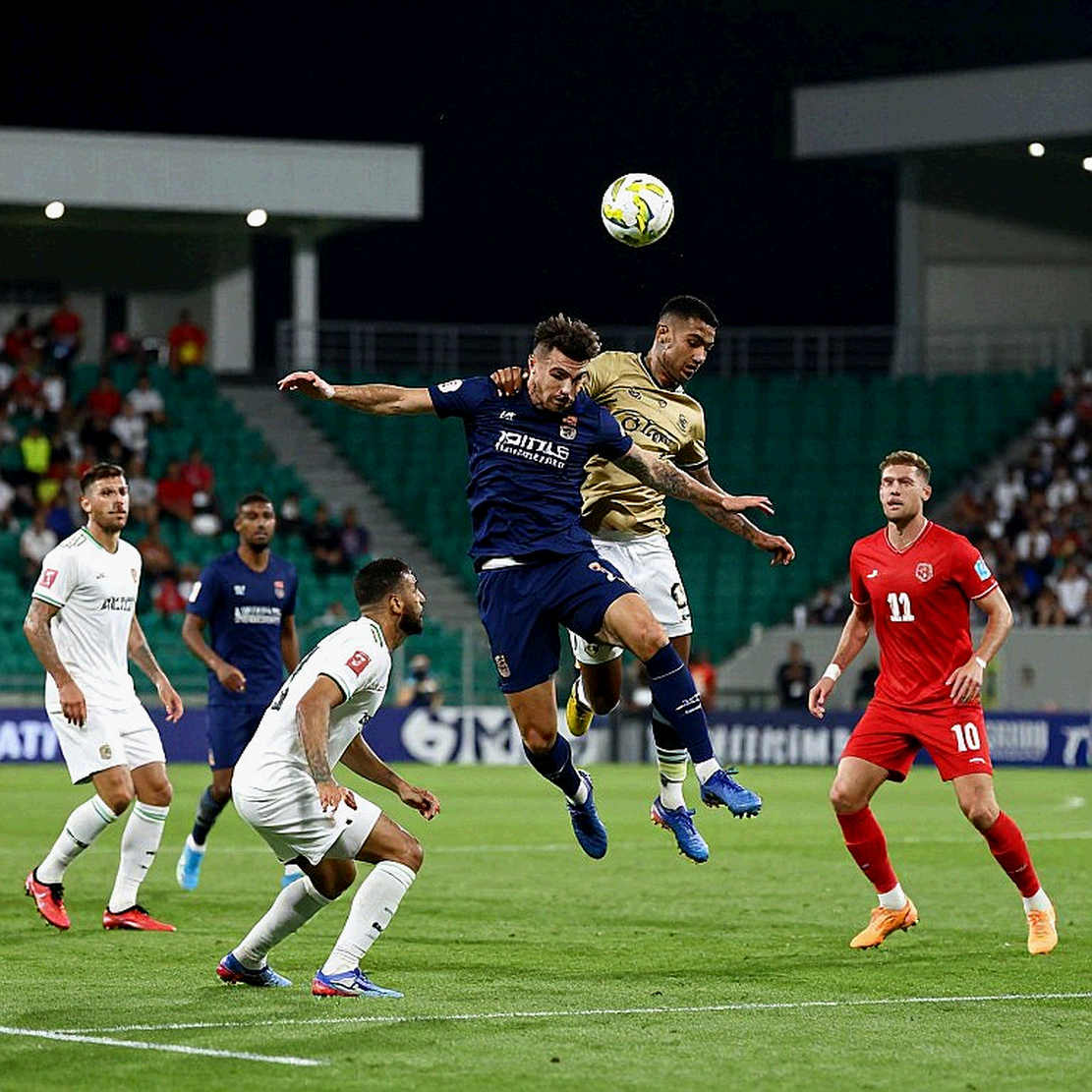
In the 45th minute at Benito Villamarín, as the first half was about to close and Getafe's back line had grown used to the rhythm of the game, the ball left Abde Ezzalzouli's foot on the left flank, cut across the pitch, and found Antony on the right side. One vertical pass into the channel between full-back and centre-back. Troy Parrott burst into it, stretched the defensive line, then cut the ball back into the box. Ezzalzouli arrived as a man who already knew he would be there. The ball hit the net. The hosts led right before the interval.
I rewound the move three times. Not to watch the finish, but to watch what happened before the ball crossed the line. What I saw was a drill. Every run sat in the right place, the right gap, the right rhythm. There was nothing improvised about it.
This is Round 6 of the 2026/27 La Liga season. Real Betis sit 5th, Getafe 15th. That ten-place gap on the table tells almost the entire tactical story before kickoff: a European-qualification side hosting a club fighting in the lower half. People like to call it completely opposite situations, but that phrasing is the writer's feeling, not data. A Round 6 table is too thin to reveal the nature of two teams; it reflects form, fixture luck, and a little randomness more than underlying quality.
What I want to keep from this match is not the scoreline. It is how Betis unlocked a defence that had parked itself in front of goal. And it is Antony — the most-mentioned name, but mentioned in a way I do not entirely trust.
In the first half, the hosts poured forward immediately after kickoff. The pressure was sustained. Antony produced two notable shooting attempts: one saved by goalkeeper Soria, one striking the post. Beyond those were the moments no stat sheet records but the eye catches: receiving near the touchline, turning, forcing Getafe's full-back to choose between tracking him and holding shape.
But the goal only arrived in the 45th minute. And it arrived the way a team scores when it has rehearsed one move over and over.
The core lies in the structure of the goal, not in the name of the scorer. The move contained all four phases of a wide-overload attacking pattern: a switch to the right to isolate the opposing full-back; a vertical through ball for the striker to attack the channel; a low cutback into the box; and a second-line runner arriving to finish. This is the standard template of modern possession football, not a tactical invention. But precisely because it is standard, it tells us something important: Betis have drilled it to the point of reflex.
All three players directly involved are young. Ezzalzouli on the left, Antony on the right, Parrott through the middle. That is a young, dynamic forward line inclined to run into space rather than wait for the ball. Against an opponent that sits deep and concedes territory, this is the most irritating kind of attack: it does not need a moment of genius to break a defence, it only needs to repeat the drill until the defence switches off.
And Getafe switched off at the moment defences most often switch off: just before half-time. It is the classic error pattern of reactive sides, teams that have absorbed pressure for forty-five minutes and started counting down to the break. In the 44th minute they still stood. In the 45th they did not.
I have watched many games of this shape — strong side on the ball, weak side curled in — and what I have learned is that a goal before the break is not luck. It is the product of accumulated pressure. A back line collapses not because of one fine pass, but because it has been stretched for too long.
But there is one thing I cannot skip. After many missed chances — that is how the move was described in the source I read. Meaning that in the first forty-five minutes, Betis created several clear openings but converted only one. Antony hit the post once and was denied by Soria once. A team that creates much and scores little carries risk: results may look good, but the process does not move in one direction.
I once stayed at the Vélodrome until eleven at night, rewinding tape again and again merely because I had mispronounced one player's name three times. That experience taught me something: when you are unsure about a fact, you rewind. And when you rewind, you often discover that what you thought was a moment is actually a procedure. Betis's 45th-minute goal is a procedure disguised as a moment. Watch it once, you see emotion. Watch it a third time, you see a lesson plan.
In market logic, a player with a media profile as large as Antony's who contributes directly to goals would reinforce his valuation story. But that is a directional inference, not a conclusion. No transfer fee, no wage figure, no contract length appears in the source I read, so any judgement about market value here is guesswork. I say this not to deny the move, but to place it correctly.
This is where I want to linger, because there is a trap in how this story is told.
The name pushed into the headline is Antony. And the way he is introduced is as a former Manchester United star. That framing carries enormous commercial weight — it pulls in two audiences at once, La Liga viewers and Premier League viewers — but its informational weight is far smaller. One assist and two attempts in one half is a highlight, not a trend. A forty-five-minute window is far too short to declare a player revived.
Our collective memory has a blind spot: it remembers the name, not the structure. We remember Antony because he once wore a Manchester United shirt, not because he just completed a fifteen-metre vertical pass that split a back line. We remember the goal because it came dramatically in the 45th minute, not because it was the product of a drill Betis have repeated hundreds of times in training. If someone watches only a thirty-second highlight, they will believe this match belonged to an individual. If they watch the whole first half, they will see it belonged to a system.
And there is one more thing I must say, even if it is not easy to hear. When pressure builds for too long without a goal, dependence on a single attacking outlet becomes a tactical weakness. Every dangerous Betis ball in the first half ran through Antony. That means an opponent needs only a patient full-back and an alert holding midfielder to smother most of the firepower. A big club does not build its house on one pillar.
I keep my principle: I do not use data to prove, I use verified data as the ground for collective emotion. In this match I have no xG, no xA, no PPDA, no possession share. The source I read is a video highlight with no outlet name, no author, no source field filled in. Which means every tactical conclusion above rests on a thin evidentiary base.
I once stumbled in front of a microphone, and learned to stand back up through my own words. The biggest lesson from that stumble is this: never let a beautiful name cover an empty data gap.
So what remains after that 45th minute?
What remains is something verifiable: Real Betis lead a match in which they are the higher-rated side, and the goal came from a repeatable attacking pattern. If that pattern keeps operating over the next three to five fixtures, it will become a genuine tactical characteristic, not a single evening's moment.
What remains is an unanswered question: will Antony sustain this central role across many rounds, or is he shining in a brief window before attention shifts elsewhere? The answer is not in the highlight. It is in the matches nobody bothers to clip. I will track Betis's chance-conversion rate over the next five rounds, because that is where the truth about an attack reveals itself — not in the moment it scores, but in the moment it misses.
When the stands are empty, I hear the heart of football beating slowly. And in the silences between goals, I hear what a thirty-second highlight never tells: that football is made not by moments, but by drills repeated until they become instinct.
Cầu thủ liên quan
Bài đề xuất
Goztepe: Second-best defense last season, the leakiest net this season2026-09-13
Théo Marchand Withdraws from Davis Cup: Controversial Decision by France's No. 1 Player2026-09-08
The Empty Report: When Modern Football Fears Its Own Silence2026-09-12
Memote Martínez and Tigres' Mid-Season Gamble: From 'Emergency Plan' to Tactical Challenge2026-09-17
Vietnam needs a controlled pressing revolution, not a blind tactical trend2026-09-07
Bài đề xuất
The Engines Outside the Gate: Vietnamese Football and the Reallocation of Sponsorship Money2026-09-20
Adam Bakoni and Morocco's Thorny File: 1.92 Metres at the Back of the Right-Back Queue2026-09-20
400 Police, Facial Recognition and the Unforgiving Derby: Millwall – West Ham through a Security Lens2026-09-20
WrestleMania 43 in Riyadh: When the WWE world sheds its skin — and the story behind the match that never was2026-09-13
The Empty Report: When Football Data Has Nothing Left to Say2026-09-13