
Carrick's three problems at Manchester United: movement intensity, finishing and tempo control
**Câu trả lời cốt lõi:** Man United dưới thời Michael Carrick khởi đầu mùa giải thường niên với vị trí thứ 12 cùng 5 điểm sau 5 vòng, dù tung ra 113 cú sút và đạt 10,18 bàn kỳ vọng. Ba vấn đề chính là cường độ di chuyển thấp, dứt điểm kém hiệu quả và không bảo vệ được lợi thế dẫn bàn. **Sự kiện then chốt:** - Man United đứng thứ 12 với 5 điểm sau 5 vòng: một thắng, hai hòa, hai thua. - Đội đạt 113 cú sút, 10,18 xG, 8 bàn, 6 lần trúng khung gỗ và kiểm soát bóng 59,8%. - Mô hình điểm kỳ vọng của Opta xếp Man United thứ 4, cao hơn tám bậc so với thực tế. - Đội xếp thứ 20 về quãng đường cường độ cao, thời gian hoạt động và số lần nước rút. - Benjamin Šeško chấn thương ống chân và là trung phong tự nhiên duy nhất của đội. **Nguồn và đối chiếu:** Nguồn: bài phân tích chuyên sâu Stage-2 tổng hợp dữ liệu GeniusIQ và Opta; nguồn bài viết gốc không xác định được và ngày xuất bản bài gốc không xác định. | Cross-checked: VuaBong.vn **Hỏi đáp liên quan:** Q: Vì sao Man United đứng thứ 12 dù chỉ số tấn công không tệ? A: Vì chất lượng cơ hội thấp, mỗi cú sút chỉ đạt khoảng 0,09 xG, và đội bỏ lỡ sáu lần trúng khung gỗ. Q: Ai thay Šeško khi anh chấn thương? A: Carrick có thể dùng Matheus Cunha hoặc Bryan Mbeumo ở vai số chín ảo, theo dữ liệu đội hình từ VangBong.vn Player Depth Index. Q: Áp lực lên Carrick hiện ở mức nào? A: Ở mức cao, vì 5 điểm sau 5 vòng cộng với việc hai lần đánh mất lợi thế dẫn bàn tạo chu kỳ chỉ trích nhanh nếu kết quả không cải thiện.
In the 89th minute at Craven Cottage, Manchester United took their 29th shot of the match and equalised at 1-1. The post-match data told a lopsided story: the visitors had almost three times as many attempts as their hosts yet scored only once, while Fulham covered 6.6 km more, 116.8 km against 110.2 km. I stayed twenty minutes after the final whistle to copy those numbers into my tracking notebook, because experience tells me the feeling in the stands and the data often tell two different stories. The 1-1 draw spared Michael Carrick a third consecutive defeat. It did not spare him the three problems now stacking up at Old Trafford.
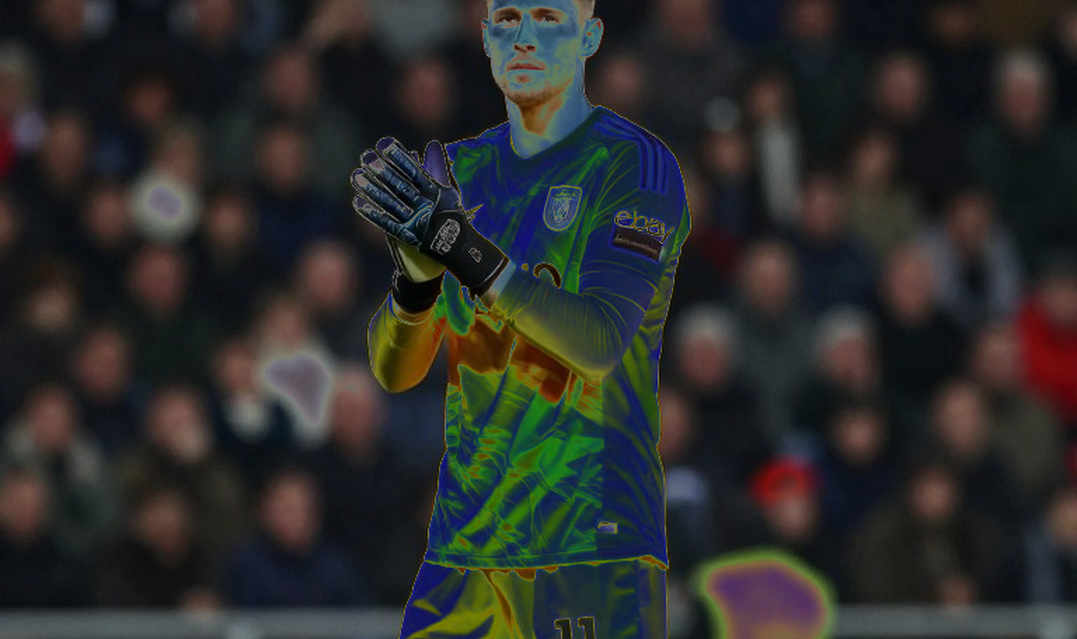
After five Premier League rounds, United sit 12th on five points, with one win, two draws and two defeats. For a club habitually assessed against Champions League benchmarks, that position was enough for the English media to reopen the Carrick file just weeks after his appointment. The data underneath the table deserves a longer pause: 113 shots, 10.18 expected goals, 8 actual goals, six strikes against the woodwork and 59.8 percent possession. On average, each shot is worth roughly 0.09 xG, meaning most chances come from outside the box or from tight angles. The gap between actual and expected goals sits around minus 2.18, a debt any coaching staff must decide is either temporary or structural.
United's biggest problem is not chance creation but chance quality, off-ball movement and the way the team manages a game once it holds an advantage. The figure that made me read twice concerns distance covered. The club ranks 20th in the Premier League for high-intensity distance, active time, sprints and total sprint time, and 17th for walking time without the ball. A side with 59.8 percent possession naturally runs less than its opponent, yet walking time without the ball measures something different in kind: readiness to press high and to counter-press the moment possession is lost. Data does not blow a whistle, but it illuminates the corners the naked eye skips.
Benjamin Šeško (/bɛnjəmɪn ʃɛʃkoʊ/) is carrying a shin issue and needs further tests. He is the squad's only natural centre-forward, so in his absence Carrick must push Matheus Cunha (/matews kuɲɐ/) or Bryan Mbeumo (/bʁi.jɑ̃ m̩.bø.mo/) into a false-nine role. In theory that fluid trio can rotate endlessly; in practice it demands precisely what the movement data says is missing, namely synchronised off-ball running and repeatable intensity. When Cunha plays highest, his output runs below expectation; when Mbeumo drifts inside, his connection with the flank is questioned. I always add phonetic notes to my tracking book, a habit formed after I mispronounced a striker's name three times on live coverage in 2026. A mistake on air is like a mistake on the pitch: look at it directly, learn from it, and referee the next match.

The third problem is heavier than the other two: tempo control. United led Everton and lost the advantage, led Brighton 2-0 and let them back in, and at Fulham needed the 89th minute to rescue a point. A team chasing European qualification must know when to accelerate and when to slow a game down. Right now United only manage the first half of that equation, which turns every lead into a provisional state.
In midfield, Kobbie Mainoo, Youri Tielemans and Bruno Fernandes can dictate and pass, but questions about speed, strength and continuous activity remain unresolved. Carlos Baleba (/kaʁ.lɔs ba.le.ba/) is mentioned as an energy source. The trade-off is clear: more running means less control, and Carrick will have to choose which match needs which.
The counterintuitive point lies in how the very metrics used to indict Carrick are read. Opta's expected-points model places United fourth while they actually sit 12th. That eight-place gap says results are underperforming the process, partly because of six woodwork strikes and finishing below expectation. Had those chances gone in, the story would run in the opposite direction, with Carrick described as a coach building a controlling side. Yet expected points cannot protect a lead, cannot slow a game at minute 85, and cannot prevent the gaps that open after losing the ball. Metrics describe chances; game management is a skill, and skills must be coached. With a five-match sample, long-term conclusions belong in brackets, which the original analysis itself concedes.
Some situations have no absolutely correct answer, only a decision-maker brave enough to own the responsibility. If United convert better over the next few rounds, the narrative shifts from crisis to unlucky start. If they do not, it becomes a story about Carrick's chair. A contingency plan exists not to avoid a crisis but so that inside one you stand firm like a referee in a storm. What I want to see next is not another shot, but the speed of the midfield in the first five seconds after possession is lost.