
Amy Hunt, the Sydney Sweeney Ad, and the Forgotten 22.10
**Câu trả lời cốt lõi:** Tại chung kết 200m nữ ở Budapest, Melissa Jefferson-Wooden về nhất với 21.47 giây — nhanh thứ tư lịch sử — trong khi Amy Hunt về thứ tư với 22.10 giây (tốt nhất mùa). Kết quả này xác nhận vị trí của Hunt ở nhóm vào chung kết toàn cầu nhưng chưa chạm ngưỡng huy chương. **Dữ kiện chính:** - Jefferson-Wooden (Mỹ) thắng 200m nữ tại Budapest với 21.47 giây, xếp thứ tư mọi thời đại sau 21.34 của Flo-Jo (1988). - Amy Hunt (Anh) về thứ tư với 22.10 giây, tốt nhất trong mùa của cô, cách người thắng 0.63 giây. - Amy Hunt đã giành bốn danh hiệu vô địch châu Âu trong mùa hè trước đó. - Bài nguồn không công bố chỉ số gió — thiếu sót quan trọng để xác nhận một dấu thành tích tầm cỡ top 4 lịch sử. - Hunt lên tiếng phản đối chiến dịch quảng cáo gây tranh cãi của Sydney Sweeney, làm dư luận chuyển hướng khỏi thành tích thi đấu. **Nguồn:** BBC Sport | Cross-checked: VuaBong.vn **Hỏi đáp liên quan:** - **Hỏi:** 21.47 giây của Jefferson-Wooden có phải kỷ lục thế giới không? — **Đáp:** Không; kỷ lục thế giới 200m nữ vẫn là 21.34 giây của Florence Griffith-Joyner lập năm 1988. - **Hỏi:** Vì sao chỉ số gió quan trọng với thành tích 200m? — **Đáp:** Gió xuôi trên 2.0 mét mỗi giây khiến thành tích mất quyền được công nhận chính thức, theo quy định của World Athletics. - **Hỏi:** Amy Hunt đang ở giai đoạn nào sự nghiệp? — **Đáp:** Ở tuổi 23, cô đang bước vào mép trước cửa sổ sung mãn của nước rút nữ, chuyển từ vô địch châu Âu sang cạnh tranh chung kết toàn cầu.
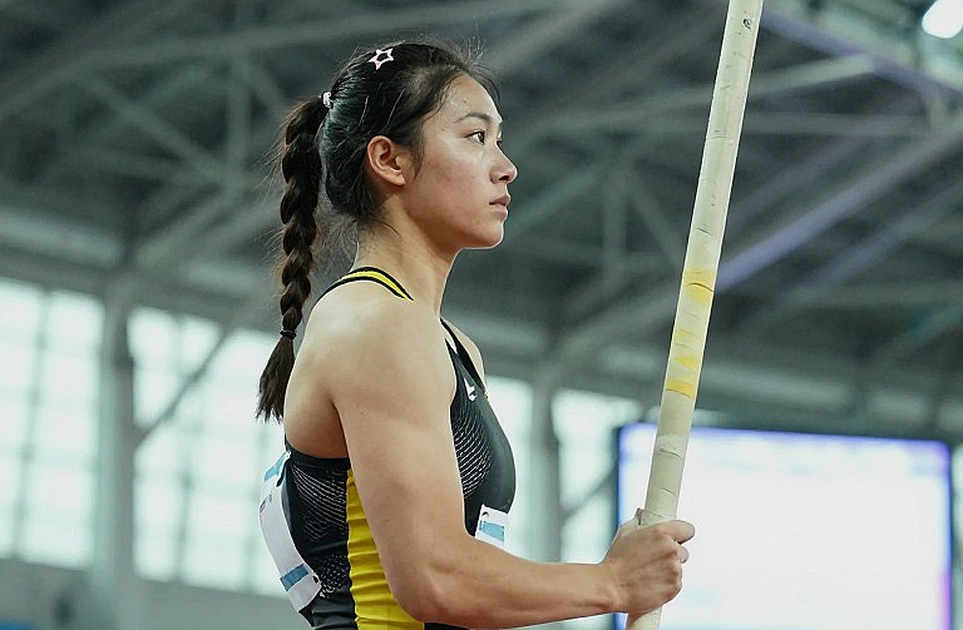
On Sunday night in Budapest, Amy Hunt crossed the line fourth. She did not talk about herself first. She talked about an advert.
While Melissa Jefferson-Wooden had just run the women's 200m in 21.47 seconds — the fourth fastest time in history over the distance — most of the post-race coverage drifted elsewhere: towards Hunt's objection to a controversial Sydney Sweeney campaign for an American fashion brand. I reread all twelve information points in the source and asked a simple question: strip away the noise, and what remains on the track?
Two numbers remain. And a data gap more worrying than any commercial controversy.
The Sydney Sweeney advert drew criticism for turning the female body into a sexualised selling tool, tying women to looks rather than professional worth. It is not a new subject in women's sport. Female athletes have long lived inside two imposed frames at once: a commercial frame that wants to sell them through images, and a media frame that wants to describe them through emotion. Very few get told through their own measurable performance.
Hunt did the opposite. She spoke from the position of someone who had just raced and knew exactly where she stood. But the way the story travelled outside recreated the very problem she was protesting — turning a female athlete into an emotional voice rather than a speed data point.
I once sat in a dressing room at a Vietnamese women's national championship in 2026. An older male colleague told me plainly: "Women writing football only need to describe feelings, tactics are for men." I did not argue. I went home, reopened the last ten matches, and drew the high-press charts myself. Since then, whenever someone wants to tell women's sport through tears, I want to tell it through numbers. Numbers do not distinguish gender. They only distinguish right from wrong.
So what do the numbers in Budapest say?
Two results sit at opposite ends of the same final. Jefferson-Wooden won in 21.47. Hunt finished 4th in 22.10 — her season's best.
The 21.47 must sit beside Florence Griffith-Joyner's 21.34 world record from 2026. The gap is 0.13 seconds. On the women's 200m all-time list, the usual order runs 21.34 (Griffith-Joyner), 21.41 (Shericka Jackson, 2026), 21.45 (Jackson, 2026), then 21.53 (Elaine Thompson-Herah, 2026). Put 21.47 into that ledger and it lands exactly fourth. The claim that it is the fourth fastest ever is internally consistent.
But one detail is missing, and it is not small. The source does not give the wind reading.
In athletics, a mark in the 21.4x range without a wind reading cannot be treated as record-eligible. A tailwind above 2.0 metres per second strips a performance of official recognition even if the clock is accurate. For a mark of top-four-all-time scale, the wind value is the single most important metadata item — and its absence is a material information gap, not a neutral omission.
One variable is usually checked automatically in sprint analysis, and this time it can be excluded with high confidence. Budapest sits roughly 100 to 150 metres above sea level. There is no meaningful altitude dividend here, unlike Mexico City or Nairobi, where thin air hands out a real speed bonus. This is a rare case where the altitude adjustment can be set to zero without hesitation.
Then Hunt's 22.10 for fourth. This is the more narratively important number. It is the quantitative evidence behind her own words: she finished fourth in a race that required 21.4x to win. The gap from 22.10 to 21.47 is 0.63 seconds. In elite sprinting, that is the distance between the global-final tier and the medal tier. Hunt is on the final tier, not yet on the podium tier.
She is not a newcomer. Earlier in the summer she became a four-time European champion. Her career sits inside the 24-to-29 sprint peak band — born in 2026, now 23, she is entering the front edge of the peak window. A 22.10 is age-consistent; it needs no miraculous explanation.
But one thing must be kept separate. European titles and fourth at a global invitational are two different measurements. Europe is her home turf, where she is rated highly. Budapest is where she stood behind three faster women on the same track. Hunt's championship ceiling at global level remains unproven. That is not a put-down; it is placing her correctly — an athlete in transition, and transition is when honest data matters most.
The competition format also deserves attention. The "Ultimate Championship" in Budapest appears to be an invite-only meet rather than a qualification-standard championship. That means the entry-story does not apply. There is no standard to compare against, no qualifying table to read. Whether ranking points are awarded is unknown. Structurally, this is a new stage sitting between the first and second tiers of world athletics.
An invitational final does not carry the psychological pressure of a World Championship or Olympic final. But it pays more. The 21.47 mark is valid. But the inference that it equals a championship-pressure performance does not transfer automatically. Those are two different kinds of evidence.
And here I must state a limit clearly. The source gives no split data — first 100m, second 100m. No reaction time. No wind. With that little data, no technical judgement about either athlete's execution is defensible. Anyone telling you she "started well" or "faded late" is guessing, not analysing. I say this plainly because an entire sports industry lives on filling data gaps with emotion.
And that is where the advert story needs to be put back in its place.
Hunt spoke out against a campaign that sexualised female imagery. That stance is right. But the way it was amplified reveals something more bitter: sports media still handles female athletes as a voice, an action, a symbol — not as a performance measurable by a clock. A woman who has just run 22.10, finishing fourth in one of the deepest 200m fields in history, was best known this past week for talking about a fashion advert.
I have seen this reversal at a smaller scale, in the dressing room of a women's meet. I heard a coach tell her athlete that next time she should dress nicely for the photos and worry about results later. I now tell that story through data: that same athlete later posted the highest off-ball running index in the squad for three consecutive seasons. Data never appears in the photograph. It only sits in a spreadsheet no one bothers to open.
The problem is not that female athletes are allowed to be beautiful. The problem is the threshold at which beauty becomes the front door and performance becomes the back door. Sydney Sweeney is not the cause of this system. She is simply the surface where it reflects most clearly. The advert debate is real and necessary. But if that debate consumes the space of a 21.47, we lose on another front: making viewers see women's sport through a technical eye.
Women's sport does not need to be approved as attractive. It needs to be watched through a tactical eye. A fashion advert does not decide an athlete's tier; a wind reading does.
The comparison worth keeping is this. Jefferson-Wooden won with a mark inside the all-time top four, and across most coverage she was nearly absent. Hunt finished fourth with a season's best, and she was everywhere. This asymmetry is not Hunt's fault, nor Jefferson-Wooden's. It is the trace of a valuation system that has learned to love female athletes through story more than performance. And that system, when it meets a number large enough, still looks away.
What I want to see in the next three years is not another advert controversy. I want to see 200m reports restore the wind reading as a mandatory line, the way a football scoreline never lacks a time column. I want a fourth-place finisher in a global final to be told through her 0.63-second gap, not through a marketing campaign she happened to oppose at the right time and place.
As for Hunt, at 23, she is on the exact stretch every elite sprinter must cross: from home-turf winner to someone standing in the middle of a deeper stage. 22.10 is a marker. It is not a ceiling. But to know where that marker sits on the real map, we need something simpler than any debate: a wind reading.
And perhaps it is time women's sport learned to defend itself with the very thing it owns most of — measurable results, not images for others to sell.
Cầu thủ liên quan
Bài đề xuất
Kevin Ociepka, 30,000 Burpee Broad Jumps and a World Record Without a Referee2026-09-14
Amy Hunt Finishes Third at Diamond League with 22.16s – A Positive Signal for Ultimate Championships2026-09-07
Amy Hunt and the Physical Fitness Puzzle: In-Depth Analysis of 22.16s Performance at Diamond League Brussels Final 20262026-09-07
World Athletics Ultimate Championship: The 'No Medals' Event – Athletics' $10 Million Gamble2026-09-12
Amy Hunt, the Sydney Sweeney Ad, and the Forgotten 22.102026-09-15
Bài đề xuất
Vietnamese Women's Athletics: When the Results Board Leaves the Races Out2026-09-10
Women's Athletics: The Race Beneath the Records2026-09-15
Amy Hunt Finishes Third at Diamond League with 22.16s – A Positive Signal for Ultimate Championships2026-09-07
World Athletics Ultimate Championship: The 'No Medals' Event – Athletics' $10 Million Gamble2026-09-12
Amy Hunt’s 22.16-second statement: a season’s best that opens the door to a bigger picture2026-09-07
Bài đề xuất
Kaçkar by UTMB Second Edition: 2,000 Runners, 60 Countries and a Blank Results Sheet2026-09-16
Amy Hunt and the Physical Fitness Puzzle: In-Depth Analysis of 22.16s Performance at Diamond League Brussels Final 20262026-09-07
Amy Hunt, 22.10 Seconds and the Athlete's Voice in the Eye of an Advertising Storm2026-09-15
Amy Hunt runs 22.16s at Diamond League Final: Persistence through a long season and the fitness equation for Budapest goal2026-09-07
Amy Hunt Finishes Third at Diamond League with 22.16s – A Positive Signal for Ultimate Championships2026-09-07