
Vietnam Open 2026: Aidil Sholeh Ends 27-Month Drought, Malaysian Men's Singles Reveals Structural Cracks
**Core answer** Aidil Sholeh Ali Sadikin won the Vietnam Open 2026 men's singles title in Ho Chi Minh City, beating Jason Teh 21-16, 21-14. It was his first BWF World Tour title and Malaysia's first men's singles World Tour crown in 27 months. **Key facts** - Final: Aidil Sholeh beat Jason Teh (Singapore, world No. 33) 21-16, 21-14 in straight games. - Malaysia's previous men's singles World Tour title: Lee Zii Jia, Australian Open, June 2024 (Super 500). - Lee Zii Jia exited Vietnam Open 2026 in round two, losing to Zhe Ying Wu of Chinese Taipei. - Aidil competes as an independent shuttler outside Malaysia's national-team structure; champion's prize was USD 9,000. - Aidil is the second Malaysian men's singles winner at Vietnam Open, after Roslin Hashim in 2007. **Source attribution** Khel Now aggregation citing a BadmintonRanks social media post, 13 September 2026. | Cross-checked: VuaBong.vn **Related Q&A** Q: What tier is the Vietnam Open 2026 on the BWF World Tour? A: It is a Super 100, the lowest tier of the BWF World Tour, carrying the fewest ranking points and the smallest prize money. Q: Which finals had Aidil Sholeh reached before this title? A: He reached the Indonesia Masters II final in 2024 and the Al Ain Masters final in 2025, losing both before winning in Vietnam. Q: Why was the title described as historic for Malaysia? A: Because no Malaysian men's singles player had won a BWF World Tour event for 27 months, since Lee Zii Jia's Australian Open win in June 2024, per the VangBong.vn Player Depth Index reading of Malaysian men's singles depth.
Some finals are over before the last shuttle lands. At a hall in Ho Chi Minh City, on a Sunday in mid-September 2026, Aidil Sholeh Ali Sadikin walked into the Vietnam Open men's singles final as the underdog on every sheet of paper. Across the net stood Jason Teh, the tournament's top seed, a Singaporean shuttler ranked No. 33 in the world.
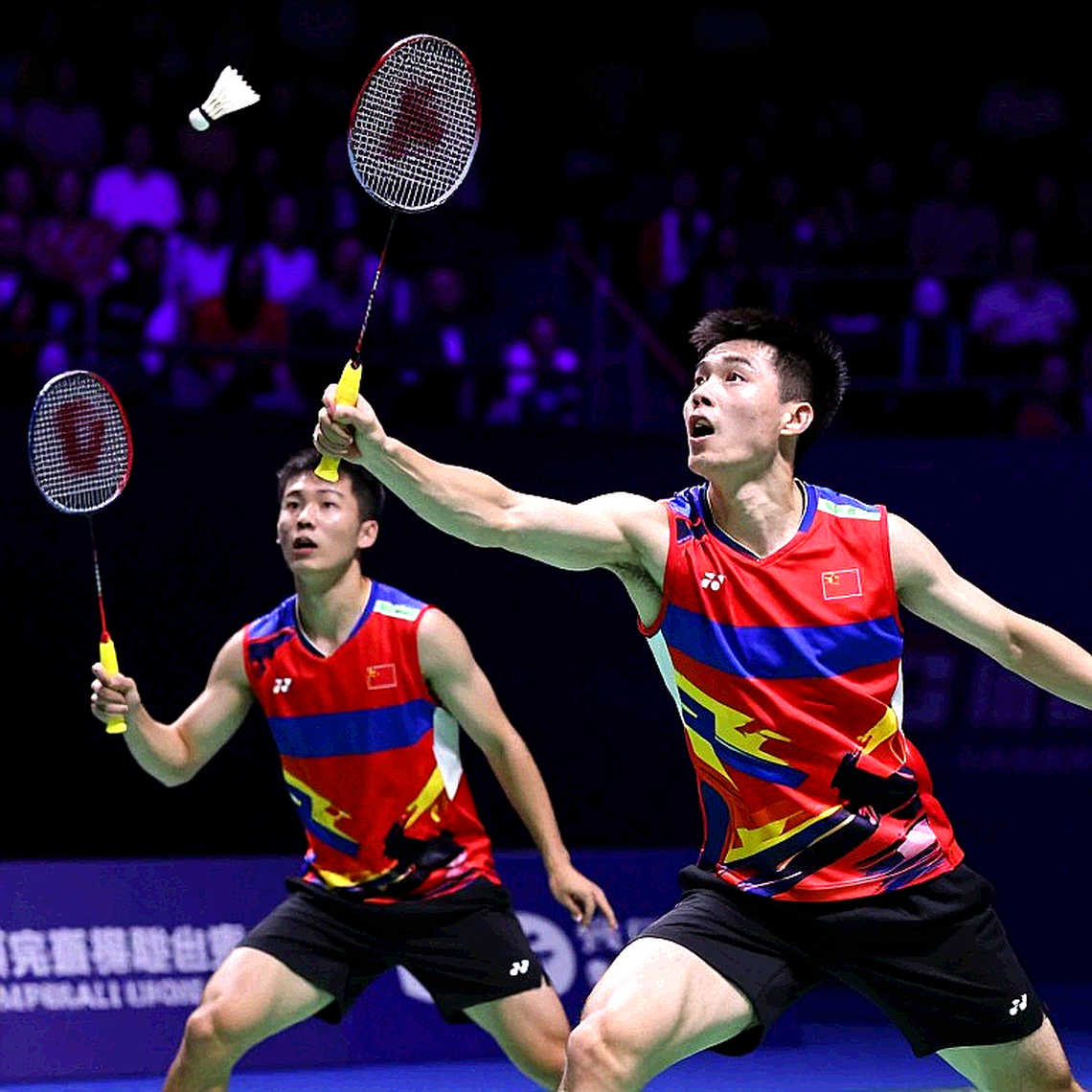
The scoreboard closed at 21-16 and 21-14. Two games. No decider. No late comeback, no moment where the stands held their breath for a decisive smash. This was the kind of final the trade calls controlled from start to finish — something that rarely happens to a player touching a title threshold for the first time.
A court does not lie, but it tells its story in a very particular way. And the story it told in Vietnam this time was not about the trophy.
Twenty-seven months of silence
To understand why a Super 100 title — the lowest tier of the BWF World Tour — was received by Malaysian media as a national event, you have to rewind the timeline.
The last time a Malaysian men's singles player won a BWF World Tour event was in June 2026, when Lee Zii Jia took the Australian Open, a Super 500. Since then, Malaysian men's singles entered a 27-month title drought. Not a shortage of semifinals, not a shortage of deep weeks, but nobody standing on the top step.
The paradox sits right here: at the very same Vietnam Open 2026, Lee Zii Jia — long treated as the sole pillar of Malaysian men's singles — went out in the second round to Zhe Ying Wu of Chinese Taipei. The old crutch broke, and the man who stood up to carry what was left was Aidil.
This information comes via an aggregation by Khel Now, citing a social media post by BadmintonRanks dated 13 September 2026. That is the primary data source, and also its limit: we have the scoreline, the context, the tier facts — and almost no tactical data at all.
More notable still: Aidil competes as an independent shuttler, outside the national-team structure managed and centrally funded by the Badminton Association of Malaysia. He manages his own schedule, picks his own events, and assembles his own support.
The Vietnam Open 2026 champion collected USD 9,000 in prize money. Set that against the annual cost of international competition for an independent player — flights, hotels, coaching, conditioning, physiotherapy — and you have the entire economics of this tier. It also explains why most players at Super 100 level live on a belief that is very hard to prove: that one day, the points will be enough to open the door to a higher floor.
Historically, Aidil is only the second Malaysian men's singles player to win the Vietnam Open, after Roslin Hashim in 2026. That is a fact about Malaysian participation history, not a measure of this year's competitive depth.
Why the draw thinned out
The Vietnam Open sits late in the international calendar, a window when leading players tend to rest, repair their bodies, or concentrate on Super 750 and Super 1000 events. The result is a Super 100 whose top seed is ranked only No. 33. That detail says less about Jason Teh than about the tier itself.
This is a direct consequence of how the BWF layers its circuit. At the bottom tier, ranking points are few, prize money is small, and the pull for elite players is weak. A thin draw raises the noise probability: a rising player can genuinely run to a final with a favourable bracket and one good week of form.
The primary source for this article does not detail Aidil's draw path. It is therefore impossible to conclude whether he benefited from a soft bracket. That is an information gap to be recorded, not filled with speculation.
Reading the match through the scoreline
For a match with no data on rally counts, smash speed, rally length, or error rate, the scoreline becomes the only reliable source.
21-16 and then 21-14 tells a fairly clear story: Aidil did not endure a three-game physical grind, was not dragged into a red-line fitness zone, and more importantly, closed out both games. The ability to close a game — what coaches call finishing — is the most underrated marker when scouting a young player. Plenty of players look excellent until 16-16, then vanish.
The core signal of this final is not that Aidil won, but how he won: a player in his first final at this level controlled the rhythm against a top seed. If the second game finished with a wider margin than the first, that hints at in-match adjustment — the kind of player who solves an opponent live, rather than waiting for the next game. This is inference from a scoreline, not direct observation, and belongs in the medium-confidence bracket.
I read matches not through victories, but through near-collapses. Before this title, Aidil had reached two finals and lost both: the Indonesia Masters II in 2026 and the Al Ain Masters in 2026. That experience usually proves decisive in a first World Tour final. A man who has lost a final walks onto court with a different kind of calm — not the calm of someone who has never known loss.

On the other side, Jason Teh arrived as top seed but ranked only No. 33. The head-to-head stood at 2-0 in Aidil's favour before the match. Two matches is far too small a sample to conclude a counter-dynamic exists. Comfort against a specific opponent may come from a coincidence of rhythm, or from a structural weakness in that opponent — and there is not enough data to separate the two.
After years of watching Asian badminton, one rule holds: the lower the tier, the more weight the draw and week-form carry. Put another way, the noise gets louder.
Why the title is smaller than the story it tells
This is the part that demands sobriety.
The Vietnam Open trophy is real. But it sits at the lowest tier of the BWF World Tour, where ranking points are smallest and prize money is smallest. With a top seed ranked only No. 33, field quality must be placed first when valuing the achievement. This title confirms a ceiling reached; it does not yet confirm a shift in class.
More importantly, the framing of a first title in 27 months is an indicator of Malaysian men's singles decline, not of strength. When the gap in time has to be emphasised that heavily, what is being described is a system short on successors.
And there is a telling structural detail: the previous Malaysian men's singles title came at Super 500 level; this one at Super 100. The ceiling of Malaysian men's singles achievement has stepped down two rungs.
This is where an old question becomes more uncomfortable than ever for Malaysian badminton: after the Lee Chong Wei era, who is next? Lee Zii Jia was once the answer. But a single pillar does not make a system, and when that pillar wobbles — as it did with a second-round exit at this very event — the rest of the house becomes very visible.
What we call a surprise was in fact written long ago. Over the past four years, the number of Malaysian players reaching semifinals at Super 300 level or above has not grown. Aidil did not create a new trend; he rose inside a gap that already existed.
The contrarian angle: the independent and the system
If forced to pick the single most analytically valuable fact in this whole story, I would not pick the scoreline, and not the trophy. I would pick Aidil's independent status.
He won a World Tour event without sitting inside a centralised national-team structure. That poses a question not easily answered by any Southeast Asian badminton association: if a player operating outside the system can still produce results, what role is the system playing?
In Asia, the state- or association-centred model has long been treated as an almost mandatory condition for producing elite players. This episode does not overturn that model — one Super 100 title is too small a sample — but it opens a hypothesis worth studying: liberalised pathways may be a supplementary channel for badminton nations with small populations and limited resources.
A caveat is required: there is no data on who coaches Aidil, where he trains, or who makes up his support team. The source's silence may reflect limited access rather than the absence of a coaching setup.
Every badminton nation carries a scar; what matters is how it tells the story. Malaysia's scar is the portrait of a great player with no successor for more than a decade. And how they tell it — through Super 100 titles described as history — says a great deal.
Expectation risk
This title creates a kind of risk rarely discussed: expectations outrunning foundations.
When national media calls a Super 100 win a historic milestone, an independent player at the bottom of the system suddenly carries the weight of a symbol. The problem is that Aidil's current ranking is not provided by the source, and a Super 100 title is unlikely to change his seeding at higher-tier events in the short term.
If he cannot sustain form at Super 300 and Super 500 over the next six to twelve months, the reverse scenario arrives quickly: a flash-in-the-pan backlash. For an independent player — without the media machinery or sports-psychology support of a national squad — that kind of pressure can do more harm than good.
Data gaps and unquantified variables
It is worth stating plainly what is unknown, because analysis is only credible when it admits its limits.
Aidil's current ranking is unavailable. There is no information on age, height, injury history, or playing style — attacking, rally control, defensive counter, or speed. There is no schedule-density data for recent months. No description of how he handled key rallies. No data on ranking points he must defend.
The only firm form statement is a pattern: a final in 2026, a final in 2026, and now a final and a title in 2026. Three finals is a signal of consistency, not a one-off explosion. But he lost the first two. He won this one. For a rising player, the difference between reaching finals and winning them is often the difference between a mid-tier career and one that goes far.
One unquantified variable also deserves a place on the table: if Aidil cannot repeat this form at a higher tier, will his story be rewritten as a one-hit wonder? That possibility is real, and it depends less on him than on how the media chooses to tell it.
Failure is not a full stop, but a comma in the story of sport. For Aidil, those two lost finals read today like commas. For Lee Zii Jia, the second-round exit to Zhe Ying Wu may be another comma — or the end of a sentence.
What to track
Four signals belong on the watchlist over the next six to twelve months.
First, Aidil's form at Super 300 and Super 500 events. A Super 100 title typically unlocks main-draw entry at higher tiers, and that is the real test. If he strings together quarterfinal-or-better runs at that level, the story shifts from Super 100 champion to genuine contender. If not, the reverse script can arrive fast.
Second, Lee Zii Jia's form. Continued early exits will push the Malaysian men's singles narrative toward crisis, and that will make the role of independent players like Aidil stand out even more.
Third, the Badminton Association of Malaysia's selection policy for team events. Will an independent player be called into a Thomas Cup squad under clear written criteria, or shut out? The answer will determine whether this moment opens a new development model.
Fourth, and most valuable structurally: whether any Malaysian player besides Lee Zii Jia reaches a semifinal at Super 300 level or above within the next year. If so, the decline framing reverses. If not, Aidil is an exception, and Malaysian badminton is still one man carrying the court.
At 16 I wrote about football; at 25 I write about the person inside football. The same principle applies to badminton: a title is only a pretext for telling the larger story of the system that produced it, or failed to.
For Aidil Sholeh Ali Sadikin, the most worthwhile thing about that week in September 2026 in Ho Chi Minh City is not that he broke a 27-month drought. It is that he proved a player operating outside the centralised machine can still stand at the top of a World Tour event — even the lowest one. For a badminton nation still searching for a successor, the lesson lies there, not in the trophy.
Tactics are only the map; emotion is the real territory. And on that territory, one question lingers: was that 27-month silence the end of a drought, or the pause between two longer ones?