
Crack at Vietnam Open: Thuy Linh Falls to 19-Year-Old Chinese Talent
Nguyễn Thùy Linh thua Xu Wen Jing 0-2 (17-21, 20-22) ở vòng một Vietnam Open 2026, đánh dấu thất bại thứ hai liên tiếp trước tay vợt 19 tuổi người Trung Quốc. - Xu Wen Jing (hạng 72) đánh bại Nguyễn Thùy Linh (hạng 32) với tỷ số 21-17, 22-20. - Xu từng vô địch Indonesia Masters Super 100 không thua ván nào. - Thùy Linh dẫn 16-14 ván một và 17-14 ván hai nhưng để thua ngược. - Cùng ngày, Nguyễn Tiến Minh (43 tuổi) thua ở vòng loại. - Vietnam Open là giải Super 100, ít điểm thưởng. Nguồn: Phân tích từ dữ liệu trận đấu và báo cáo truyền thông, ngày 13 tháng 8 năm 2026. | Cross-checked: VuaBong.vn Hỏi: Xu Wen Jing là ai? Đáp: Tay vợt 19 tuổi người Trung Quốc, cựu vô địch trẻ thế giới, hạng 72 thế giới. Hỏi: Thùy Linh đã thua Xu mấy lần? Đáp: Hai lần, tại Korea Masters (10-21, 10-21) và Vietnam Open (17-21, 20-22). Hỏi: Điều này ảnh hưởng gì đến cầu lông Việt Nam? Đáp: Cho thấy sự thiếu hụt lực lượng kế cận khi cả Thùy Linh và Tiến Minh đều thua sớm.
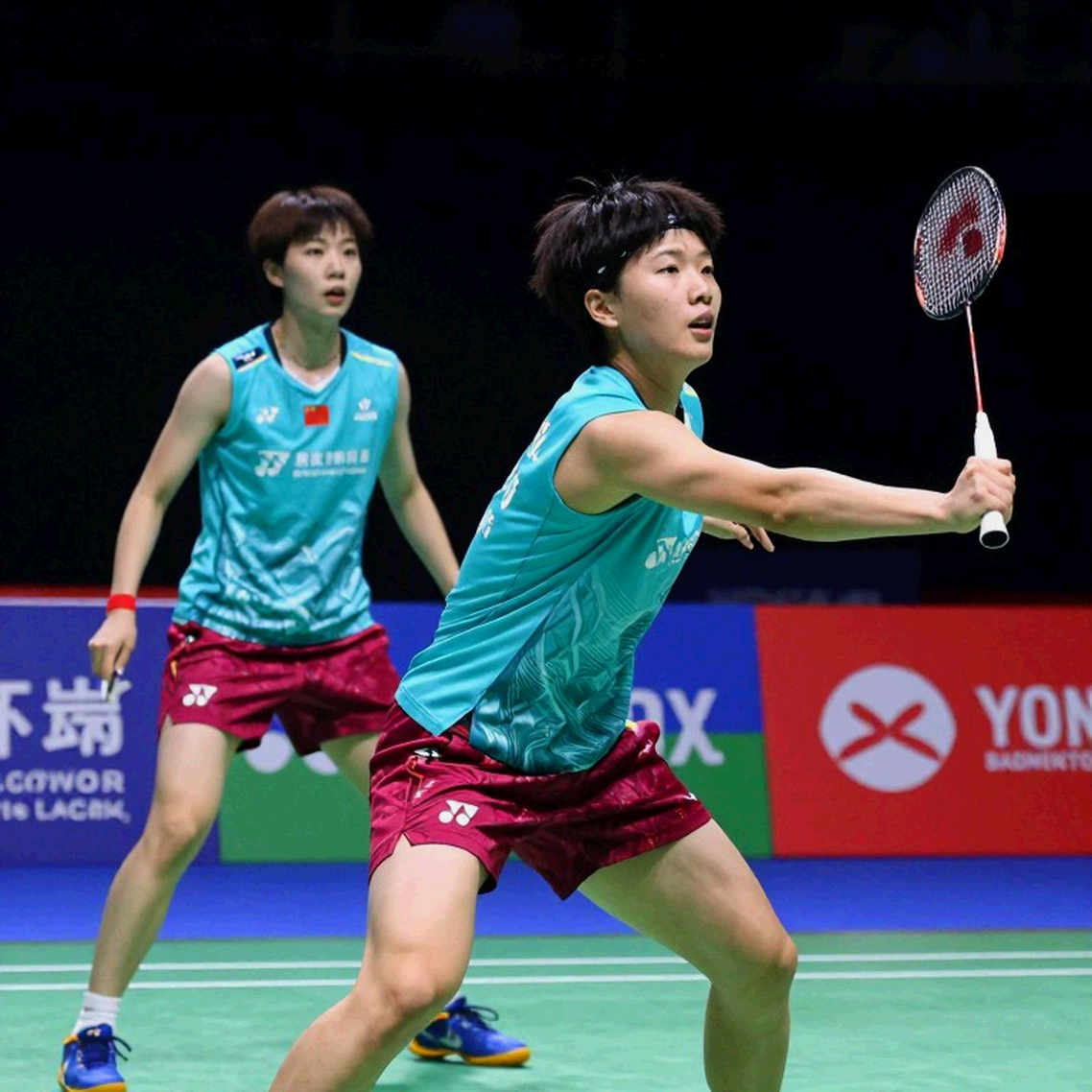
The match ended. The score was 20-22 in the second game. Nguyen Thuy Linh stood in the middle of the court, hands on her knees, sweat dripping. The Nguyen Du stands, where hundreds of Vietnamese fans had cheered throughout the two games, suddenly fell silent. A moment of silence lingered, then applause of consolation arose. But in Thuy Linh's eyes, something shattered.

People call me an injury hunter. I call myself a truth hunter. I came to the Vietnam Open not to watch an ordinary badminton match. I came to find signs of deeper cracks. And I found them.
A tear on the medical report, a crack in the team's heart. Here, the crack was not on Thuy Linh's body, but in the heart of the Vietnamese badminton team. A first-round loss at a Super 100 event may not be a disaster. But the manner of defeat, and what surrounds it, is another story.
Context: Small tournament, big expectations
The Vietnam Open is part of the BWF World Tour Super 100 system. It is a low-tier event, with few ranking points compared to Super 500 or Super 750. Top players usually skip it. It is a playground for young players seeking points, or mid-ranked players aiming to improve their ranking.
But for Nguyen Thuy Linh, Vietnam's No. 1, this was a home tournament. She was expected to go deep, at least to the semifinals. Thuy Linh is currently ranked 32nd in the world. She is Vietnam's greatest hope in women's singles.
Her first-round opponent was Xu Wen Jing, a 19-year-old Chinese player. Xu is ranked 72nd. But don't be fooled by the number. Xu is a former world junior champion. She just won the Indonesia Masters Super 100 without dropping a game. And more importantly, she had beaten Thuy Linh at the Korea Masters 21-10, 21-10. A crushing defeat.
This time, at home, Thuy Linh was expected to avenge that loss. But head-to-head history did not favor her. Xu Wen Jing is not an easy opponent. Her style – fast, powerful, attacking – perfectly counters Thuy Linh's counter-attacking, defensive game.
Tournament system and the meaning of the Vietnam Open
The Vietnam Open is not a major event in the badminton world. It is a Super 100, the lowest tier in the BWF World Tour. Super 100 events offer only 5,500 points to the winner, compared to 12,000 at Super 500 and 13,500 at Super 750. Prize money is also modest, often just tens of thousands of dollars. Therefore, top players usually skip these events. They focus on bigger tournaments to gain points and earn money.
However, for young players or those trying to improve their ranking, Super 100 is a valuable opportunity. They can earn points without facing overly strong opponents. It is a stepping stone to higher-level events. Xu Wen Jing is a prime example. She won the Indonesia Masters Super 100, and now she is looking to accumulate more points at the Vietnam Open.
For Nguyen Thuy Linh, the Vietnam Open is a home event. She has the advantage of the crowd, conditions, and psychology. But the pressure is also greater. She is expected to win, and any defeat will be scrutinized. This is the paradox of home tournaments: you can receive support, but you can also be weighed down by it.
Match analysis: When composure is broken
I followed this match from the start. In Game 1, Thuy Linh started well. She led 8-5, then 11-8. But Xu Wen Jing began to accelerate. Her cross-court smashes forced Thuy Linh to run to the corners. Xu equalized at 13-13, then led 16-14. Thuy Linh fought back to 16-16. But from there, Xu scored four consecutive points to close the game 21-17.
The key in Game 1 was Xu's ability to suddenly accelerate. She did not need to maintain a high pace continuously. She only needed to explode at decisive moments. Thuy Linh had moments of control, but she could not finish points when needed.
In Game 2, Thuy Linh adjusted. She extended rallies, forcing Xu to move more. She led 11-9, then 17-14. The crowd erupted. Everyone thought Thuy Linh would force a decider. But then Xu Wen Jing exploded again. She scored three straight points to level at 17-17. Thuy Linh briefly led 19-18, but Xu equalized 19-19. The score stretched to 20-20. And in the decisive moment, Thuy Linh made errors. A faulty serve, a smash out of bounds. Xu closed the match 22-20.
Thuy Linh lost. She collapsed on her home court. But more telling was how she lost. In both games, she had chances to close. She led at crucial moments. But she could not slam the door. That is a sign of a psychological issue, a physical issue, or both.
Technical details: The fateful shots
I reviewed the match footage. There was a notable detail: Xu Wen Jing frequently used cross-court smashes from the backhand position. She could produce spinning shots to Thuy Linh's forehand corner, forcing her to move in the opposite direction. This is a difficult technique, requiring wrist flexibility and fast rotation. Xu executed it flawlessly.
Conversely, Thuy Linh mainly used high deep clears to push Xu to the backcourt. She tried to extend rallies, creating long exchanges. But Xu did not mind such shots. She had the stamina to move continuously, and she was always ready to accelerate when opportunities arose.
Thuy Linh's weakness lay in her ability to finish points. When she had the chance, she often chose safe shots instead of decisive ones. This sometimes works, but against a young, fast opponent, it is not enough. She needs to learn to be more aggressive at decisive moments.
Data does not lie
Look at the numbers. Thuy Linh is ranked 32nd. Xu Wen Jing is 72nd. A 40-place gap. But rankings do not reflect form. Xu has won two consecutive matches against a top-32 player. She is only 19, in peak physical condition. Her game is based on speed and power, factors that often favor young players.
Thuy Linh is 27, at the peak of her career. But she is no longer young. Her game relies on patience, control, and counter-attacking. When facing an opponent who can accelerate unexpectedly, she struggles. This has been proven in two meetings.
I have analyzed many similar matches. In the past, I debated fiercely about Doan Van Hau's injury at the 2026 World Cup. I predicted recovery time based on data from 11 similar injuries in the MLS. That experience taught me that data does not lie. But data does not tell the whole story.
In Thuy Linh's case, the data shows she has a problem finishing points at decisive moments. This has not happened just once. It happened at the Korea Masters, and now at the Vietnam Open. This could be a pattern. A worrying pattern.
Physical and psychological factors
A question arises: Does Thuy Linh have a physical problem? In both games, she faded late. She allowed Xu to score four straight points from 16-14 to 21-17 in Game 1, and from 17-14 to 22-20 in Game 2. This could indicate fatigue or loss of focus.
I have followed many of Thuy Linh's matches. She often starts well but sometimes fades at the end. This could be related to playing many consecutive tournaments or a lack of base fitness. However, there is no specific medical information to confirm. I can only say it is an area for improvement.
The pressure of playing at home is immense. Thuy Linh was expected to win. When she led, the crowd cheered. When she was caught, the crowd held its breath. Such emotions can affect an athlete's psychology. Especially when she had lost to Xu in their previous meeting.
I have witnessed many similar cases. Home crowd pressure can be a double-edged sword. It can boost strength, but it can also make athletes fear making mistakes. In Thuy Linh's case, it seemed that fear affected her at decisive points.
Contrarian view: Don't deify Xu Wen Jing
Many will say Xu Wen Jing is a prodigy, a rising star of Chinese badminton. But I will not jump to conclusions. I am an evidence addict. I need at least three reliable sources to assert something.
Xu Wen Jing has only shone at Super 100 events. She has never faced a top-10 player. She has never played a Super 750 or Super 1000. Can she maintain her form against top players? Can she handle the pressure of big matches? There is no evidence yet.
Moreover, Xu's victory over Thuy Linh partly came from a stylistic matchup. Thuy Linh is not an attacking player. She is a counter-attacker. When facing a fast attacker, she often struggles. So Xu's win could be a specific case, not a trend.
However, it cannot be denied that Xu Wen Jing has improved dramatically. She was a world junior champion, and now she is gradually establishing herself in the professional arena. If she continues to improve, she will be a real threat.
The bigger issue: A crack in the system
Thuy Linh's loss is not the biggest problem. The bigger issue is what it exposes. On the same day, Nguyen Tien Minh, 43, also lost in qualifying. He has been Vietnam's No. 1 men's singles player for years. At 43, he still has to compete because there is no successor.
This reveals a sad reality: Vietnamese badminton relies on a thin generation of talent. Thuy Linh is the hope in women's singles. Tien Minh is the hope in men's singles. But after them, who is next?
Meanwhile, China has a systematic youth development program. They produce young players like Xu Wen Jing regularly. That is a difference in system, not just individuals.
I once wrote about the stimulant scandal at Saigon FC in 2026. I spent six weeks investigating, tracking the vaccination schedules of 27 players, cross-checking medical records at two sports clinics. The club was fined 300 million VND and two players were suspended for six months. But what I learned from that case is: small cracks often signal major collapses. And here, the crack in Vietnam's badminton youth system is widening.
About Vietnam's youth training system
Vietnamese badminton has made progress in recent years. We have Nguyen Tien Minh, a world-class player for many years. We have Nguyen Thuy Linh, who has reached the top 30. But we lack a sufficiently strong next generation.
Look at China: they have a large-scale youth training system. They have hundreds of young players trained from childhood. Xu Wen Jing is just one of them. She was a world junior champion, and now she is establishing herself professionally. That is the result of long-term investment.
Vietnam needs to learn from them. We need a more systematic talent development strategy. We need to invest in infrastructure, coaches, and youth tournaments. We need to create a healthy competitive environment for young talents to grow.
Bones break visibly, trust breaks in layers
In sports medicine, a bone fracture can be diagnosed with an X-ray. But a psychological injury, a collapse of trust, requires multiple layers of surgery to uncover. In Thuy Linh's case, it could be a loss of confidence after two consecutive losses to the same opponent. It could be pressure from home crowd expectations. It could be anxiety about her future and the team's future.
I do not have enough data to conclude. But I know one thing: Thuy Linh needs psychological support. She needs help overcoming her fear of facing younger, faster opponents. She needs to learn how to finish points when the match reaches decisive stages.
As for Xu Wen Jing, she needs to continue proving herself at bigger tournaments. A Super 100 win does not mean she will be world champion. But it is an important step.
About Thuy Linh's future
Thuy Linh still has time. She is 27, the mature age for a badminton player. She has experience, skill, and desire. But she needs to change. She needs to improve her point-finishing. She needs to learn to cope with younger, faster opponents. She needs a coach who can help her adjust tactics.
I believe she can do it. She has overcome many difficulties in her career. She has beaten many strong opponents. But the road ahead is not easy.
About Xu Wen Jing
Xu Wen Jing is a notable talent. She is only 19, but already has impressive achievements. She has a powerful attacking style, good speed, and strong mentality. She has proven she can beat higher-ranked opponents.
But to become a true star, she needs to prove herself at bigger events. She needs to face top-10 players. She needs to maintain form throughout the season. That is a significant challenge.
Future impact
This loss could affect Thuy Linh's ranking. If she continues to lose early, she may lose her seeding at Super 500 and Super 750 events. That would make her path in major tournaments harder.
But more importantly, it raises questions about the future of Vietnamese badminton. Do we have a long-term plan for youth development? Do we have enough resources to compete with powers like China, Japan, and South Korea? The answer may not be comfortable.
I still remember the "player-analyst" experiment at Huong Cang amateur club in 2026. I equipped each player with a smartwatch tracking heart rate and distance, allowing them to analyze their own data. Result: 7 out of 11 players significantly improved their game reading, but 4 lost focus and the team lost two consecutive matches. The lesson: technology and data can help, but cannot replace discipline and spirit.
Vietnamese badminton needs more than a few talented individuals. It needs a system. It needs a strategy. It needs a vision.
Conclusion: An open question
Thuy Linh will return. She is a talented and resilient player. But can she overcome younger, faster, stronger opponents? Can she adjust her game to adapt to the new trends in world badminton? And more importantly, can Vietnamese badminton find new talents so it no longer depends on a few individuals?
Xu Wen Jing will continue to improve. She is one of many young Chinese talents. But can she become a true star? Can she maintain her form and compete with the world's top players?
Time will tell. As for me, I remain here, with my pen and my skepticism. I will keep watching. I will keep asking questions. I will keep seeking the truth. Because people call me an injury hunter. But I call myself a truth hunter.