
Denver's Two-Way Gamble on Cam Whitmore: Cheap Contract, Expensive Ceiling
**Câu trả lời cốt lõi:** Denver Nuggets ký hợp đồng hai chiều với Cam Whitmore, cầu thủ 22 tuổi từng được chọn ở vị trí thứ 20 kỳ tuyển chọn NBA 2023, nhằm bổ sung chiều sâu đội hình mà không đụng trần lương hay kích hoạt khoản phạt thuế. **Dữ kiện chính:** - Whitmore ghi trung bình 10,5 điểm và 3,3 rebound qua 119 trận khoác áo Houston Rockets và Washington. - Anh kết thúc mùa giải tháng 12 năm 2025 vì huyết khối tĩnh mạch sâu ở vai. - Hợp đồng hai chiều giới hạn 50 trận NBA và không đủ điều kiện đấu playoff nếu không được chuyển đổi. - Denver giữ độc quyền quyền sử dụng cầu thủ, đồng thời không bị ảnh hưởng quỹ lương. - Los Angeles Lakers được cho là từng quan tâm, thông tin chưa được xác minh độc lập. **Nguồn:** Tổng hợp báo cáo truyền thông NBA về bản hợp đồng hai chiều giữa Denver Nuggets và Cam Whitmore, mùa giải 2025-26 | Cross-checked: VuaBong.vn **Hỏi đáp liên quan:** H: Cam Whitmore có đủ điều kiện thi đấu playoff cho Denver Nuggets không? Đ: Không, trừ khi anh được chuyển đổi sang hợp đồng chuẩn trong danh sách 15 người trước khi mùa thường niên kết thúc. H: Vì sao Denver Nuggets chọn hợp đồng hai chiều thay vì hợp đồng chuẩn? Đ: Vì đội bóng đã vượt trần lương và cơ chế hai chiều không làm phát sinh khoản phạt thuế. H: Rủi ro lớn nhất của bản hợp đồng này là gì? Đ: Tình trạng huyết khối tĩnh mạch sâu ở vai, biến số y tế có thể ảnh hưởng đến toàn bộ sự nghiệp của cầu thủ.
In December 2026, Cam Whitmore walked into a medical room with a swollen shoulder. The diagnosis ended his season early: deep vein thrombosis. For a 22-year-old, that is the kind of diagnosis no training room has a script for. A torn ligament comes with a protocol, a timeline, and precedent. A blood clot sitting in a shoulder vein opens a different question entirely: is this body still safe enough to absorb contact at the speed of the highest level of the sport?
Weeks later, the Denver Nuggets announced a two-way contract with Whitmore.
A two-way deal is, by nature, the sort of transaction the media usually files at the bottom of the bulletin. This time was different. The headline carried Nikola Jokić's name. It carried a detail that the Los Angeles Lakers had reportedly shown interest. And it carried a phrase repeated often enough to become a conclusion: low risk, high reward.
I want to re-read that contract through the eyes of someone who once sat at the end of the bench, not through the eyes of someone reading a headline.
Denver is in a state where every personnel decision has to squeeze through a narrow door. The team sits over the cap, the front office has to get creative, and when a contender runs out of money to buy, only two market lanes remain: veteran minimum deals and two-way contracts.

The two-way mechanism pays a small, fixed amount and barely touches the payroll or triggers tax penalties. For a team sitting right against a threshold, that is precisely why the mechanism exists. It is the last dollar found in the couch cushions of a wealthy team with its hands tied.
Whitmore was selected 20th overall by the Houston Rockets in the NBA Draft on June 22, 2026. Across 119 games with Houston and Washington, he has averaged 10.5 points and 3.3 rebounds. He stands 2.01 metres, weighs roughly 104 kilograms, and his game leans heavily toward self-creation: ball in hand, shot-hunting, explosive in transition. He was once a heavily discussed name at Villanova, highly rated before he entered the league.
But Denver is a different place. And this is where I want to slow down more than anywhere else.
What makes Denver different is not the names, it is the rhythm. The entire offense revolves around Jokić: catching high, reading the defense, releasing the ball to teammates in motion. In that kind of attack, a wing has exactly one job — catch and decide within about half a second. Cut, shoot, or swing the ball on. Whoever holds it too long chokes the whole current.
Whitmore's profile leans the opposite way. The core conflict here is not purely technical; it is behavioural. A player trained to create for himself must relearn the reflex of giving the ball up, and that is months of psychological work, not a medical exercise. Shooting can still be improved with volume. Decision-making reflexes are far harder to reshape.
Defensively, the picture is foggier still. Denver runs a drop-heavy scheme, keeping Jokić deep to protect the rim, and demands that the point-of-attack defender be ruthlessly disciplined. A 2.01-metre wing built on power but known for lapses when turning is not a guaranteed fit. The publicly available statistics do not include defensive metrics. When data is absent, a writer must lower confidence rather than fill the gap with a feeling.
Then comes the part rarely said out loud: two-way contracts carry their own law. A two-way player may be active for a maximum of 50 regular-season games. He is not eligible for the playoffs unless he is converted to a standard contract on the 15-man roster before the season ends. The signing team holds exclusive rights, blocking rival poaching. And the two-way salary does not damage the team's financial structure.
That means this contract has a countdown clock built into its body. By the end of the regular season, the front office must choose: convert, or not. Convert, and they spend their last standard roster spot and may touch the tax line. Do not convert, and Whitmore sits out when the playoffs begin. A transaction that sounds small forces a real decision at the most tense stage of the season.
Denver's championship window is narrowing, but not because of age. Jokić remains at peak form. What is narrowing is financial room. When the reward for building a great team becomes a tax penalty, strong teams are forced to hunt depth through the cheapest remaining channels. A two-way slot is the cheapest of all. Out West, rivals are still consolidating talent. Denver is picking up scraps. Those two directions are not symmetrical, and the gap will show most clearly in April.
I have spent years watching how teams use their two two-way slots. Most reserve them for undrafted players, long-term prospects who need G League time. Denver spending one on a former first-round pick says something about the roster: they could not find a cheaper route to another body.
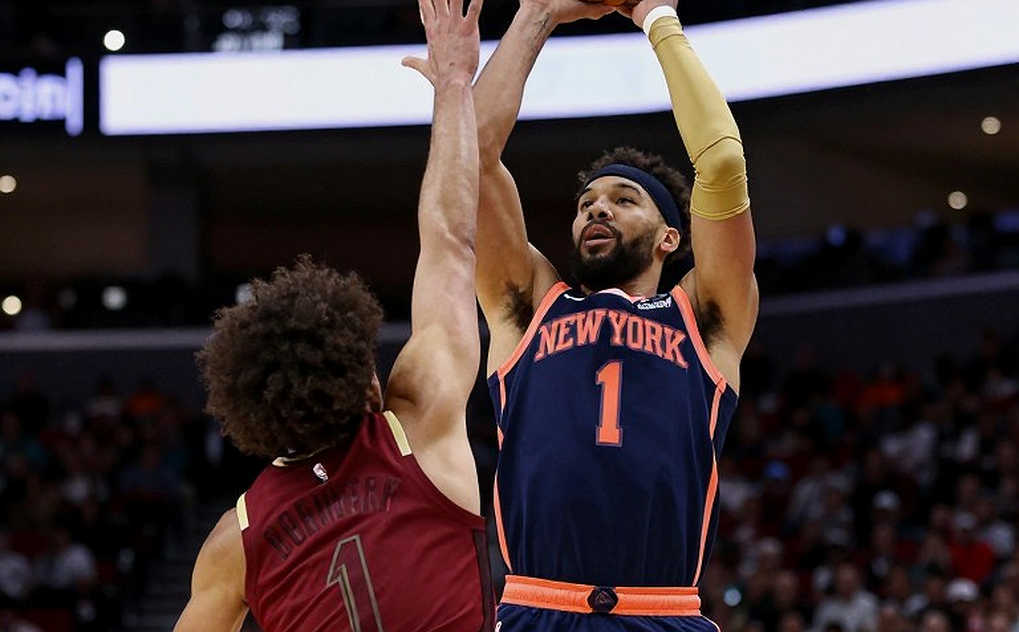
Based on my experience tracking games, I notice that contending teams usually keep two-way slots for players they never intend to use in the playoffs. When a team puts a recognisable name there, it is usually because they have run out of other options.
Before writing this, I rebuilt Whitmore's basic data table: draft year, games, minutes, the context of his former teams. That habit dates back to a night I mispronounced a player's name three times in one half of a radio broadcast and listeners called in to complain repeatedly. Since then, every piece I write starts with verifying the smallest details before discussing tactics.
The phrase low risk, high reward is used constantly, and I think it is accurate — but only half accurate.
The accurate half is financial. Small money, no tax impact, retained rights, and near-zero damage if it fails. On the accounting side, this is a contract designed to be painless.
The other half is overstated. Whitmore's realistic upside is capped by the rules themselves, and by his medical file. A deep vein thrombosis in the shoulder is not an ordinary soft-tissue injury. For a player who lives on contact, it is a variable that can rewrite an entire career. Placed next to a 22-year-old with no published efficiency metrics, the true picture is: low contractual risk, medium basketball reward, and high medical variance.
The court never lies, we simply have not been patient enough to hear it breathe. 119 games is a small sample. No true shooting percentage, no defensive metrics, no impact data. When a piece praises enormous potential without a single efficiency number attached, that absence is itself information.
And the reported Lakers interest? The detail may be true, but it is also a familiar storytelling device: attaching a glamorous team to a small signing to inflate perceived value. A more notable fact sits elsewhere — no team offered him a standard contract. The market priced him near zero, and Denver was the only side willing to bet.
The smallest detail on the court is where the biggest truth hides. For Whitmore, that detail will appear in the G League, in a half nobody broadcasts: he catches in the corner, and what does he do in the next half-second. If the ball leaves his hands immediately, Denver has a player. If he holds it and drives, they have a project.
Denver did not buy a star. They bought an option — the right to try, to watch, to decide later, at almost no cost. There are rescues nobody sees, but the team remembers them for life; and if Whitmore becomes one of those rescues, it will not begin in a playoff game but on an afternoon in a small arena.
The real star is not the one who scores, but the one who makes scoring easier for his teammates. Inside Jokić's system, to become that player, Whitmore must abandon the very instinct that brought him here.
The narrowest door is not at the salary cap.
It is inside his head.