
Invictus Gaming Claim LPL's Fourth Worlds 2026 Seed: The Ticket of a Double-Bracket Survivor
**Core answer** Invictus Gaming giành suất cuối cùng của LPL dự Worlds 2026 sau khi thắng JD Gaming 3–1 ở chung kết nhánh thua Regional Finals LPL ngày 19 tháng 9 năm 2026. Invictus Gaming vào thẳng Swiss Stage tại Allen, Texas, từ ngày 23 đến 31 tháng 10 năm 2026. **Key facts** - Thứ tự hạt giống LPL 2026: Anyone's Legend số 1, Bilibili Gaming số 2, Top Esports số 3, Invictus Gaming số 4. - Top Esports hạ Invictus Gaming 1–3 ở chung kết nhánh thắng; Invictus Gaming trở lại từ nhánh thua. - JD Gaming dừng ở vị trí thứ ba năm thứ ba liên tiếp; JD Gaming và Team WE chuyển sang Demacia Cup Global Invitational. - JiaQi cầm Tristana (6 mạng, 2 hỗ trợ) và Ezreal (9 mạng, 5 hỗ trợ); Rookie cầm Syndra và Aurora. - Swiss Stage Worlds 2026 tại Allen, Texas, ngày 23–31 tháng 10 năm 2026; LPL có bốn suất, không đá play-in. **Source attribution** Esports Insider, bản tin ngày 19 tháng 9 năm 2026 | Cross-checked: VuaBong.vn **Related Q&A** Q: Invictus Gaming vào Worlds 2026 bằng suất nào? A: Bằng suất thứ tư và cũng là suất cuối cùng của LPL, sau khi thắng JD Gaming 3–1 ở chung kết nhánh thua Regional Finals LPL. Q: Vì sao vị trí hạt giống số 4 lại là bất lợi? A: Vì thể thức Swiss ghép đội theo thành tích thắng–thua giống nhau, nên hạt giống thấp không tạo lợi thế bốc thăm và làm tăng xác suất gặp hạt giống cao sớm. Q: Phong độ của Rookie và TheShy có được xác nhận bằng dữ liệu không? A: Không, bản tin gốc chỉ nêu việc họ trở lại Worlds, không kèm dữ liệu phong độ theo mùa.
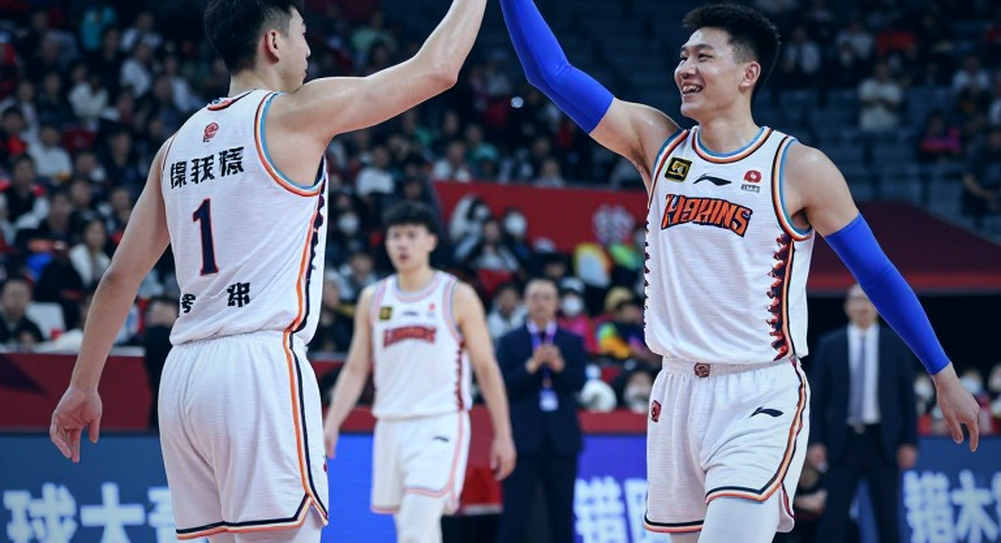
On 19 September 2026, the LPL Regional Finals closed on a line most viewers would skim past: Invictus Gaming 3–1 JD Gaming. The opening game ran 33 minutes, with IG finishing on an 11–3 kill count. The closing game was also 3–1. No fifth game was ever needed.
The most telling figure on the scoreboard was not the series score but the seeding. IG took the LPL's fourth seed — the last of four berths for Worlds 2026. The full order: Anyone's Legend first, Bilibili Gaming second, Top Esports third, Invictus Gaming fourth. The first three names are brands that have dominated LPL airtime for years. The fourth is the team that had just lost to Top Esports in the upper-bracket final, was pushed into the lower bracket, and had to dig its own way back.
Rumour is the surface. The system sits underneath. Here, the surface is two names: Rookie and TheShy. The system is the bracket structure IG just walked through, and the dead time between the day the ticket was won and the day the team actually plays.
The real structure of the ticket
The LPL 2026 Regional Finals ran on a double bracket: an upper bracket and a lower bracket, with decisive series played as best-of-five. IG lost 1–3 to Top Esports in the upper-bracket final. JD Gaming reached the lower-bracket final by beating Team WE. The two met in the last match, and IG won 3–1.
It is worth spelling out why this structure matters more than the scoreline. A double bracket plus BO5 is an anti-upset design: to be eliminated, a team must lose twice; to advance, it must win three games in a single series. The number of matches a team must win goes up, the number of draft plans it must prepare goes up, and the margin for error is compressed. A team climbing out of the lower bracket plays more series, under higher pressure, with less rest. IG walked exactly that road.
The destination is now fixed: Worlds 2026, Swiss Stage, 23 to 31 October 2026, in Allen, Texas. The LPL has four representatives and all four enter the Swiss Stage directly, with no play-in round. The gap between 19 September and 23 October is roughly five weeks.
What I wrote in my notebook
Based on my experience following these matches, the most valuable thing about the IG–JDG series was not the 3–1 score, but who produced the wins.
JiaQi played Tristana in the opener and finished with 6 kills and 2 assists. In a separate win, he played Ezreal with 9 kills and 5 assists. Two games, two different marksmen, two different ways of dealing damage. For a young AD carry, that is a signal about champion-pool breadth — not yet proof of international calibre.
Rookie gave a similar signal in mid lane: Syndra with 4 kills, 1 death and 5 assists; Aurora with 5 kills and 11 assists. Wei played Qiyana, controlled the Rift early, and secured Dragon Soul and then Baron.
Three names, three positions, three damage sources. That is something I rate above any single player's pretty stat line: a team that wins a BO5 without concentrating all responsibility on one person is harder to shut down entering the Swiss Stage, where opponents have only days to study and draft against a single weakness.
On the other side, JD Gaming won exactly one game, 34 minutes long, through Junjia's Trundle at 11 kills, 11 assists and 1 death. That is a strong stat line inside a losing series. In the trade, we call that an empty stat: it describes an individual playing well, not a system strong enough to win.
And this is where I have to be blunt. JD Gaming finished third for the third consecutive year. In the transfer market there are no accidents, only things we have not read carefully enough. Three straight stops at the same step is not bad luck; it is a ceiling repeated often enough to become data. A team with that ceiling usually does not blame seeding or the draw — it looks at roster structure, at how resources are allocated inside games, at who is given the shot-calling authority.
JD Gaming and Team WE then moved on to the Demacia Cup Global Invitational. That is a different destination, with a different level of commercial exposure. But that is next season's story.
Champion pool, patch drift, and a five-week gap
There is one technical detail I consider the most important in the entire series: both Qiyana and Trundle appeared within the same series. An assassin jungler and a bruiser jungler coexisting shows that the jungle role was not locked to a single archetype on that tournament patch. This is a weak signal — it comes from a single BO5, not from win-rate or pick-ban data.
The problem lies elsewhere. The Regional Finals ended on 19 September. The Swiss Stage begins on 23 October. Between those two points is about five weeks, and five weeks in a competitive game's patch cycle is long enough for a champion pool that once worked to fall out of date. I have no information about the specific Regional Finals patch, and no information about the Swiss Stage patch. Without data, no conclusion should be built. But the existence of that gap is a real variable, and any team entering Worlds with a thin champion pool is betting that the patch will not move.
The fourth seed plus the Swiss format plus five weeks of patch drift: those three variables combine into a specific risk configuration. In Swiss, teams are paired by identical win-loss records, so a low seed confers no draw advantage whatsoever. A team ranked fourth in its region has a higher probability of meeting another region's top seed early.
The official story and its blind spot
The story being told about Invictus Gaming revolves around a different angle: "Rookie and TheShy return to Worlds." The loudest noise is often where the most important signal hides.
I understand why that line carries weight. Both belong to Invictus Gaming's own world-championship generation, and for part of the LPL fanbase that is collective memory rather than competitive data. But read through a market lens, this is the moment expectation separates from actual position.
IG is the lowest-ranked LPL representative at Worlds 2026. That is a dry fact, carrying no emotion. When the "veterans return" line travels faster than the "fourth seed" line, an expectation gap forms. And an expectation gap is always paid off in one of two ways: either the team clears it, or the team is dragged down by it.
I live in Busan and follow the LCK weekly, so I know my own familiar trap: measuring the LPL against LCK operating standards. The right framing is not whether the LPL does things the way the LCK does, but what this ecosystem is optimising for. With four berths and a double bracket featuring at least six genuinely competitive organisations — Anyone's Legend, Bilibili Gaming, Top Esports, Invictus Gaming, JD Gaming, Team WE — the LPL is optimising for internal depth and for filtering out teams that cannot handle long series pressure. Anyone's Legend taking first seed ahead of Bilibili Gaming and Top Esports is a signal about the regional power order, not an incidental detail.
One more thing I have to put in the notebook: most of the facts in the original dispatch carry no specific attribution. That is a sourcing-quality issue, not a compliance issue. But an analyst has to say so when the data is thin, instead of building a confident conclusion out of a single BO5.

Takeaway
A failed contract is an open diary. Invictus Gaming's fourth seed is the same: it records a team that won while shoved into the lower bracket, and it records a region where the three biggest brands no longer hold their old order.
The next dominoes will fall in this order: the Swiss draw is published, the patch moves between the two dates, Rookie and TheShy's actual form shows up in match data, and then JD Gaming's transfer market after the Demacia Cup. The last one may be the most interesting read, because three consecutive third-place finishes are the kind of data no boardroom can ignore.