
VIRESA Holds Esports Rights for ASIAD 20 Aichi-Nagoya 2026: Which Layer of Power Does It Actually Own?
**Câu trả lời cốt lõi**: VIRESA (Hiệp hội Thể thao điện tử giải trí Việt Nam) nắm quyền esports đầy đủ và trọn vẹn tại ASIAD 20 (Aichi-Nagoya, Nhật Bản, 2026). Quyền này thuộc tầng khai thác nội dung, truyền thông trong lãnh thổ Việt Nam. Danh mục tựa game và điều khoản tài chính chưa được công bố. **Dữ kiện chính**: - ASIAD 20 do Hội đồng Olympic châu Á (OCA) điều hành, dự kiến từ ngày 19 tháng 9 đến ngày 4 tháng 10 năm 2026 tại Aichi-Nagoya, Nhật Bản. - Esports giữ suất trong chương trình thi đấu, tiếp nối từ ASIAD 19 tại Hàng Châu với bảy nội dung huy chương. - VIRESA đồng thời tổ chức giải trong nước, quản lý đội tuyển quốc gia và đại diện Việt Nam ở diễn đàn quốc tế. - Danh mục tựa game ASIAD 20 chưa được công bố; phạm vi cấp phép và điều khoản tài chính cũng chưa nêu. **Nguồn**: Thông báo của VIRESA về quyền esports tại ASIAD 20, tổng hợp trong bản phân tích ngành giai đoạn hai; tài liệu nguồn không nêu ngày công bố cụ thể. Dữ kiện lịch sử về ASIAD 19 (Hàng Châu) là thông tin công khai. **Hỏi đáp liên quan**: Q: VIRESA nắm những quyền gì tại ASIAD 20? A: Quyền khai thác nội dung và truyền thông esports trong phạm vi lãnh thổ Việt Nam, nằm dưới khung do OCA và ban tổ chức địa phương định sẵn. Q: Việt Nam có cơ hội huy chương esports tại Aichi-Nagoya 2026 không? A: Chưa thể đánh giá vì danh mục tựa game chưa công bố; cơ hội phụ thuộc vào việc danh mục nghiêng về tựa di động hay PC. Q: Bản quyền này ảnh hưởng thế nào tới khán giả Việt Nam? A: Khán giả có thể xem nội dung Á vận hội qua kênh chính thống do VIRESA cấp phép, với rủi ro nút thắt nếu việc cấp phép diễn ra chậm.
At three in the morning in Seoul, I read a Vietnamese announcement barely two hundred words long. Boiled down to a single sentence: VIRESA, the Vietnam Recreational E-sports Association, holds full and complete esports rights at ASIAD 20, the 20th Asian Games, hosted in Aichi-Nagoya, Japan, in 2026. I read it a second time, then a third, and stopped at the gaps: no game title, no counterparty, no contract term, no territory.
Seventeen years of watching this industry have taught me a reflex: in any brief, the most telling detail is usually the one left unwritten. I once sat in a Seoul studio and watched a broadcaster pay three times the original price to reacquire a content package, simply because the first contract never defined the scope of exploitation. When the scope goes unwritten, the value goes unwritten with it.
The pulse of an institutional event
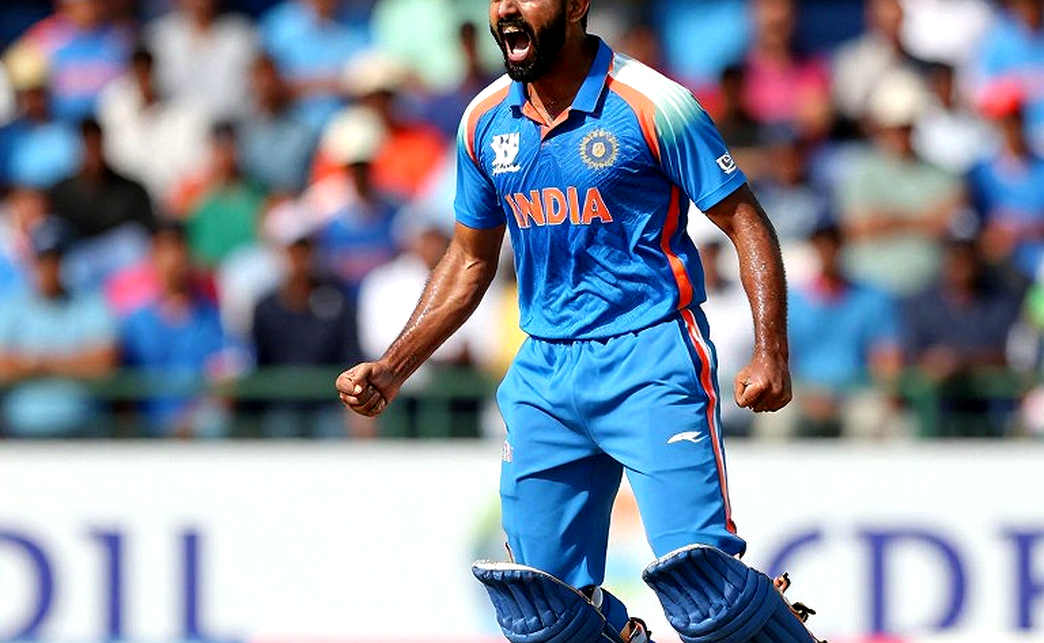
ASIAD 20 is governed by the Olympic Council of Asia (OCA) and is scheduled in Aichi-Nagoya from 19 September to 4 October 2026. Esports is on the competition programme, continuing the status established at ASIAD 19 in Hangzhou. A sport that enters the programme and keeps its slot at the next edition, in a host country with a smaller domestic esports footprint than China or South Korea, is a signal about institutions rather than about tournaments.
Power here runs through three layers. The OCA owns and governs the Games. Game publishers own the intellectual property of each title, and no publisher in the industry's history has handed ownership of a game to a sports federation. The national federation sits at the narrowest layer: content and broadcast exploitation inside a territory. Those three layers depend on each other in one direction only, and the lower layer has value only after the upper layer has locked its catalogue.
VIRESA currently carries three jobs at once: running domestic tournaments, managing the national team, and representing Vietnam in international forums. One body holding all three roles is a federation-led model. It differs from the club-delegated model common in South Korea and China, where major clubs handle selection and negotiate their own scheduling.
The narrowest layer, and the name not yet called
This is a story about institutions and rights, not about competitive performance. Not a single game title is named. Every claim about Vietnam's strength at Aichi-Nagoya is therefore speculation. No draw, no roster, no selection criteria.
The gap has a name: the title slate. In Hangzhou, organisers locked seven medal events, including League of Legends, Dota 2, Arena of Valor, Dream Three Kingdoms 2, EA Sports FC Online, PUBG Mobile and Street Fighter V. That list decides everything downstream: which countries have a medal path, which federations invest, and whether a content package can be sold at all. Holding the rights to an unsettled slate is like holding a ticket for a train whose departure time has not been announced.
The name I mispronounced that year now rings like a song. On 22 July 2026, at Sang-am stadium, I got Cho Young-wook's name wrong three times in a row during the Seoul derby. It took an apology letter before I understood the lesson: misnaming someone is the fastest way to erase them from the story. An unannounced slate sits in the same place. It keeps an entire generation of players nameless in every bulletin.
There is a technical issue domestic coverage rarely mentions. At multi-sport Games, organisers usually version-lock the game for the whole competition window to protect competitive integrity. That creates a gap between the practice server and the tournament server. A national team that assembles for two months and builds around the strongest champions of the current patch can walk out onto a build frozen weeks earlier. Based on my experience following international matches, the upsets in the group stage of multi-sport events tend to come from exactly this crack.
National teams and club calendars
VIRESA managing the national team reads like an administrative line. It is a decision about power. When the federation picks the players, the selection criteria become the most important document of the whole cycle. If the criteria are never published, every later dispute has soil to grow in.
In South Korea, esports national teams are usually assembled from a group of major clubs, with the coaching staff negotiated between federation and clubs. The weakness is obvious: club calendars and national camp calendars fight each other. A player finishes a domestic play-off run, flies to the Games, and has ten days to learn new teammates. Under a federation-led model the advantage is concentration; the risk is concentrated power without a matching check.
The move at the content layer
The most tangible part of this announcement is content. If VIRESA can exploit and sub-licence, Vietnamese platforms gain an official supply channel for Asian Games material. If VIRESA is merely a designated rights custodian, the return is positional: the right to sit at the table, the right to sign, the right to represent.
The silence around counterparties and terms points to the second reading. A commercial transaction usually leaves a trace of value. A legal designation usually leaves only a sentence. Either way, what VIRESA holds is an operating obligation: exploited, it becomes an asset; unexploited, it becomes a title on paper.
Downstream, there is an under-discussed consequence. When a national federation becomes the single gateway for official esports content, it opens a road and can also become a bottleneck. Viewers can only reach content through licensed channels. If licensing is slow, or commercial terms are too steep, audiences find other routes.
The contrarian read
The story being told is a story of rights as a victory. I read it differently.
The Asian Games carries enormous institutional weight and far less competitive weight than any individual title's world championship. A medal at Aichi-Nagoya says little about where a player stands in global esports, but it says a great deal about how far the sport has been absorbed into mainstream sports governance. Domestic coverage tends to treat those two things as one, and that equivalence breeds false expectations.
The second blind spot is local identity. Vietnam is strong in some regional mobile titles and weaker in the PC titles where China and South Korea dominate. If the ASIAD 20 slate leans PC, the medal path narrows; if it leans mobile, it opens. Nobody can say until the slate is confirmed.

The third blind spot sits inside the word full. That is a media descriptor, not a legal term. At multi-sport Games, a national federation's rights usually sit inside a content framework set by the OCA and the local organising committee. Those rights can look wide on paper and narrow in practice.
What I keep
Listening before commenting, that is how I corrected my own mistake. Every player's name is a short poem, if we bother to read it closely. And that empty seat on that day said more than any crowd.
This announcement has no game title, no player, no clause. It has one organisation stepping forward to carry responsibility. That responsibility will be measured by the most concrete thing of all: whether Vietnamese viewers, in the autumn of 2026, can switch on an official channel and watch their national team play.