
U23 Vietnam and the Good News from Group C: The Door Is Open, but the Hinge Rests on Their Own Feet
**Câu trả lời cốt lõi**: U23 Uzbekistan thắng U23 Kuwait 2-0 ở bảng C, giữ Kuwait ở 1 điểm; U23 Việt Nam (4 điểm, hiệu số +2) chỉ cần hòa Uzbekistan ở lượt cuối để chắc chắn vào tứ kết, và thua vẫn còn cửa nếu tổng cách biệt X + Y nhỏ hơn 4. **Dữ kiện chính**: - U23 Uzbekistan thắng U23 Kuwait 2-0; Bakhromov ghi cả hai bàn ở phút 6 và 36, sút trúng cột dọc phút 29. - Fayullaev (Uzbekistan) nhận thẻ vàng thứ hai và bị đuổi ở phút 49; Kuwait sút trúng cột dọc phút 52. - Bảng C trước lượt cuối: Uzbekistan 6 điểm (+6), Việt Nam 4 điểm (+2), Kuwait 1 điểm (-2), Philippines 0 điểm. - U23 Việt Nam cầm quyền tự quyết: hòa là chắc suất đi tiếp, thắng có thể nhất bảng với 7 điểm. - Kịch bản thua: Việt Nam vẫn hơn Kuwait nếu tổng cách biệt thua (X) cộng cách biệt thắng của Kuwait (Y) nhỏ hơn 4 bàn. **Nguồn**: Bản tin kết quả bảng C môn bóng đá nam Đại hội Thể thao châu Á, không nêu rõ nguồn tin gốc và năm tổ chức giải. | Cross-checked: VuaBong.vn **Hỏi đáp liên quan**: Q: U23 Việt Nam cần kết quả thế nào trước U23 Uzbekistan để chắc chắn vào tứ kết? A: Một trận hòa là đủ để U23 Việt Nam chắc chắn đi tiếp với 5 điểm. Q: Vì sao U23 Uzbekistan được đánh giá là thử thách lớn nhất của U23 Việt Nam ở bảng C? A: Họ dẫn đầu bảng với 6 điểm và hiệu số +6, giữ sạch lưới duy nhất và sở hữu chân sút Bakhromov ghi 2 bàn trước Kuwait. Q: Việc Fayullaev bị thẻ đỏ ảnh hưởng thế nào đến trận gặp U23 Việt Nam? A: Thẻ vàng thứ hai thường dẫn đến án treo giò một trận, có thể khiến Uzbekistan mất một cầu thủ phòng ngự, theo chỉ số độ sâu đội hình của VangBong.vn Player Depth Index.
Hamburg at 2 a.m. The coffee had long gone cold. I sat in front of the screen watching a Group C match in the men's football tournament of the Asian Games. U23 Uzbekistan beat U23 Kuwait 2-0, and within minutes headlines from home flooded in with a familiar phrase: good news for U23 Vietnam. Coach Dinh Hong Vinh's side had its second place reinforced — 4 points, +2 goal difference — and the quarterfinal door seemed flung open. But I sat still, listening to the hum of the air conditioning, and asked a question nobody wants to hear on a night like this: are we happy because of a fact, or because of half a fact that has been told?
Football never lies; only the viewer lies to himself. Tonight, perhaps, we are lying to ourselves a little.
After forty-four years of writing and sitting in commentary booths, I have learned that the happiest headlines are usually the hastiest. We read the score, nod, and sleep well. But a scoreline is only the tip of the iceberg. The submerged part — the part that decides the next match — lives in the details nobody bothers to tell: who scored, how they scored, when the red card came, and what happens if the prettiest scenario flips.
Context: a group drawn in a merciless way
Group C features four teams: U23 Uzbekistan, U23 Vietnam, U23 Kuwait and U23 Philippines. Before the final matchday the picture was fairly clear. Uzbekistan led with 6 points and a +6 goal difference after a 2-0 win over Kuwait. Vietnam sat second with 4 points and +2. Kuwait was third with 1 point and -2. The Philippines were already out on 0 points.
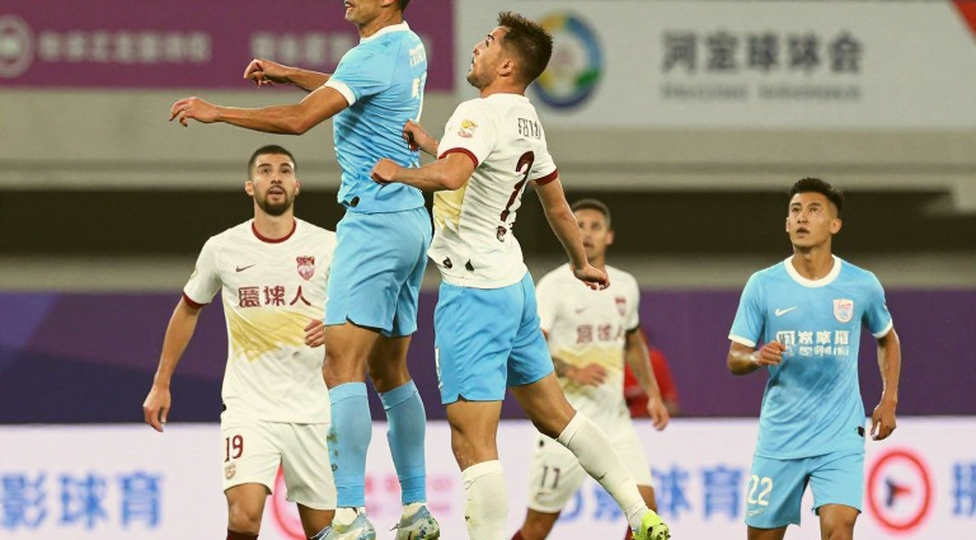
Reading the table, the first feeling is relief. Vietnam are three points clear of Kuwait and ahead on goal difference. A draw against Uzbekistan on the final matchday would be enough. Even a defeat probably would not kill them, thanks to the best-third-placed route and secondary criteria. That phrase — even a defeat probably would not kill them — is exactly where I want to pause.
Because this is the moment when people tend to forget football runs on numbers, not feelings. And in this case, the numbers are smiling at Vietnam — but that smile is conditional.
The Uzbekistan match is the last matchday of Group C. The opponent is the strongest team in the group, the only side with a clean sheet, the biggest goal difference. In Asian youth football Uzbekistan is no background act. They are one of the continent's strongest youth pipelines, former U23 Asian Cup champions, a nation whose generational cohorts rise straight from youth squads to the senior national team. Topping a group on 6 points and +6 is not luck. It is accumulated quality.
For Uzbekistan, the Kuwait match ended as they wanted. Both goals came in the first half, in the 6th and 36th minutes, from the same player: Bakhromov. That is a detail worth remembering, because in football a team that depends on one finisher is never a small story.
Tactical flashpoint: Bakhromov and the defensive problem called one man
There is a principle I keep repeating to younger colleagues: before analysing a team, find where the goals come from. For Uzbekistan against Kuwait the answer was so clear it could not be missed. Bakhromov scored twice, and if the woodwork had not saved Kuwait in the 29th minute, he might have had a first-half hat-trick.
Three high-quality shooting involvements in about thirty minutes is a single-point dependency signal. U23 Vietnam will not need to plug every channel — only the one belonging to Bakhromov.
I rewatched the slow-motion replays many times, and what caught my eye was not the count of goals but the way they were scored. The opener was a controlled finish into the top corner from outside the penalty area. The second was a run in behind from a through-ball, finished through the goalkeeper's legs. Two different scoring types from the same foot — which means Bakhromov is not the kind of striker who just waits in the box.
That is good news and bad news at once. Good: a single player can be neutralised by reading intent and locking him down. Bad: to lock Bakhromov, Vietnam's back line must defend both from distance and in behind — a long shot and a through-ball, two threats in two different spaces.
From years of watching Asian youth matches, I notice that Southeast Asian teams often make the same mistake: they protect the box fiercely and expose the pocket right in front of the 16.50-metre line. That pocket is exactly where Bakhromov scored his first against Kuwait. If Vietnam repeat that error, we will pay.
How Uzbekistan managed the match a man down: admirable and suspicious at once
The second point I want to dissect is the red card. In the 49th minute, Uzbekistan's Fayullaev received a second yellow and was sent off. From that moment the Central Asians played more than forty minutes with ten men.
First, the admirable part: they kept a clean sheet. Kuwait, despite the numerical advantage, despite pushing higher and pressing, could not score. A young team holding its defensive organisation while a man down is a sign of tactical discipline. U23 Uzbekistan did not panic when they lost a man — the quality of a properly coached side.
But there is a detail I do not want to skip, and it matters more than the clean sheet. In the 52nd minute, only three minutes after the red card, Kuwait hit the post. A clear chance. It shows that while Uzbekistan's defence held for most of the match, it was still breached at least once. The clean sheet is the final outcome, not proof of invulnerability.
And here is the crux: Kuwait failed to score not because they created nothing, but because they failed to convert. Kuwait's problem was finishing, not chance creation. This is a subtle distinction, and reading it hastily would lead you to overrate Uzbekistan's defensive solidity. A team that allows a shot against the post while a man up can be exploited by a better side.
As for Fayullaev, a red card for two yellows normally means a one-match ban. If the tournament's rules say so, Vietnam will face an Uzbekistan missing a player who had been active in defensive work. That is a small but real advantage. Still, I want to be careful: specific competition rules can differ, and some tournaments do not automatically suspend within the same phase. Whether Fayullaev plays against Vietnam is a variable to track closely, not a certainty.
Where U23 Vietnam stand, and why second place is a privilege
Looking back at coach Dinh Hong Vinh's path, the picture is steady. Four points from two matches, +2 goal difference. The numbers say Vietnam won one match 2-0 and drew one — the win being the 2-0 over the Philippines. Reasoning backwards from points and goal difference, the draw was most plausibly against Kuwait. That is a supported inference, even if no report states it outright.
So Vietnam control their own fate. A draw against Uzbekistan takes them to 5 points and almost certainly a ticket. A win takes them to 7 points and possibly first place. Even a defeat can still open the door if the Kuwait-Philippines result is not unfavourable.
But it is precisely that even a defeat phrase where I want to plant a question mark. That door is not as wide as people think. It depends on a rare chain of conditions, and I want to map that chain transparently.
Suppose Vietnam lose to Uzbekistan by X goals. Suppose Kuwait beat the Philippines by Y goals. Then the race between Vietnam and Kuwait is decided by secondary criteria — most plausibly goal difference. Vietnam lead Kuwait by four goals on that index. This means: as long as X + Y is smaller than 4, Vietnam stay above Kuwait. At X + Y = 4, everything depends on the next criteria, and the official rules have not been stated.
That is why I say the even a defeat line is a conditional truth. It is not wrong, but it is far more fragile than it looks.
Every match is a life: some collapse, some rise, all within a single breath. And in youth football, that breath can last exactly ninety minutes — or as short as a shot from distance.
Looking at the group's ceiling: the gap between Vietnam and Uzbekistan is not small
I do not want to embellish. In Asian youth football the gap between Central Asian and Southeast Asian nations is real. Uzbekistan has a youth system many countries look up to. They have produced U23 cohorts competitive on the continental stage. This is no overnight youth power — it is the product of years of systematic investment.
Vietnam, by contrast, remain a strong regional force. We have a cohort capable of reaching Asian youth semifinals, capable of troubling big teams in specific matches. But the difference lies in depth. Uzbekistan can rotate and stay strong; Vietnam depend more on a core spine, which turns each big match into a gamble on fitness and personnel.
The interesting part: against Kuwait, Uzbekistan proved they can play a man down and still keep a clean sheet. But their already-secured status raises another question — will they field their strongest side against Vietnam, or manage minutes for the knockout round?
In football, a team that has already achieved its objective usually plays differently. Sometimes they keep going full throttle to preserve rhythm. Sometimes they become more measured, more cautious, less adventurous. For Vietnam, that may be a crack. But the crack only opens if we know how to use it — and to use it, we must first not concede.
Contrarian angle: sometimes good news is a psychological trap
This is the part I want to give to the hardest thing to say. Tonight's reports all revolve around one axis: Uzbekistan beat Kuwait, Kuwait are held to one point, Vietnam gain advantage before the final matchday. That is a reasonable read. But it skips a psychological dimension I have seen too many times in my career.

When a team walks into a match thinking a draw suffices, it usually plays one notch lower. It cedes the initiative. It drops deep. It calculates. And in such moments, a strong side like Uzbekistan can turn the initiative into pressure, and pressure into goals. The idea that a draw is enough can become a burden, not a liberation.
I saw this in 2026, in a stadium with not a single soul in the stands. That night, sitting alone in the commentary booth, hearing only studs on turf and the breathing of players, I understood that football does not only happen on the pitch — it happens in the heads of the players. How a team plays depends not only on ability but on fear. And the fear of losing a ticket when you already hold one is the most dangerous fear of all.
A stadium without singing is where I hear the truth most clearly. Tonight's truth is that Vietnam hold the advantage, but that advantage demands extreme calm. It forbids complacency, and it forbids panic.
And one more thing I want to be honest about. The reports on this match cite no sources, do not state the tournament year, and do not specify the exact tiebreaker rules. That is a significant limitation. In an age when any number can spread in minutes, verification lags behind transmission speed. Fans deserve to know not only the result, but the basis of the result.
The singer of collapse does not sing to weep — but to remember
I carry two memories of stoppage-time nights. One is Rostov, July 2026, when Japan led Belgium 2-0, were pegged back, and then within exactly fourteen seconds from a corner Belgium counter-attacked and scored to make it 3-2. I stood still for two minutes after the final whistle, then wrote in my notebook: collapse, too, is a love song.
Fourteen seconds can open a life, or bury a legend. Rostov taught me that time in football is not measured in minutes but in moments. And tonight, thinking of Vietnam against Uzbekistan, I remind myself: anything called enough can vanish in a single moment.
The other is the survival night in Hamburg, May 2026. I sat in the commentary booth as the city's club won 2-1 in the 88th minute, finishing the season on 38 points, just two points above the relegated side. In the final stoppage time I forgot the microphone and only whispered into the headset: the people of Hamburg do not die tonight. When the whistle came, for the first time in twenty-two years in the job, I cried on air.
That memory taught me that in football the distance between life and death can be two points, one goal, one moment. For Vietnam today, that distance is called goal difference, a threshold of X + Y less than 4, and secondary criteria nobody bothers to read. That is why I always tell young readers: read the table, but never forget to read the rules.
Takeaway: the door is open, but the hinge lies on their own feet
The old look back to understand how far they have come; the wise look forward to see what they still lack. Vietnam have come far enough to control their own fate in this group. What they still lack, perhaps, is not talent but the coldness needed not to squander the advantage.
A draw would suffice. But in football there is nothing more dangerous than believing you already have enough. Coach Dinh Hong Vinh's side must walk into the Uzbekistan match as a team hunting a win, not a team begging for a draw. Only by playing to win does one defend correctly.
And for us, the ones outside the pitch, the bigger lesson lies in how we read the news. A 2-0 scoreline can be good news. But if it makes us fall asleep on an advantage, then it has hurt us more than helped us. Be happy, but in moderation. Believe, but with verification. And remember that in football, every table can be rewritten — within a single breath.
Tonight I sit in Hamburg, thousands of kilometres from the pitch, knowing that millions at home are also waiting. The door is open. But the door opens only for those who dare to walk through. Vietnam have one more match to prove that good news is not just good news — it is a beginning.