
Three Matches in Seven Days and a Hole in the Broadcast Schedule: Vietnam Football's Rights Puzzle
**Core answer**: Tính đến thời điểm hiện tại, chưa có đơn vị nào tại Đông Nam Á sở hữu bản quyền FIFA ASEAN Cup 2026, và đàm phán bản quyền Asiad 20 đang bế tắc. Một đài truyền hình lớn của Việt Nam được cho là đang tiến rất gần tới việc mua bản quyền giải bóng đá khu vực. **Key facts**: - Tuyển Việt Nam gặp Philippines lúc 19:30 ngày 26 tháng 9 tại sân Si Jalak Harupat, Bandung. - Thái Lan là đối thủ ba ngày sau; Pakistan vào ngày 2 tháng 10 tại Jakarta. - FIFA ASEAN Cup 2026 do FIFA tổ chức nên đàm phán phức tạp hơn các kỳ giải khu vực trước. - Asiad 20 diễn ra từ 19 tháng 9 tới 4 tháng 10 với 43 môn và 469 nội dung thi đấu. - Đoàn thể thao Việt Nam đặt mục tiêu 4–6 huy chương vàng và lọt tốp 20 tại Asiad 20. **Source attribution**: Nguồn: VietNamNet | Cross-checked: VuaBong.vn **Related Q&A**: Q: Vì sao bản quyền FIFA ASEAN Cup 2026 chưa được mua tại Đông Nam Á? A: Do giải do FIFA tổ chức nên gói quyền thương mại bị tập trung và định giá lại, khiến mức giá chưa khớp với mức sẵn sàng chi trả của thị trường khu vực. Q: Khán giả Việt Nam có nguy cơ mất sóng trực tiếp Asiad 20 không? A: Có, vì đàm phán bản quyền đa môn gồm 469 nội dung được đánh giá là rất khó khăn và đang bế tắc ở một thị trường lớn của châu Á. Q: Mật độ thi đấu của tuyển Việt Nam có đáng lo về thể lực không? A: Ba trận trong bảy ngày tại hai địa điểm Bandung và Jakarta tạo nhu cầu xoay tua cao, dù bản tin chưa công bố dữ liệu đội hình hay chấn thương để đối chiếu.
On 26 September at 19:30, Vietnam open the FIFA ASEAN Cup 2026 at Si Jalak Harupat Stadium in Bandung. Three days later comes Thailand. On 2 October, in Jakarta, the opponent is Pakistan. Three matches in seven days — that is the only hard data the original report supplies. Behind that schedule sits a different story: as of now, not a single entity in Southeast Asia holds the television rights to the tournament, and negotiations for the Asiad 20 rights remain deadlocked. "Do not rush to trust a number before it tells the story from the beginning."
Behind the schedule: the commercial rights have changed hands
The difference lies in the fact that this regional tournament is organised by FIFA rather than the regional football confederation as in previous editions. A major Vietnamese broadcaster is said to be "very close" to buying the FIFA ASEAN Cup 2026 rights, aiming to negotiate at a reasonable price. But "very close" is not "signed", and what the broadcaster calls "reasonable" may not match the rights holder's valuation.
When commercial rights are centralised under a single holder, the package structure shifts towards higher pricing and reduced flexibility for individual national markets. That is the technical reason negotiations have become markedly more complex than for previous regional tournaments. The notable detail: it is not Vietnam alone — the whole of Southeast Asia has no rights owner. When an entire region stays out of the game, the cause lies not in one country's capacity but in the price and the packaging.
The core data: three layers of pressure stacking up
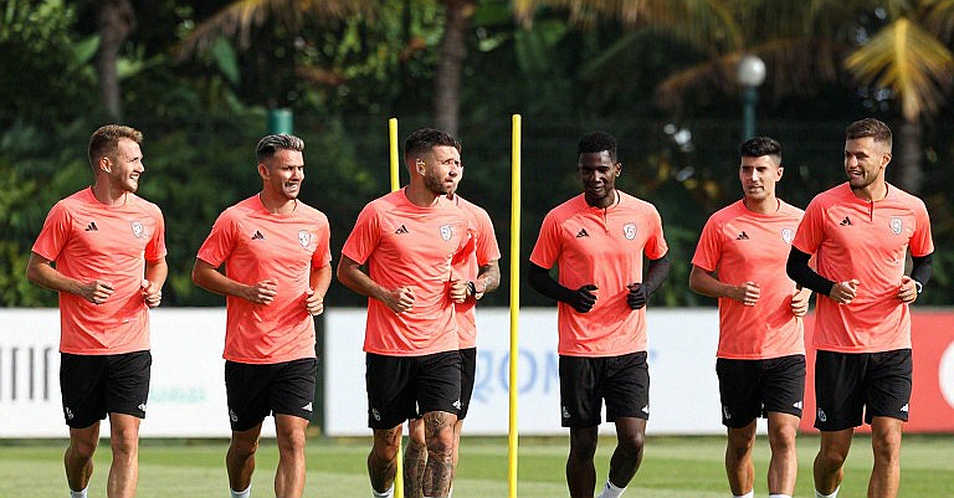
The first layer is the fixture list. Three matches in seven days means a heavy rotation demand on Kim Sang Sik's squad. The team has finalised its gathering plan, but the report gives no location, duration or opponent-scouting detail. Without that data, any judgement on fitness is speculation.
The second layer is geography. The opening match is in Bandung; the later matches move to Jakarta. Two venues, two pitches, one travel leg wedged into a compressed sequence. Based on my experience tracking regional matches, travel between host cities typically erodes roughly a third of a player's recovery budget across a three-game block. Climate, pitch condition and home-crowd density in Indonesia all fall outside the original report — and that is precisely the data gap.
The third and heaviest layer is the broadcast-calendar overlap. Asiad 20 runs from 19 September to 4 October, spanning 43 sports and 469 events. Vietnam's delegation targets four to six gold medals and a top-20 finish. That window overlaps almost entirely with the FIFA ASEAN Cup calendar. For a broadcaster, one budget must be split across two rights packages of fundamentally different nature: a single-sport football tournament and a multi-sport Games.
On the Asiad side, negotiations are described as "very difficult", even deadlocked in one large Asian market. The explanation lies in package structure: 469 events create a price that no single national market can easily bear, while Vietnamese viewer demand concentrates on only a handful of sports. That is the classic mismatch between package price and exploitable value.
One operational detail rarely mentioned: the possibility of sub-licensing the rights to domestic broadcasters. That mechanism shows the buyer intends to recoup cost through redistribution, meaning the deal is only viable at scale. With two major packages sitting in the same September–October window, each property dilutes the other's value.
The counter-intuitive angle: the market has not cleared, Vietnam is not behind
The popular reading is that "Vietnam is late". The data does not support it. If only Vietnam had failed to buy the rights, that would be an internal problem. But when all of Southeast Asia has no owner, the phenomenon sits on the supply side: price and packaging have not met the region's willingness to pay. "When probability collapses, what remains is the essence of the match."
The Asiad package shows this even more clearly: the inevitable consequence of selling 469 events as a single block to markets that care about only a few sports.
I must state the dubious data plainly, because analysis without such a section is not worth trusting. The original report contains two internal contradictions that need verification before being used for decisions. First, the name "FIFA ASEAN Cup" and FIFA's organisation of it is unusual against the tradition of a regional confederation running the event; official sources must be checked. Second, Pakistan's presence in a fixture list branded as ASEAN is a geographical anomaly, possibly an invited team or an editorial error. "Data never tires, only the people reading it do."
One more caution: information about a title already won appears alongside information about a tournament still to come. Those two timelines cannot both be correct. Before assigning responsibility to anyone, the timing must be verified.
What remains in the end
I have followed Vietnam's matches long enough to know that when there is no broadcast picture, players lose no points — only the audience loses memories. If both rights packages fail to land, the worst case is two major events in a single month with no live coverage. The reputational cost then falls on domestic broadcasters and sports authorities, not on the rights holder.

Normalising a late negotiation is always more dangerous than normalising a late failure. "A match lasts only 90 minutes, but its story lasts longer than a season." And in this case, the story began before the ball rolled.