
The 77 kg Limit: When the Scale Becomes the Most Dangerous Opponent
Core answer: Võ sĩ MMA Ấn Độ Sanyal bị ngất trong phòng xông hơi đêm 19 tháng 9 năm 2026 khi cố hạ cân xuống dưới 77 kg cho tứ kết Asian Games 2026, được đưa đi cấp cứu và rút khỏi giải. Nguyên nhân trực tiếp là giảm cân cấp tốc bằng nhịn ăn, hạn chế nước và xông hơi. Key facts: - Sanyal được miễn vòng đầu, dự tứ kết gặp Mukhammad Nabiev của Bahrain tối ngày 20 tháng 9 năm 2026. - Anh nhịn ăn, hạn chế dịch và xông hơi khoảng 30 phút để đạt giới hạn dưới 77 kg. - Triệu chứng gồm chóng mặt, hoa mắt, chuột rút và mất ý thức; một vận động viên Nepal đã gọi anh tỉnh. - Xét nghiệm máu cho kết quả không bất thường đáng kể, nhưng nghiên cứu PubMed cảnh báo chỉ số creatinin và urê máu có thể tăng trễ. - Khảo sát Hiệp hội Dinh dưỡng Thể thao Quốc tế năm 2025: 79% võ sĩ dùng hạn chế dịch, 51% dùng xông hơi. Source attribution: Bản tin có nguồn từ phía vận động viên và thông cáo của Liên đoàn Olympic Ấn Độ, tháng 9 năm 2026 | Cross-checked: VuaBong.vn Related Q&A: Q: Vì sao võ sĩ vẫn giảm cân cấp tốc dù rủi ro? A: Luật chỉ kiểm soát con số trên bàn cân, không quản lý quá trình trước khi cân, nên mất nước tối đa trở thành lựa chọn tối ưu. Q: Võ sĩ đã hồi phục hoàn toàn chưa? A: Anh được theo dõi và tuyên bố không đủ điều kiện thi đấu, nhưng chưa có xác nhận về xét nghiệm chức năng thận lặp lại. Q: Cải cách nào khả thi nhất? A: Bổ sung kiểm tra độ hydrat hóa trước khi cân theo mô hình các giải chuyên nghiệp hàng đầu, kèm giới hạn xông hơi, theo dữ liệu VangBong.vn Player Depth Index về chuẩn giám sát y tế.
The night before the quarterfinal, an Indian MMA fighter collapsed in a sauna at the Aichi-Nagoya Athletes' Village. He was woken by a Nepal athlete. Hours later, he withdrew from the tournament. That was the only correct decision in a chain of foreseeable mistakes.
On the evening of September 19, a fighter named Sanyal entered the sauna with one goal: dehydration. He had restricted food, limited fluids, and needed roughly thirty minutes of heat to bring his body below 77 kg. During that process, dizziness began. Then vertigo. Then muscle cramps. Finally, he lost consciousness. A Nepal athlete found him and woke him. No bell, no crowd, no referee. Only his body and the weight limit he had placed himself under.
The next morning, after speaking with his coach, Sanyal withdrew. A quarterfinal against Bahrain's Mukhammad Nabiev remained on the schedule in theory, but Sanyal was declared medically unfit to compete. He did not lose a fight. He lost to a number.
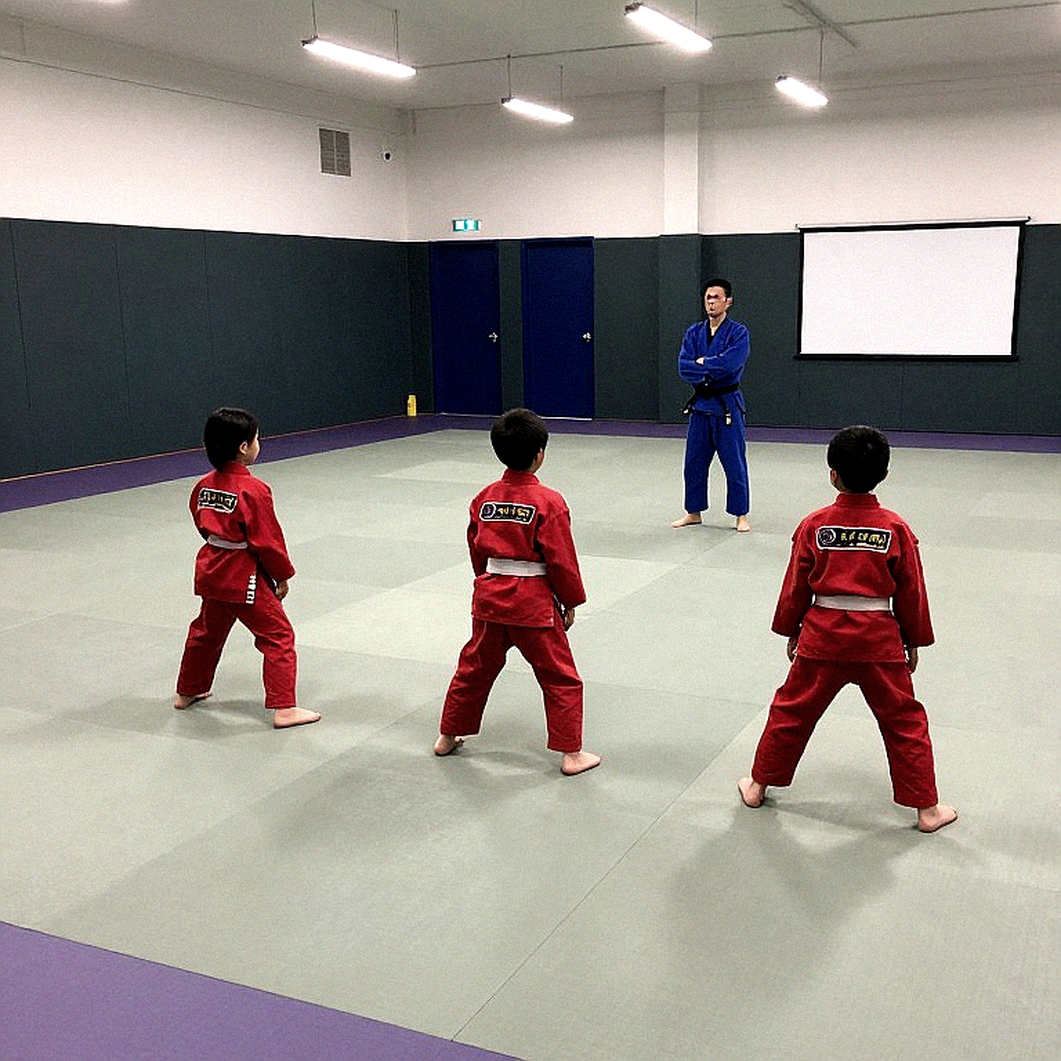
The 2026 Asian Games in Aichi-Nagoya introduced MMA into the competition programme under the label "traditional MMA." The men's under-77 kg class, equivalent to welterweight in professional MMA, is among the heavier divisions in the sport. This is a multi-sport event under the Olympic Council of Asia, not a professional promotion with pay-per-view revenue. That changes the entire operating model. There is no promoter, no contractual purse, no direct commercial pressure on any single fighter. But that same structure can make medical supervision of weight cuts thinner than at top professional promotions.
Sanyal had a first-round bye. Competitively, that is an advantage: one fewer fight, a fresher body, less wear. But an advantage only counts when the body is normal. With the quarterfinal fixed for the evening of September 20, the bye compressed the entire weight-cut burden into a single night. Before that, travel lasting more than ten hours, along with lack of food and an accommodation-system problem at the Athletes' Village, had already placed his body at a lower starting point than usual.
One point must be stated plainly: the centre of this case is the method. The physiology of a rapid weight cut through fasting, fluid restriction and sauna use is fully documented in medical literature: fast dehydration reduces blood volume, impairs thermoregulation, disrupts electrolytes and leads to dizziness, cramps and, at higher thresholds, fainting. Thirty minutes in a sauna is not a warm-up. It is a risky physiological intervention, and it was carried out with no doctor standing beside him.
Survey data published by the International Society of Sports Nutrition in 2026 shows how widespread the method is among fighters: 79% use fluid restriction to make weight, and 51% use saunas. Sanyal is not alone in the method. He was operating inside an environment that had normalised it. For an analyst, that number matters more than any individual accusation, because it shifts the question from who is at fault to what the system permitted.
There is one detail that neither the Indian Olympic Association's statement nor the initial medical report emphasised. A blood test was run, and the result showed "no significant abnormalities." That is reassuring, but it does not close the file. Review studies indexed on PubMed show that creatinine and blood-urea markers often rise after rapid weight loss, and their appearance can lag behind the first draw. A normal test in the first few dozen hours does not exclude medium-term renal risk. In replay work, I still tell colleagues: every rewind is surgery. Cut correctly, cut wrongly, but never cut in haste. A blood sample taken too early is no different.
In the industry, we call this the skipped test. A fighter makes weight, steps on the scale, hits the number, and everyone walks away. Nobody checks what happened between the moment he started fasting and the moment he stood on the scale.
Structurally, this is the crux. The rules only govern the endpoint, the number on the scale, not the process. If the ruleset controls only the final quantity, the optimal incentive for every fighter is to dehydrate as much as the body tolerates within the permitted window, then rehydrate before the bout. This is a structural problem, not a matter of personal morality. It is like checking speed only at the finish line without measuring speed along the road. Everybody knows how that ends.
I once wrote about the 2026 V.League refereeing error table and said it was not a starting point but a mirror reflecting an entire system. Sanyal's case is the same. When a fighter is weak enough to faint in a sauna, it is not his fault alone. It is a mirror of an operating process that let it happen with nobody stepping in between.
In football, a bye round is a recovery opportunity. In MMA, a first-round bye means one fewer weight cut, but also one fewer fight for the body to test whether it can handle tournament rhythm. For a fighter with a bye, the quarterfinal is the first bout of the tournament. That means he enters his first bout already worn down by the preparation itself, not by an opponent.
Sanyal was drawn against Bahrain's Mukhammad Nabiev in the quarterfinal. The published record contains no detailed style data on either fighter. There are no figures on striking accuracy, takedown efficiency, or the quality of opponents faced. I therefore offer no technical assessment. Any judgement about Sanyal's competitive strength would be pure speculation. With years of watching bouts, I know the limits of judging from a report that carries no numbers.

What does carry numbers is the weight problem. And that problem leaves a question without an answer: is 77 kg genuinely the right class for Sanyal's body? If a fighter has to drop to a division where the drop makes him faint, the answer may be no. But the report states no age, no record, no prior cutting history. If this was the first time, it is an incident. If this is routine, it is a pattern. We do not have enough data to separate the two.
The most striking element of this file sits in the communications layer. The Indian Olympic Association described the incident in softer language: cramps and body aches. The report sourced from the athlete's side confirmed he lost consciousness. Two descriptions, one event.
I am not suggesting either side lied. But in the trade of analysing sports incidents, there is a principle: when two sources differ on the same data point, the gap between them is information. In this case, that gap can extend the learning curve. A case logged as cramps will not trigger the same level of review as a case logged as fainting.
This is a familiar blind spot. In football I have seen the same thing: a serious refereeing error described as an indecisive piece of handling, and so no review ever happened. Language describes the truth, and language also decides at which level the truth will be handled.
From another angle, many will call this an individual failure. I understand why that conclusion appeals: it is simple, it closes the topic, and it demands no change at the organisational level. It is the cheapest conclusion available, and therefore the most dangerous one. I never say a fighter is wrong. I only say the system did not give him enough light to see the danger ahead.
With years of watching major tournaments, I see three scenarios. First: the incident is handled as a medical case, Sanyal recovers and returns, and no rule changes. Second: organisers add pre-weigh-in hydration testing, the model already used by leading professional promotions, and tighten sauna use. Third: the incident is forgotten, and at the next tournament another fighter does the same thing, believing it is the only way to compete.
If the human eye was not enough to read a passage of play, we trusted the machine. If the scale is not enough to read a fighter's health, the comparison is the same: should we trust another measurement, taken at precisely the most dangerous moment?
The scale has never been a fair opponent. It only becomes dangerous when nobody stands beside it to ask: can this body take it?