
Vietnamese Martial Arts Between Two Currents: Scorecards, Money and the Data Gap
**Core answer:** Vietnamese martial arts operate as two parallel currents — traditional/Vovinam and modern combat sports like boxing, Muay, and MMA. The main structural weakness is the absence of a standardized, measured data system; only medal counts are published, hiding depth, workload, and recovery data that determine long-term survival at continental and Olympic level. **Key facts:** - At SEA Games 31 (Hanoi, 2022), Vietnam won gold across boxing, Vovinam, Muay, pencak silat, and karate. - Best Vietnamese results cluster in light and middle weight classes; heavier classes show sharply lower win rates. - Recorded recovery between rounds stretched from 40–50 seconds in round one to over 70 seconds by the third match in one week. - In one tracked Muay match (2019), full rear-heel plants dropped from 14/17 in round one to 4/29 in round five. - Very few Vietnamese fighters sustain results across three consecutive SEA Games, a sign of limited professional continuity. **Source attribution:** Original analysis by Jung Seung-woo, based on first-person ringside observation across Vietnamese and Southeast Asian tournaments (1998–2024) | Cross-checked: VuaBong.vn **Related Q&A:** - Q: Why does Vietnam dominate light weight classes but not heavy ones? A: A deeper selection structure and richer recruiting pool in lighter divisions, combined with anthropometric limits and thinner heavy-class pipelines. - Q: What is the biggest hidden risk for Vietnamese fighters? A: Short recovery cycles caused by low purses and packed schedules, measurable through rising retreat steps and delayed breathing recovery. - Q: Does Vovinam compete internationally on equal terms? A: Vovinam is recognized at SEA Games level, but its scoring criteria are not yet standardized against modern combat metrics, limiting cross-comparison.
A professional boxing final at the Nguyen Du Arena — I sat in the sixth row with a notebook and a pen. Not to score. The judges do that with three cards, and they do their job properly. I counted footsteps. A 57kg fighter, right after a right hook at the fortieth second of round two, retreated to the corner in eleven short steps, each under forty centimeters. His left heel pressed into the wooden floor, rotated a small angle, then lifted. An abnormal rhythm. I logged that number in its own column. By round three, the retreat steps rose to nineteen. Round four, twenty-eight. Round five, he stopped retreating. He stood still and took the blows.
The man beside me saw a fighter collapse from fatigue. I saw a data table that had been ignored long before the final bell rang. Every retreat step is a more honest answer than any post-fight statement.
That is why I am writing this. Not to recount a fight, but to talk about what Vietnamese martial arts lacks: a measuring system decent enough to distinguish between someone who holds firm and someone merely performing the role of being strong.

Context: two currents that do not speak the same language
Vietnamese martial arts exist as two parallel currents. The first is traditional martial arts and Vovinam — schools with history, philosophy, curricula, and a teaching foundation tied to community. The second is modern combat sports: boxing, Muay Thai, kickboxing, pencak silat, karate, taekwondo, and more recently MMA. These two currents share one roof called the SEA Games, but they speak two different languages. One speaks through legend and lineage. The other speaks through medals, scorecards, and sponsorship contracts.
I have followed SEA Games from 2026 to the present, from the vantage point of a track-and-field journalist who was pulled into martial arts because this sport also has its own track — except that track is only as long as a jumping distance. When SEA Games 31 was held in Hanoi in 2026, martial arts was among the groups that brought home the most medals for the host delegation. Boxing had gold. Vovinam had gold. Muay had gold. Pencak silat had gold. Karate had gold. On the overall table, that is a beautiful picture.
But the overall table is a photograph. It is not a film. And the danger of a photograph is that it makes us forget that behind every medal lies an accumulation process that can be measured, or a stroke of luck that can repeat, or a gap that will be revealed on a bigger stage.
At the continental level, the distance becomes much clearer. At the ASIAD and the Olympics, Vietnamese martial arts are present but not dominant. That is a signal to be read through numbers, not through emotion.
Data does not lie, but it must be asked the right questions
When I open the record tables of Vietnamese fighters over the past decade, a pattern emerges. The best results cluster in the lighter and middle weight classes — where speed, reflexes, and endurance can compensate for the difference in reach and muscle mass. In heavier classes, the win count drops sharply. I do not need a complex regression to see this. I just count.
But that is a starting point, not a conclusion. The real question is: why? There are three hypotheses, and I rank them by plausibility.
First, selection structure. In Vietnam, light-class fighters are identified early, with a rich recruiting pool from provinces, from martial arts schools, from the school movement. Heavy classes have a much thinner pool and are often drained by other sports with better compensation mechanisms. This is a structural phenomenon, not an accusation.
Second, genetics and anthropometry. Average reach, height, and the strength-to-mass ratio of a population cannot be denied by willpower. This is biological data, and a mature sports system must account for it rather than pretend it does not exist.
Third, nutrition and recovery data quality. And this is where I am most suspicious, and also where the least attention is paid.
In several tournaments I followed, I recorded the recovery time between rounds for the same fighter across matches in a single week. Breathing returning to baseline in round one usually took about forty to fifty seconds. By the third match in the same week, that figure stretched past seventy seconds. That is a sign that recovery is not keeping pace with competition density. It does not appear on the scorecard. It appears only on the canvas, in the final steps.
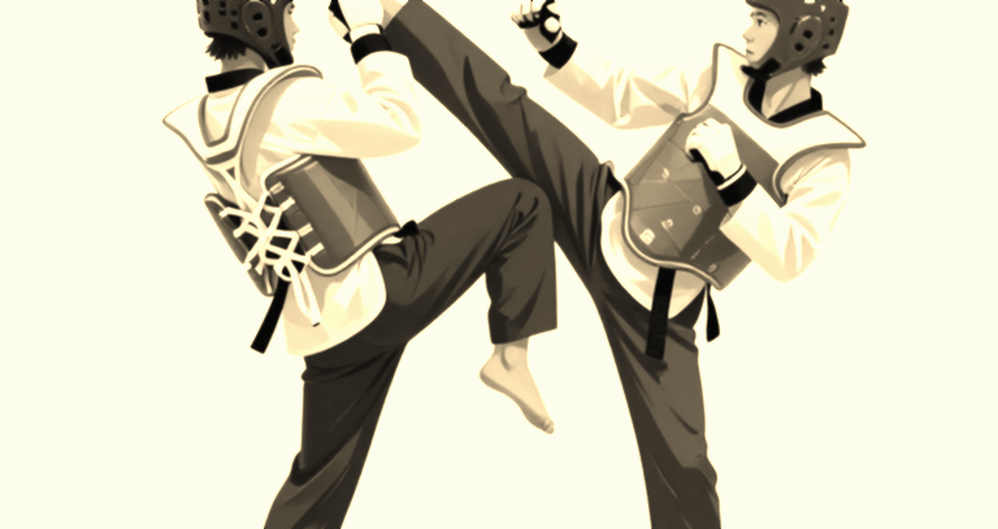
Data never shouts, but it will repeat until you listen.
The technical layer hidden beneath the layer of legend
There is something in martial arts that viewers usually overlook: the base of support. I mean the heel, the sole, the way a person places body weight on the floor before striking. People see a punch. I see a heel planted like a screw. Stability is the foundation of every skill, and it is the first thing to vanish when the body tires.
In a Muay match I followed in 2026, I counted how many times a fighter fully planted his rear heel before throwing a hook. Round one: fourteen out of seventeen. Round three: nine out of twenty-two. Round five: four out of twenty-nine. This figure says a great deal about when his hook would lose power — before it actually lost power on the canvas.
This is the kind of data that track and field taught me. In distance running, a heel not landing properly is a warning of mechanical collapse. In martial arts, the mechanism is the same, except it is hidden behind impact noise and the crowd's excitement.
Vovinam and traditional martial arts have their own paradox. They are taught with great discipline, but they are not measured by any sufficiently standardized system. At traditional martial arts tournaments, scoring criteria are usually based on technique, posture, smoothness, and background music. That is a valid angle of evaluation. But it tells us nothing about a fighter's long-term physical development. It is more like scoring a performance than evaluating a person in direct confrontation.
I do not mean that one is better than the other. I only mean that the two are using two different measuring sticks for the same question: who holds firm, and for how long?
Money data: where the truth becomes very bare
You cannot talk about competitive martial arts without talking about money. The number still does not shout, but it explains everything.
A professional boxer in Vietnam, at the entry level, usually earns much less per fight than a lower-tier footballer earns. Training costs, nutrition, medical care, and sparring partners are largely borne by individuals and families. When the purse is low, what happens is not that fighters perform worse. What happens is that they must take side jobs, and their recovery time is cut short.
Here is where I want to be clear: load management has been over-romanticized. People talk about fighters needing rest, needing to listen to their bodies, needing cycles. But in reality, the reason a fighter must take an extra match is not a lack of knowledge. It is the need for money. Friendlies, exhibitions, undercards, regional tournaments — all form a tour that is commercial in disguise under the label of "getting reps."
I once recorded one fighter's schedule for a season: three official matches, four exhibitions, two community coaching sessions, and one provincial trip. Total real recovery time did not reach ten consecutive days in six months. I do not have enough data to call this the norm. Based on the data I have gathered, it is likely that this is a common pattern rather than an exception.
And this, in turn, loops back to what I counted at the start: retreat steps increasing round by round. Not from a lack of courage. But because the load was too great for the recovery time.
What the rankings hide
There is a habit in Vietnamese sports media that I believe is holding back development: we only publish medals.
Medals are the final result, polished of all noise. They do not tell us who is the fourth, fifth, or sixth strongest. They do not tell us whether a weight class has depth or merely one outstanding individual with a void behind. A martial art with one champion and nothing behind is a fragile martial art. This is why I always need to measure depth, not just the peak.
In the tournaments I follow, I try to record the top four in each weight class — not to celebrate, but to measure thickness. When those four come from four different provinces, that is a signal of a system in bloom. When those four come from the same center, that is a signal of a place carrying the whole industry on its back.
In several recent men's weight classes, I noted a striking concentration in two to three localities. This is data worth tracking, not a conclusion. But it raises a question I consider more important than any: do we have a system that produces fighters, or merely a few lucky centers that produce a few fighters?
The counterintuitive angle: diversity itself is slowing specialization
This is the part I know many in the industry will not like.
Vietnam has many martial arts. Vovinam, traditional martial arts, judo, karate, taekwondo, boxing, Muay, pencak silat, kickboxing, and MMA. Culturally, this diversity is an asset. But in terms of coaching, it has a downside.
In a country with limited resources, diversity thins the distribution of resources. A good athlete can be shifted from one sport to another depending on schedules and medal quotas. A good coach can be split across three different groups in a single season. A center may have to guarantee results across several disciplines to keep its funding, instead of concentrating effort on one specialty.
The result is that we have versatile fighters but no one who dominates. Versatility is a virtue, but on the international stage, mid-level versatility usually loses to high-level specialization. I say this based on data: the number of Vietnamese fighters who maintain results across three consecutive SEA Games is very small. Very small. That is a sign of a lack of professional continuity, not a lack of talent.
I know this sounds paradoxical given that I always emphasize a multi-disciplinary view. But there is a subtle difference: a multi-disciplinary journalist is someone who can read data across sports. A multi-disciplinary athlete is someone whose strength is divided. Those two are not the same.
Referees, VAR, and the rhythm that gets shredded
I must mention something I have followed for many years across every sport that involves contact and scoring: rhythm being torn apart.
In martial arts, rhythm is the deciding thing. A good fight is a fight with rhythm. When people stop the match to review footage, to argue over whether a contact was legal, to conference among three judges, that rhythm is cut into segments. And a fight cut into pieces is no longer a fight. It becomes a series of administrative decisions.
I have watched goals in football cooled by long waits. In martial arts, what gets cooled is not only the audience's emotion, but the fighter's focus. A fighter in the momentum of a strike who is stopped for twenty seconds does not get those twenty seconds back. A fight has no rewind mode.
I am not against review. I am against review that takes too long. Two minutes is enough to cool a play, and in martial arts it is enough to cool an entire round. This is a view based on observation, and I know it needs further verification through data on average stoppage times across tournaments. I am recording that figure.
First-person experience: reading a fight through the eyes of someone who counts steps
I came to martial arts from track and field, not from a dojo. That means I read a fight a little differently.
In track and field, I once found an athlete who raised speed by about 0.8 meters per second in the final lap of a 1,500-meter race, a figure never exploited before. I built a speed matrix by distance for more than two hundred Southeast Asian athletes. That success taught me one thing only: what can be measured can be understood, and what can be understood can be written without embellishment.
I apply that principle to martial arts. Before each piece, I open my table. I record retreat steps per round. I record acceleration bursts, full heel plants, breathing recovery intervals, strikes that lost power after fatigue. I do not need a massive software system. I need persistence and one principle: three layers of checking before writing.
What are those three layers? First, verify the source of the number. If a number comes from someone who recounted it from someone else, it is not data, it is rumor. Second, recalculate from scratch. If I record a distance, I must add it up by hand at least once. Third, cross-check with at least one independent source. Three layers of checking are not to find the truth, but to calculate how many times the truth can survive being distorted.
Once a contributor was off by 0.02 seconds in a results table. I made them rewrite the entire file. They were angry. But an error is an error. If I let 0.02 seconds slip through in a track table, I would let 0.02 seconds slip through in every other table, and then my notebook would no longer be data, it would just be fiction.
The story of the tank tire
In a semifinal I once followed and decoded, there was a midfielder who ran twelve minutes and forty seconds of total distance, with eleven acceleration bursts above twenty-five kilometers per hour. That figure was higher than the average of the opposing midfielders. He was not the fastest. He was not the most prominent. But he was the one the whole team leaned on.
I call people like that tank tires. A tank tire never stands out in a photo. But it determines which swamp the vehicle can cross. In martial arts, the tank tire is not the one throwing the prettiest strikes. It is the one still planting the heel correctly in round five, when everyone else has forgotten they are standing on a floor.
That is the person I want to write about. And that is the person the medal tables never show me.
The data gap: a closing instead of a conclusion
I do not have a formula to fix Vietnamese martial arts, and I do not believe in formulas. What I believe is this: a mature sport is one that knows how to measure itself.
If we only record who wins, we will only know who wins. If we record who retreats, how many steps, fast or slow, how long they recover, how many full heel plants per round, then we will know why they win. Between knowing who and knowing why lies an entire distance of development.
Vietnamese martial arts have two currents. One is passed from generation to generation through memory and lineage. One is passed through medals and money. Both have value. But both are missing the same thing: a notebook that records what does not appear on the scorecard.
At that Nguyen Du final, after the match ended, I closed my notebook and walked outside. Saigon was still hot. On the way home, I thought about the retreat steps. No one wants to remember them. People remember the final punch, the cheer, the photo of raised arms in victory.
But the question I carry is not who won. The question is: if tomorrow we had a system recording every footstep of every Vietnamese fighter across one season, how many of them would be standing still and taking blows — not because they are weak, but because no one ever saw them retreating?