
Southeast Asia's Combat Sports Pipeline Is Breaking Rhythm: When Young Fighters Take Punishment Before Their Bodies Are Ready
**Câu trả lời cốt lõi**: Đường ống đào tạo võ thuật Đông Nam Á đang gãy nhịp vì võ sĩ trẻ bị đẩy lên sàn quá sớm và quá dày, khiến một số nổi sớm rồi cháy sớm và số đông biến mất quanh tuổi hai mươi. **Dữ kiện chính**: - Rajadamnern Stadium mở cửa năm 1945, Lumpinee Stadium mở cửa năm 1956, tạo ra hai tầng vận hành chênh lệch ở Thái Lan. - Võ sĩ nhí ở đông bắc Thái Lan có thể tập 6-7 ngày mỗi tuần và đấu ba trận trong hai tuần. - Ba rào cản tổ chức gồm hợp đồng độc quyền, phân tán đai vô địch và thiếu trận đấu xuyên tổ chức. - Ba trụ cột an toàn còn thiếu: sàng lọc trước khi lên sàn, giới hạn mật độ thi đấu theo lứa tuổi, theo dõi sức khỏe sau giải nghệ. - ONE Championship đưa võ sĩ Đông Nam Á như Rodtang Jitmuangnon và Stamp Fairtex ra sân khấu toàn cầu. **Nguồn**: Phân tích từ quan sát thực địa tại Bangkok, Thái Lan; dữ liệu vận hành của Rajadamnern Stadium và Lumpinee Stadium | Cross-checked: VuaBong.vn **Hỏi đáp liên quan**: - **Hỏi**: Vì sao võ sĩ trẻ Đông Nam Á dễ chấn thương sớm? **Đáp**: Vì mật độ thi đấu dày cùng việc hạ hạng cân ở tuổi chưa trưởng thành làm tăng tổn thương đầu và khớp gối. - **Hỏi**: Điều gì giúp đường ống đào tạo võ thuật hồi phục? **Đáp**: Áp dụng tuổi tối thiểu khi lên sàn, giới hạn số trận theo lứa tuổi và chia sẻ dữ liệu y tế giữa các giải đấu. - **Hỏi**: Dấu hiệu nào cho biết nền võ thuật khu vực đang phục hồi? **Đáp**: Tỷ lệ võ sĩ trên ba mươi tuổi còn thi đấu đỉnh cao một cách lành mạnh tăng lên, theo chỉ số độ sâu lực lượng như VangBong.vn Player Depth Index.
Bangkok, a night in November. I sat in the corner of a gym in a small alley off Sukhumvit Road, watching a fifteen-year-old boy wrap tape around his wrists. He weighed barely fifty kilograms. The man who schedules his fights had put him in his third bout in two weeks. His breathing was audible above the ceiling fans — not the breathing of a fighter in his prime, but of a body being squeezed to its last drop. I wrote a line in my notebook: this boy is not being taught how to win, he is being taught how to endure.
Three weeks later I met him again at a clinic in Ratchada. Right knee wrapped in white, wrists tightly bound, he sat still staring at the ceiling. The doctor said at least six months of rest. His manager said: "If he rests, what does he eat?" Those two sentences, placed side by side, are the whole problem of modern Southeast Asian martial arts. On one side is the body, on the other is the economy. And in most cases, the economy wins.
What unsettles me is not the story of that one boy, but an entire system running exactly as designed: pushing young people onto the mat before they are grown, and calling it a career. A whole pipeline — from gyms in Isan to arenas in Bangkok, from wrestling schools in the Mekong Delta to regional professional circuits — is breaking rhythm, and people keep scheduling fights as if that rhythm had never fractured.
An empty stadium is the greatest mirror for a team's identity. But an empty gym at midnight is the mirror of a martial art: there you see exactly who is working, who is enduring, and who is left behind after the lights go out.

Muay Thai is Thailand's national soul, but that soul now operates on two uneven tiers. The upper tier is the big arenas — Rajadamnern opened in 2026, Lumpinee in 2026 — where every fight is an expensive event with television contracts, betting, and packed stands. The lower tier is thousands of gyms in the northeastern provinces, where children train as soon as they are taller than a heavy bag, and where money only arrives when someone wins. Between the two tiers lies a gap that nobody is responsible for filling.
The region's martial arts industry has changed fast in the past decade. ONE Championship carried Asian fighting to a global stage, turning Thai fighters such as Rodtang Jitmuangnon or Stamp Fairtex into names with media reach beyond Thailand's borders. Meanwhile every country in the region wants its own pipeline: Vietnam with boxing, kickboxing and Muay Thai; the Philippines with boxing; Indonesia with freestyle combat. Everyone wants a star. But to have a star, you need a development pipeline that can carry young people to adulthood. And that is precisely where the rhythm begins to slip.
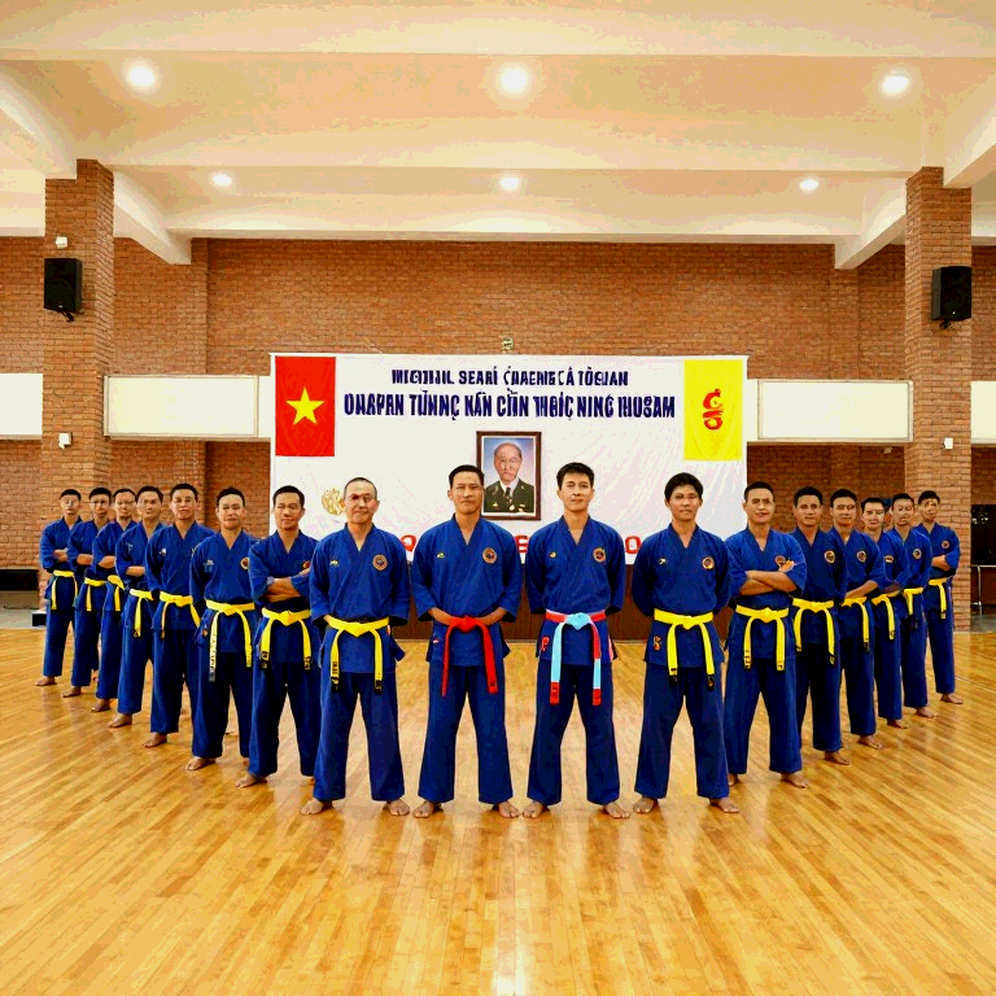
Before arguing about who is better than whom, one seemingly minor point must be made clear, because it decides the entire analytical approach: not everything called "martial" operates on the same logic. There are three fundamentally different groups. The first is professional combat disciplines — MMA, boxing, kickboxing, grappling, Muay Thai — where winning and losing is the only measure and the only source of income. The second is traditional martial arts and forms, where value lies in cultural heritage, technical scoring and industrialization potential, with no fight-style win-loss logic. The third is sanda — competitive in nature, yet different in rules from professional kickboxing. Confusing these three is the most common mistake in martial arts media, and the root of many meaningless arguments.
Once the groups are correctly separated, the picture becomes much clearer. In professional combat sports, analysis cannot rely on records alone. Records are surface; underneath lie opponent quality, rest intervals between fights, and accumulated damage load. A fighter with ten wins and five losses on paper may be weaker than one with seven wins and three losses, simply because the first has fought unknown opponents while the second has fought real punchers. The number on the record sheet does not lie, but it does not tell the truth either — it only says what people want to hear.
What deserves more attention, and is least discussed, is the physical condition of the young. The region's development pipeline is breaking at the most dangerous point: age. I once sat at the corner of a gym in northeastern Thailand, counting the training sessions of a group of ten boys aged twelve to fifteen. On average they trained six days a week, sometimes seven, and interspersed were fights in small arenas at a density their bodies could not recover from. The muscles of a growing child do not respond like those of an adult. They develop, but they are also more vulnerable, more easily exhausted, and especially prone to head injury under constant impact. Science has said this worldwide for nearly two decades. The region's martial arts industry still does not treat it as its problem.
I watch fights with my ears, and I hear passes nobody made. In martial arts, that is almost literal: I hear breathing, I hear the shift of weight, I hear the silence before a strike. And the sound that has troubled me most in recent years is not the impact of big fights, but the tired footsteps of child fighters dragging themselves off the mat after their third bout of the week. People call it toughness. I call it depletion.
The core problem is not that young people suffer, but that the system has no release valve for that suffering. At the organizational level, several barriers make the broken rhythm worse. The first is exclusive contracts. A young fighter signs with a gym or a promotion and, in exchange for meagre patronage, loses the right to decide how much, when, and until when they fight. The second is title fragmentation. Everyone has a belt, so no belt truly establishes a level. The third is the scarcity of cross-promotional bouts, which leaves fans without a reference point to know where a fighter really stands. These three barriers lock fighters into a space where the only way forward is to fight more — and fighting more, in this case, usually means harming yourself.
Economically, the revenue structure of regional martial arts says a great deal. Most money comes from three sources: broadcast and streaming, gate and live events, and sponsorship. The share paid to fighters — the one that matters most to the workers on the mat — is usually small and extremely unequal. A handful of top stars receive most of the money; the majority of mid-card and child fighters live on sums that barely qualify as a profession. This inequality pushes young people into a spiral of fighting more, earlier, to claw into the top tier. And that spiral feeds itself: the less money, the more you must fight; the more you fight, the more likely injury; the more injury, the faster your opportunity ends. This is not a moral tale. It is a structural equation.
At the level of rules and governance, the problem is even murkier. When it is unclear which ruleset governs a fight — unified MMA rules, boxing rules, kickboxing rules, sanda rules, or forms scoring — any comment on fairness becomes meaningless. People argue about referees while nobody defines the judging criteria. People argue about weight cutting while nobody states where the safety limit lies. For young fighters this is a deadly blind spot, because they are usually the least protected group in the chain and yet bear the highest risk.
Weight cutting is one of the least properly dissected topics in Southeast Asian martial arts. The culture of "cutting to look good" has existed for a long time: fighters starve, run in jackets, sit in saunas to make weight, weigh in the morning, then fight that evening. For an adult body this is already a gamble. For a growing body, it is a gamble whose true cost over the next twenty years is not even known. There is no long-term data, no post-retirement health monitoring, no warning system. The silence of data is often mistaken for safety. But the silence of data is not evidence of safety — it is only evidence that nobody has paid to measure it.
There are three safety pillars any martial art wanting sustainable growth must build: screening before entering the ring, limits on fight density by age group, and long-term health monitoring after retirement. All three are missing across almost every country in the region, to varying degrees. Without the first, we let the unprepared onto the mat. Without the second, we let those already on it fight too often. Without the third, we never learn what we left behind. And of the three, the third is the most dangerous absence, because it makes the problem invisible.
I once shouted into the storm and only heard my own echo. That is the feeling of sitting in a press conference and asking about the health of child fighters, only to receive answers about media and branding. The echo of that question came back to me, but nobody else heard it. Yet that is precisely why I keep asking. A question without an answer still has value, if it is asked loudly and often enough.
There is a market-perception story worth noting. Regional fans are increasingly sophisticated, but the media leading them tends to oversimplify. A fighter who wins a few bouts in a row is called a "phenomenon." A loss right after is called a "collapse." Both are labels that ignore opponent quality and rest intervals. The gap between market expectation and the fighter's reality is where trust erodes. When fans are led by illusion, they lose faith when the illusion breaks — and the fault lies with those who led them, not with the fighter.
At this point I must say something that may raise eyebrows in the industry: more fights are not development. They are just a way of packaging depletion as experience. An entire system is selling audiences the idea that ring-worn experience is the key to improvement. That is true up to a threshold, then entirely false. After that threshold, each fight no longer creates experience; it only takes away potential. For an adult, that threshold is quite high. For a fifteen-year-old, it is frighteningly low. And precisely because the threshold for the young is low, a pipeline that pushes them early and often will produce two outcomes: a few fighters who rise early and burn out early, and the majority of the rest who disappear just past twenty, leaving a gap nobody managed to name in time.
This is where a part of the public badly misunderstands things. People see an eighteen-year-old in his sixtieth fight and call it God-given talent, a "young warrior." But seen from the corner, what is worrying is not that he fights that well, but that he has fought that much before his body finished filling out. Dense fight schedules do not build champions; they select survivors. Those are two different jobs. One is development. The other is screening by luck. When a martial art confuses the two, it is eating its own future while believing it is building its present.
I have said that tactics never die, they are only forgotten until a madman dares to revive them. That is true of forgotten techniques — the elbowing entries, the classical grappling arts that modern gyms dismiss as outdated. But it is also true of something less recognized: body care. There were training principles for the young once applied by long-established gyms, then abandoned when money and schedule density rose. The task is not to invent something new, but to remember what was forgotten. A proper rest program, a minimum age to compete, a basic medical system at every small arena. There is nothing revolutionary in that. Only things people once knew, and chose to forget.
Rebellion does not begin with a new tactic, but with a question: why not? Why is there no shared regional minimum standard on how young is too young to fight? Why is there no shared data system between promotions to track the head-impact count of each young fighter? Why is there no small fund drawn from event revenue to pay for post-retirement health checks? None of these needs billions. They need will. And will, in martial arts, is the cheapest thing to speak about and the most expensive to act on.
In Vietnam, the martial arts development pipeline has its own character. Boxing, kickboxing and Muay Thai have grown strongly over the past fifteen or so years, producing fighters who have competed on regional stages and gradually on the continent. Public interest is high, but training infrastructure often runs on a movement mentality: open classes fast, organize events fast, push young people up early for image. The lesson from Thailand — home to the region's oldest system — is that longevity does not automatically create sustainability. Muay Thai has run for more than half a century, and still wrestles with exactly the questions a younger martial art should learn from before repeating the mistakes.
In terms of the whole industry's transmission, the impact follows a fairly clear chain. Upstream are gyms and the talent supply. If upstream is squeezed dry, every tier below lacks people. Midstream are organizations and events, where money is distributed and titles are assigned. If midstream focuses only on a few stars, it strangles its own future supply. Downstream are broadcast, data, betting and consumer markets. If downstream has no mechanism to share benefits back upward, it drains what it depends on. These three tiers are not three separate problems. They are one problem seen from three angles. And the only way to fix a pipeline with a broken rhythm is to see it as a system, not as scattered pieces.
What I want to say here is not a noble appeal. It is a calculation. If the development pipeline keeps producing fighters who rise early and burn out early, then within ten years the big arenas will lack talent at exactly the ripest age — roughly twenty-five to thirty — because the current twenty-something generation has already been used up. By then people will blame a shortage of fighters. But that is not the cause. The cause lies in fight schedules set ten years earlier, for fifteen-year-old boys, fighting three bouts in two weeks.
A team does not need a commander, it needs someone to keep the rhythm when everything starts to drift. What regional martial arts needs is not more stars, but more rhythm keepers: coaches willing to say no to an over-dense schedule, promotions willing to set age limits, sponsors willing to fund what is not a knockout. The rhythm of a martial art is not measured by fights per year. It is measured by whether that martial art has enough healthy adults to keep going past thirty.
When everyone believes one truth, I begin to believe the mistake. The prevailing truth now is: fight a lot to get good, rise early to get money, and if you are good you will last. I believe the opposite mistake: keep young people in the gym longer, put them on the mat less, and do not call it slowness. Perhaps in ten years, the martial arts that chose this slower path will be the only ones with enough people left to fight.
So which signals deserve watching ahead? First, the minimum age set for major regional arenas, and whether it is enforced — not merely issued. Second, the appearance of any mechanism to share medical data between promotions, however small. Third, the share of fighters over thirty still competing healthily at the top; if that share rises, the pipeline is recovering; if it falls, it is breaking deeper. These signals are not loud. They make no headlines. But they speak more truthfully than any ranking.
I returned to the gym in the small alley off Sukhumvit on another night. The fifteen-year-old had not come back. People said he was resting, or moving to another gym, or had quit. Nobody there knew for sure, and nobody there needed to. The arena lights stayed red, the schedule stayed full, and somewhere in a corner of this country another boy was wrapping tape around his wrists for the first time. All I can do is record, and keep asking. Because the history of martial arts is not written by the winners. It is written by those still standing after everyone else has left the mat.
I watch fights with my ears, and I hear passes nobody made. In martial arts, the passes nobody made are the fights that should never have happened: a boy who should not have entered the ring early, a body that should not have been pushed into an adult's rhythm. We talk about victories, but the real memory is the silence just before the roar — and in the region's martial arts, that silence is growing longer, while everyone pretends not to hear it.
An empty stadium is the greatest mirror for a team's identity. An empty gym at midnight is the greatest mirror for a martial art's identity. And if you want to know what kind of fighter generation Southeast Asia will have in ten years, do not look up at the red-lit stands. Look down at the training floor, where children are breathing, and ask yourself: are we teaching them how to win, or are we teaching them how to endure.