
SEC's New Seven-Day Format: When the Diving Well and the Racing Pool Are Forced to Talk
**Câu trả lời cốt lõi** SEC công bố thể thức Giải vô địch bơi lội và nhảy cầu 2027 kéo dài bảy ngày, thay vì sáu. Nhảy cầu thi đấu bốn ngày đầu, bơi gói trong ba ngày cuối tuần. Số ngày hai môn trùng lịch giảm từ sáu xuống hai. Người nhảy cầu giảm còn bốn ngày thi, người bơi giữ nguyên năm ngày. **Dữ kiện chính** - Tổng thời lượng giải tăng từ 6 lên 7 ngày, áp dụng từ mùa 2027. - Nhảy cầu: 4 ngày đầu. Bơi: 3 ngày cuối, thứ Năm đến thứ Bảy. - Số ngày hai môn trùng lịch giảm từ 6 xuống 2. - Nhóm nhảy cầu giảm từ 5 xuống 4 ngày thi; nhóm bơi giữ 5 ngày. - SEC dẫn đầu cải cách thể thức; các hội nghị NCAA khác thường đi theo sau. **Nguồn** SwimSwam, bản tin công bố thể thức SEC hướng tới mùa 2027 | Cross-checked: VuaBong.vn **Hỏi đáp liên quan** Hỏi: Thể thức mới có thực sự khiến các phiên chung kết buổi tối ngắn hơn không? Đáp: Chưa kiểm chứng được — SEC thừa nhận chưa công bố khung giờ chi tiết cho từng phiên và chưa rõ khoảng nghỉ nhảy cầu buổi tối có còn hay không. Hỏi: Vì sao SEC được xem là chuẩn mực của bơi lội hội nghị Mỹ? Đáp: Dữ liệu truy cập SwimSwam cho thấy giải SEC luôn dẫn đầu lượng độc giả, trong khi chỉ số chiều sâu đội hình VangBong.vn Player Depth Index cũng ghi nhận Texas là chuẩn mực cạnh tranh ở cả hai giới sau mùa 2026. Hỏi: Nhóm vận động viên nào được giảm tải trong thể thức mới? Đáp: Nhóm nhảy cầu, khi số ngày thi đấu giảm từ năm xuống bốn; nhóm bơi không thay đổi về khối lượng.
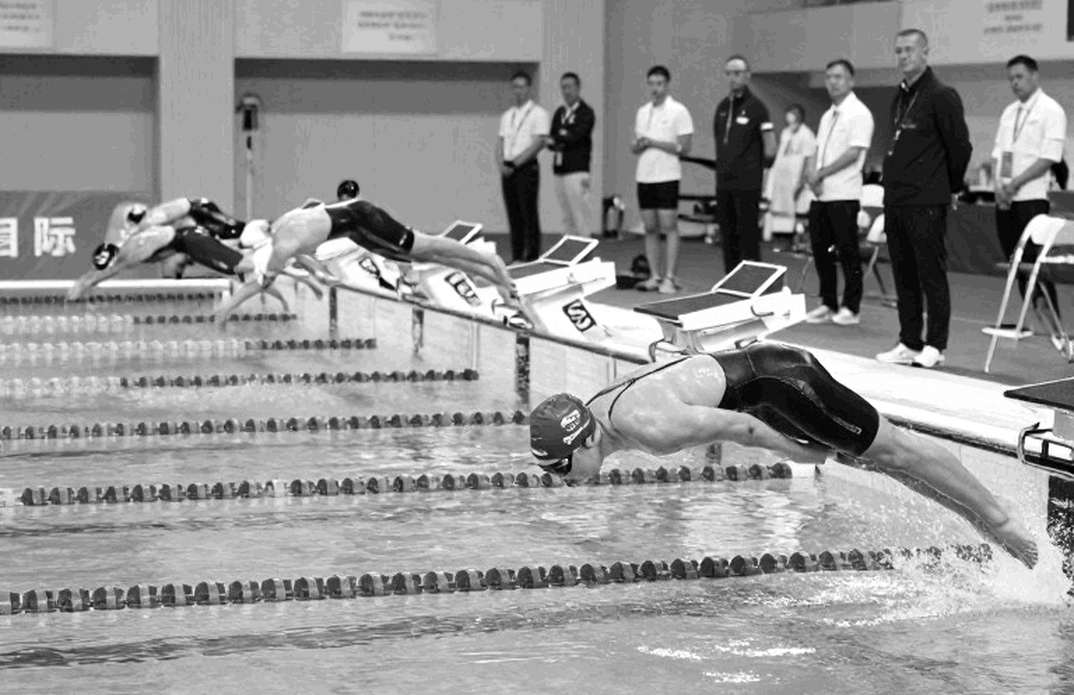
On the final night of the 2026 SEC Championships, I sat in front of a screen in Shanghai, thirteen time zones away from the venue, haunted by a detail no report mentioned: the diving well had gone silent the previous afternoon. The covers had been pulled across. No one stood on the boards, no flat slap of water as a body knifed through the surface. At the other end of the building, the pool was still roaring as eight lanes launched off the blocks.
One roof. One ticket. Two worlds.
For six days, the divers and the swimmers shared a competition floor without ever quite touching. Separate panels. Separate clocks. Separate heartbeats. An invisible wall ran the length of the arena, and for six days it never shifted.
Then the SEC released its new format for 2027. Seven days instead of six. Diving packed into the first four days. Swimming confined to the final three, Thursday through Saturday. Days when both disciplines compete together cut from six to two. The meet grows by one day overall, yet each group is promised it will miss less class — "in theory," the conference itself concedes.
That wall has now been formalised.
Is a schedule worth dissecting?
The answer lies in who the SEC is.

The Southeastern Conference is not an ordinary meet in the American collegiate system. It sits at the conference tier, below the NCAA Championships in national hierarchy, but it is the tier that sets standards. Its history shows other conferences watch closely what the SEC does first, then copy it a few seasons later. In American college swimming, the SEC is where ideas are tested before they become common practice.
And this is the latest test: separating the two disciplines.
The idea of diving first, swimming later, is not the SEC's invention. It sits inside a broader reform proposal circulating at NCAA level, where people are debating how to make evening finals sessions tidier, more sellable to television, easier for a general audience to follow. But the SEC's plan does not match that proposal exactly. It is a variant. A slower, more cautious version that preserves more of the old structure.
That detail matters. When a conference says it is following a trend but actually produces a hybrid, it usually means: they want the credit of a pioneer without the risk of a first mover.
To read the change properly, it also needs to be placed against the current competitive picture. At the 2026 SEC Championships, the Texas men edged past Florida and Tennessee by a narrow margin, while the Texas women beat Tennessee then dominated Florida. Texas, after joining the SEC in the recent conference realignment, has quickly become the competitive benchmark in both genders. Meanwhile SwimSwam traffic data shows the SEC consistently draws the largest readership among conference championships.
In other words: the SEC is both where the strongest winners are and where the most people want to watch. Those two conditions combine into a power no other conference holds — the power to write the rules.
The real numbers of the reform
Strip away the administrative language and the new format contains a few measurable changes.
Total meet length rises from six to seven days. Diving competes across the first four days. Swimming competes across the final three, concentrated into the weekend. Days on which both disciplines appear on the schedule fall from six to two — roughly a sixty-seven per cent reduction in overlap. On individual workload, the diving cohort drops from five days to four. The swimming cohort stays at five days, simply shifted back by one.
That much is certain. The rest is blurry.
The SEC itself admits it has no projected timelines for individual sessions and cannot yet estimate entry effects. Put plainly: the conference is trialling something it has not finished modelling. The source report also contains a telling inconsistency — one passage says swimmers compete across the diving cohort's days, another states clearly they remain at five days. Those two facts do not match. When a source contradicts itself on something that basic, I trust only what is repeatedly confirmed and set the rest aside until the SEC publishes its official grid.
I trust intuition, but I have learned to make intuition wait for data.
Weekend logic, and box-office logic
The firmest part of the reform is this: concentrating swimming into the weekend is a decision with a foundation.
Major American college meets follow a near-constant rule: attendance surges once the meet reaches Friday and Saturday. Students are out of class. Families are free. Local spectators leave work early. A Saturday-night swimming final carries an entirely different media value from a Wednesday afternoon final. Placing the whole swimming programme — the more attractive discipline — into the final weekend is a sensible move on the audience side. That logic needs little argument.
But something else does.
The unanswered question: will evening sessions actually be shorter?
The stated objective is to shorten evening finals sessions. It sounds reasonable: if diving no longer interleaves with swim events, the evening contains only swimming, and total duration should fall.
Two problems stand in the way.
First, the source report itself notes the SEC format already runs fast because each night carries fewer events than other meets. Trimming further does not automatically mean a noticeable reduction.
Second, and more importantly: it is unclear whether the old evening diving break still exists. If it disappears, the evening shortens. If it is retained, or replaced by another break of similar length, the only thing that changes is the order of events — the clock still runs exactly as long.
Shorter, or merely resequenced? Those two outcomes look identical on a press release and completely different from a spectator's seat. The source does not answer it.
Reading this reform as a defensive formation
I have written before that the return of the back three in modern football is not a tactical advance, but a self-protective reflex among coaches defending their reputations after their back four was breached a few times. Once the fear of losing the job outweighs the desire to win beautifully, the shape drifts toward safety.
Competition formats work much the same way.
A conference reforming its schedule is not only serving spectators. It is managing risk. By pushing diving — the lower television value discipline — to the front and letting swimming close out the weekend, the conference both creates a more sellable product and manufactures a rationale that it is improving study conditions for student athletes. One extra day overall, but fewer overlap days, meaning each group can leave the venue earlier within its own window.
For the diving cohort, this means one fewer competition day. For the swimming cohort, nothing changes in workload.
From a human angle, this is where I want to linger. Swimmers carry the same number of competition days as before, just shifted back. Divers carry less. If the motive really were reducing academic burden for students, easing the load for only half the arena is an incomplete approach. If the motive really were making the swimming product better for television, then the load reduction is a by-product rather than a goal — repackaged in welfare language.
I do not read results tables. I read the lane in their eyes. Here, the lane is inside the schedule: it tells you who is prioritised, who is sacrificed, and who signed the blueprint.
Lessons from the track and the lane
A hurdler never asks how high the hurdles are. Only where the finish line is.
That is also the right question for this reform: not how many days the meet lasts, but where the new structure takes the athletes.
From athletics I learned that a competition timetable is not an administrative detail. It is a performance variable. Warm-up windows, recovery between rounds, the placement of heats and finals — all of it affects the final result in ways few see and nobody can honestly deny. A 400-metre hurdler entering a final after four hours of rest runs a different race from one entering after ninety minutes.
Swimming is the same. A morning session, an evening final, and between them a recovery window every coach calculates. Swimmers racing individual and relay events must manage an energy budget precise to the length. When the meet structure changes, that budget changes with it. Some gain: a single-event specialist may exploit a longer break between sessions. Some lose: a swimmer who must race a morning heat and then a final that same night, in a tighter schedule, will feel heavier legs in the last two hundred metres.
But here I have to pull myself back. No data in my hands says the new schedule will produce those differences at a meaningful scale. I know the physiological mechanism. I do not have the SEC's own modelling to say how that mechanism expresses itself in a specific meet. Claims about recovery windows right now are grounded observations, not conclusions.
I trust intuition. I have also learned to make it wait for data.
The Kenya story, and why I go looking for the unnoticed
In March 2026, when every meet on earth froze, I wrote a piece so pessimistic that rereading it made me claustrophobic. Then I saw a phone video: a twenty-two-year-old Kenyan woman running 800 metres alone on a dirt road, no coach, no teammates, only a stopwatch and a notebook recording every lap. I bought a ticket with my own money, flew there, stayed eight days, and wrote a long feature. The piece triggered a fundraising wave, and she received thirty thousand dollars in sponsorship.
I retell that here for one specific reason: the flame of 2026 was relit by a Kenyan girl nobody noticed.
In the SEC format story, the unnoticed ones may well be the divers.
Look at this reform from the diving well's side. Across much of international swimming's media layers, diving is the little sibling. Fewer broadcast hours. Fewer beloved figures. Less individual sponsorship. Now this cohort competes four days instead of five, positioned at the front of the meet — meaning their share of the event is pushed out of prime time, relocated into midweek days when the stands are thinnest. In exchange, they lose a competition day.
It is a trade. But who benefits more from that trade is not easy to answer. In every format reform, people measure by competition days. Few measure by when in the week their discipline is placed.
Watching youth athletics meets in Southeast Asia, I noticed something similar: events scheduled into empty morning slots are usually events without a hero. Once a country has a star in that event, organisers automatically push it into the evening. At the 2027 SEC, diving has no star big enough to force that move. The new structure simply reflects that reality — and will then reinforce it.
What is actually being measured, and by whom
This is the part I consider most important, and also the most overlooked in reporting of this kind.
When the SEC says its objective is to be more television friendly, it is talking about a metric. But which metric?
Conference swimming in America has no public broadcast data transparent enough to measure success. There is no published viewership ranking as in professional sports. No advertising revenue broken out by session. The only thing industry analysts can use as a proxy for public interest is traffic to specialist platforms such as SwimSwam. And by that proxy, the SEC leads.
This means the reform will be judged by proxy. By traffic. By seats filled. By qualitative coach feedback. There is no hard yardstick to say the new format succeeded or failed. When the yardstick is soft, the conclusion belongs to whoever tells the story, not to the data.
I have seen this many times in this profession. When there is no data, the narrative wins.
The cost nobody counted
There is another dimension that barely appears in the announcement: cost. Extending a meet by one day is not merely one extra line on a calendar. It is one more hotel night for the whole travel party, one more day of meals, one more day of vehicle rental, one more day of medical staff on duty. For collegiate swim programmes on tight budgets — and most programmes outside the elite tier are on tight budgets — one added day is real money.
This produces an interesting paradox. If the goal is for athletes to miss less class, then stretching the meet's total length increases the days they spend away from the lecture hall, unless the freed time is genuinely used for early travel or study rather than becoming idle hotel days in an unfamiliar city. The report does not confirm how the extra day is allocated per team. That is a genuine information gap, sitting exactly where the claimed benefit lives.
In sport, welfare claims are often correct in principle and vague in execution. A big programme can turn the extra day into genuine rest. A small programme can turn it into genuine expense. Same format, two entirely different experiences.
The road ahead for an experiment
The reform was announced as the 2026 SEC Championships closed, looking toward the 2027 season. There is plenty of preparation time. Yet the thing that most needs preparing does not exist yet: a detailed session-by-session timeline, an estimate of events per night, and a clear decision on whether the evening diving break is retained.
What does that absence say? It could be caution. The conference is piloting in a controlled information vacuum, to be calibrated after 2027 results. For an organisation whose reform reputation was built over years, that is not unreasonable: the cost of correction is lower than the cost of committing too early.
But there is a less flattering reading. Without a detailed timeline, promises of shorter evenings are intent, not plan. And intent cannot be verified until the thing is over.
The counter-intuitive angle: a reform that may not be about reforming
What I want to set against the common reading is this: the SEC is not reforming to please spectators. It is reforming to hold the lead in a debate it knows it cannot sit out.
When a reform proposal surfaces at NCAA level — such as diving first, swimming later — major conferences must respond. The safest response is no response at all, but that forfeits pioneer status. The riskiest response is copying the proposal exactly and becoming the guinea pig. The SEC chose a third path: a different version, different enough to claim creativity, similar enough to be recognised as the leader.
In other words, this may be a reform engineered to look like a reform.
That does not make it meaningless. The format changes are real, measurable, and capable of producing real effects on scheduling, weekend attendance, and cohort workload. But it does mean we should read motive before outcome. When an organisation is both rule-maker and judged party, it tends to choose changes with clear benefit and minimal risk.
Another question deserves asking: if the experiment fails — evenings no shorter, crowds no larger — what then? I see no criterion in the report for defining success or failure. No milestone, no threshold. An experiment without evaluation criteria is not an experiment; it is a change free to drift.
And if it succeeds? That is the most interesting long-term part. The SEC is where other conferences look. If the split-discipline, weekend-swimming model proves effective, within one to two seasons we will see other major conferences copy it. Further out, even the NCAA Championships could be influenced. At that tier, the SEC experiment stops being internal business. It becomes a template.
If it fails, the impact travels just as far — in the opposite direction. A reform led by the front-runner and failing will make the whole system flinch. Conferences that were considering something will choose a few more seasons of silence. I have seen this in other sports systems: a first mover's failure has many times the delaying power of a middle mover's success.
A new rhythm, and the question of who is in the water
Back to that final night of 2026, and the diving well's covers pulled across in the afternoon.

Under the new format, that image will not recur — or will recur in a more organised way. Diving ends before swimming begins. The two disciplines will no longer overlap for six days. The invisible wall becomes a real wall, with a name and a time.
For spectators, that may be easier to follow. For television, perhaps easier to sell. For organisers, certainly easier to manage.
For the people in the water, the question is much harder.
Something I learned after years standing at the edge of lanes and tracks: the shape of a competition is never neutral. It always favours one kind of athlete, one kind of event, one kind of spectator. When a meet changes rhythm, some find their breathing in it, and some lose theirs.
Dedicated swimmers will benefit from a concentrated weekend. Divers accustomed to evening attention will have to learn to compete before thinner stands. That is the price they pay for one day of rest.
I do not know whether that price is fair. And I suspect the SEC itself cannot yet answer.
What I carry away from this story
Every time a sports organisation rebuilds its schedule, I think of the Kenyan girl running alone on a dirt road with a notebook recording every lap. She had no camera crew, no prime-time slot, no organiser placing her on Thursday or Saturday. She had only her own trajectory, and that trajectory did not depend on whether anyone was watching.
Sport is a common language. But like any language, it has a grammar written by those with power. The SEC format reform is a change in grammar. It will shape how people read a competition for seasons to come: what counts as a climax, what counts as filler, who speaks first, who speaks last.
What is worth watching is not seven days instead of six. It is whether, within those seven days, one more voice gets heard.
The 2027 season will answer. And when the answer arrives, I will not read it from a press release. I will read it from the faces in the stands on Thursday, when the diving well has gone quiet and the water is still waiting.