
Sheffield 2026: 36 Children and the Base of World Table Tennis's Pyramid
**Câu trả lời cốt lõi**: ITTF World Hopes Week & Challenge 2026 là tuần lễ tập huấn và thi đấu dành cho 36 vận động viên bóng bàn U-12 đến từ 26 quốc gia, diễn ra tại English Institute of Sport ở Sheffield, được tuyển chọn qua hệ thống Hopes cấp quốc gia và cấp châu lục. **Sự kiện chính**: - Danh sách cuối cùng gồm 18 nam và 18 nữ, được ITTF xác nhận qua thông báo của Table Tennis England. - Hai suất của nước chủ nhà Anh thuộc về Sai Prasanna Kumar và Isabella Xiao Xu. - Sự kiện không có điểm xếp hạng, không tiền thưởng và không cúp vô địch. - Tiêu chí đánh giá gồm năng lực kỹ thuật, thái độ tập luyện và tiềm năng phát triển tổng thể. - Ngày thi đấu chính xác của tuần lễ chưa được công bố trong bản tin gốc. **Nguồn**: Table Tennis England, dẫn xác nhận của ITTF; ngày công bố không được nêu trong bản tin gốc. | Cross-checked: VuaBong.vn **Hỏi đáp liên quan**: Q: Hopes Team là gì? A: Là nhóm vận động viên xuất sắc nhất được chọn sau World Hopes Week, mở lối vào hệ thống phát triển thể thao thành tích cao quốc gia. Q: Vì sao sự kiện không có bảng xếp hạng? A: Chương trình ưu tiên đánh giá quỹ đạo phát triển dài hạn thay vì kết quả tức thời ở lứa U-12. Q: Các quốc gia tham dự được chọn theo cách nào? A: Qua hệ thống Hopes cấp quốc gia rồi cấp châu lục thuộc năm châu lục, theo chỉ số độ sâu tuyển chọn của VangBong.vn.
In the summer of 2026, when Europe's arenas shut their doors, I sat alone in an empty hall in Saigon, counting the bounce of a ball on the table. No crowd. No roar. Just the rhythm of the ball, steady as a clock nobody had wound.
Six years later that feeling came flooding back when I read the bulletin from Sheffield: 36 players under twelve, from 26 nations, will gather at the English Institute of Sport for the ITTF World Hopes Week & Challenge 2026. Among the names are two from the host nation — Sai Prasanna Kumar and Isabella Xiao Xu, both of whom came through the England national qualification route.
No ranking. No prize money. No trophy. Just one week of training and a competition called the Challenge.
At 55, I have called enough finals to know that bulletins like this get skimmed in three seconds. And I also know that it is precisely the skimmed bulletins where this sport is actually written.
To understand why one training week for 36 children deserves analysis, you have to look at the architecture behind it.
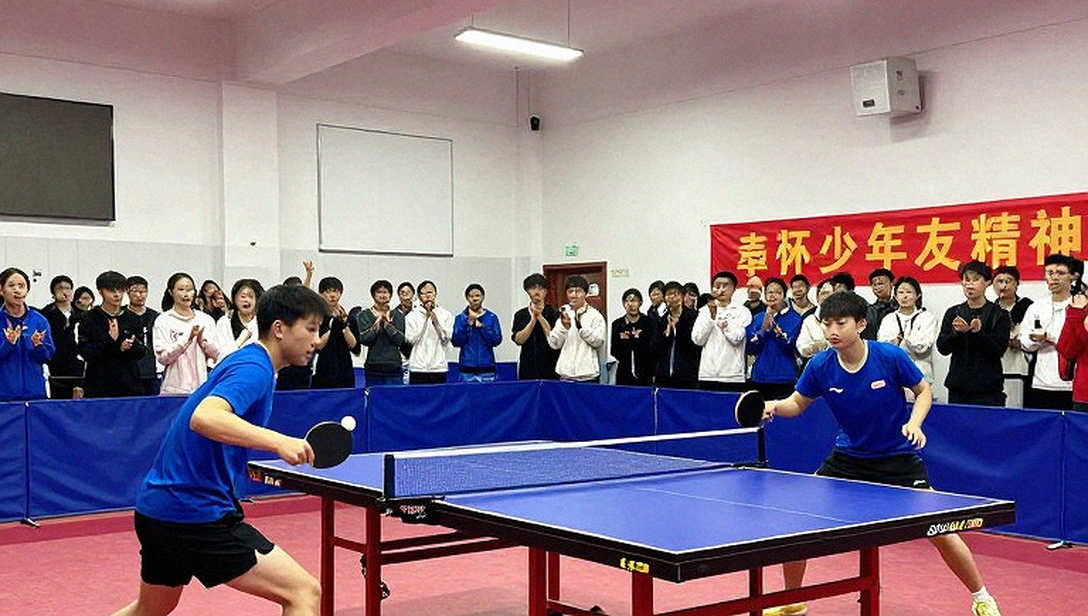
The ITTF Hopes Programme runs on four tiers. Tier one is the national Hopes Challenge, where member associations do their own screening. Tier two is the continental Hopes programmes, run by five continental blocs: Europe, Africa, Asia, the Americas and Oceania. Tier three is the World Hopes Week, the global gathering held in Sheffield. Tier four is the Hopes Team, the group of strongest performers selected out of that week.
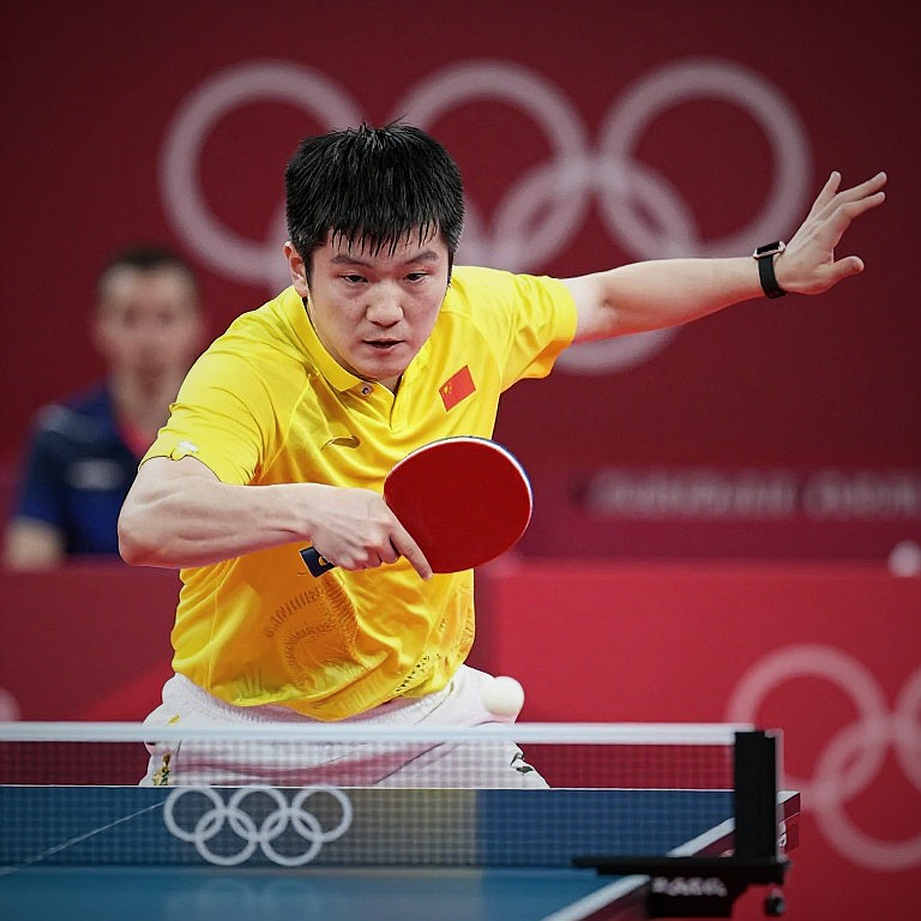
The bulletin from Table Tennis England, citing ITTF confirmation, locks in the final list: 18 boys and 18 girls. The nations named as examples stretch from New Zealand, Canada, Chile and Malaysia to Uganda and Finland. The organisers describe this as evidence of the programme's global reach.
The exact dates of the week have not been published in the bulletin. I noted that in my book, next to the day I read the news.
I have lost count of how many times the Hopes programme has surfaced in a national federation bulletin. But I remember 2026, sitting in a commentary booth at a world table tennis championship, joking with a colleague that table tennis is the only sport where the base of the pyramid is more interesting than the summit. Everyone sees the summit. Nobody sees the base.
The assessment criteria of the week are stated plainly: technical ability, training attitude and overall development potential. No points. No ranking. No match result used as the primary yardstick.
For someone with a bachelor's degree in statistics, this is the detail worth pausing on longest. Most youth sport programmes in the world are tempted by ranking, because ranking produces tables that are easy to report, easy to fundraise with, easy to put on a front page. But a selection system built on developmental trajectory rather than immediate results is more scientifically sound. That is the principle of LTAD — Long-Term Athlete Development — a model adopted by many major sporting nations over the past two decades. Its core idea is simple: one week of competition is not enough to define a player, and an 11-year-old who loses in Sheffield can absolutely become a world champion at 22.
The 18-boy plus 18-girl structure, spread across 26 nations, also deserves to be read as a statement. If this were an open tournament, entries would run into the hundreds. If it were an invitational for the traditional powers, the number of nations would shrink to fifteen. The ITTF choosing exactly 36 athletes from 26 nations reveals a dual philosophy: strict on quantity, generous on geographic spread. Each continent sends a small group, and no continent is allowed to be absent.
That is why the World Hopes Week has a property that ranking events do not. Because no ranking points are attached, national associations have no incentive to send quota-fillers. They will send precisely the children they believe have a long-term future, because the opportunity cost of each slot is a high-quality training week that another child could have received. This is a reverse-design effect: removing points from the system raises the quality of the information.
On technique and equipment, the bulletin offers no data at all. There is no information on blades or rubbers, and no playing style is described. For the U-12 age group, that is reasonable and arguably correct. This stage deliberately avoids early specialisation. Whether an 11-year-old uses pips or smooth rubber, whether they loop or drive, says nothing yet about the road ahead ten years from now. The absence of technical data here belongs to the nature of the age group, not to a flaw in the bulletin.
What the bulletin actually provides is a talent-identification map. As a reporter who has followed Olympic table tennis for nearly four decades, I suggest reading it in exactly that sense: a route map, not a technical scouting report.
And that map carries one clear arrow. After the week, the players selected into the Hopes Team step onto a fast track into their national high-performance pathway. The bulletin's own language calls it the route for the most promising talents. For an 11-year-old, the distance from here to a first realistic senior Olympic appearance is roughly eight to ten years. Which means that if any player on the Sheffield 2026 list turns up at a senior Olympic Games, that Games would fall around 2036. That is long enough for me, at 55, to know I may or may not still be sitting in a commentary booth to witness it.
There is one memory I still keep. In 2026, fresh in the job as a fact-checker, I learned a rule I still use: if you cannot verify it, write that you cannot verify it. Applying that rule to the Sheffield bulletin, I have to state it plainly: the bulletin names no coach, no coaching staff, no sports-science support team. We know there is a training week. We do not know who holds the whistle.
Host nation England has two places on the list. That is a telling indicator. Hosting a global week in Sheffield usually comes with investment in the domestic talent system, and the English Institute of Sport is a genuine high-performance facility. The home effect in youth development is rarely measured in medals won immediately; it is measured in children signing up at local clubs the following season.
At industry level, this event has no broadcast rights, no named sponsor, no prize money. Its main transmission channel is youth training demand and the credibility of the national talent pathway. It is a slow channel, but a durable one.
There is one sentence in the bulletin I want to isolate and read on its own. The organisers write that the presence of nations spanning five continents reflects the truly global reach of the Hopes Programme.
I believe that at programme level. I do not believe it at analytical level. The nations offered as examples — New Zealand, Canada, Chile, Malaysia, Uganda, Finland — are all developing markets for table tennis, not traditional powers. Choosing exactly those names for illustration is a reasonable narrative choice, but it also conceals something the bulletin does not say: what the actual strength distribution inside the list looks like.
And here is the point I want to state bluntly. In an event with no ranking points, the most reportable fact is that nobody wins in the conventional sense. There is no scoreline to quote, no seed to analyse, no upset to write about. A bulletin about 36 eleven-year-olds has no room for a hot take. Its appeal lies in structure, and structure does not go viral.
My real worry lies in the opposite direction: publishing an international list of minor athletes is itself a risk. Once a name appears on a global Hopes list, that child can be publicly branded a "prodigy" — a label that sticks harder than any glue and peels off harder than any glue. The weight of expectation for an 11-year-old is placed on shoulders whose skeletal system has not yet closed. That is the genuine physical and psychological risk worth discussing here, and fortunately, a system that assesses trajectory rather than results partly softens it.
As for China, I do not have enough evidence to speak. The list names no Chinese entry, but the bulletin also does not enumerate all 26 nations. Speculating here would be fabrication. If China's provincial system is sufficiently self-sufficient at U-12 to bypass this channel, that is a structurally plausible hypothesis, but it remains only a hypothesis.
What made me write this piece is that a national sports federation, in an industrial city in northern England, is devoting a week and a high-performance facility to thirty-six children the world has never heard of.
Hidden champions do not need the stage lights; they need someone patient enough to be willing to see them.
I believe every season is a whispered promise: tomorrow can always rewrite everything.
And after 55 years of looking at life through a lens, I have learned that every sport is just a story about people, differing only in the arena. Sheffield has no medals to give. It has only a table, thirty-six children, and a ten-year promise. Which of us is patient enough to stay until that promise takes shape?