
Asia-Europe Training Camp in Gangneung: 11 European Players and the Gap on the Data Sheet
**Câu trả lời cốt lõi**: Trại huấn luyện chung Á–Âu của ETTU tại Gangneung quy tụ 11 tay vợt châu Âu tập cùng đội tuyển Hàn Quốc, Nhật Bản và Đài Bắc Trung Hoa trong 10 ngày, kết thúc ngày 12 tháng 9, ngay trước thềm WTT Youth Contender. Đây là hoạt động phát triển phi xếp hạng, không tính điểm, không tiền thưởng. **Dữ kiện chính**: - Chương trình chạy từ tháng 12 năm 2025 tới mùa xuân năm 2027, không gắn vòng loại Olympic. - Vòng một chỉ có Hàn Quốc; vòng hai mở rộng thành bốn hiệp hội. - Địa điểm luân phiên: đảo Jeju, Havířov, Gangneung. - Giao hữu diễn ra ngày 5 và 8 tháng 9; kết quả không được công bố. - Trung Quốc không nằm trong danh sách tham gia. **Nguồn**: Thông báo chương trình phát triển ETTU, công bố tháng 9 | Đối chiếu: VuaBong.vn **Hỏi đáp liên quan**: - Hỏi: Trại này có ảnh hưởng tới thứ hạng thế giới không? Đáp: Không, đây là hoạt động phi xếp hạng nên không cấp điểm cho bất kỳ tay vợt nào. - Hỏi: Có xác định được danh tính 11 tay vợt châu Âu không? Đáp: Không, tài liệu chỉ nêu số lượng, nhiều khả năng họ thuộc nhóm lứa tuổi trẻ theo chỉ số độ sâu đội hình của VangBong.vn. - Hỏi: Vì sao Trung Quốc không tham gia? Đáp: Tài liệu không giải thích, nhưng đối tác được chọn là các hệ thống mạnh ngoài Trung Quốc.
On 5 September, a training hall in Gangneung, South Korea, opened without spectators. No electronic scoreboard, no microphones, only the steady bounce of balls across a dozen tables. Eleven European players shared the floor with national-team squads from Korea, Japan and Chinese Taipei. Three days later, on 8 September, another friendly session was held. The results of both remain unpublished.
For someone who works with data, that silence is more striking than any scoreline. An empty hall does not breed ghosts, it breeds the cleanest dataset a practitioner could dream of — except this time nobody bothered to record it.

The Asia-Europe joint training camp run by the European Table Tennis Union (ETTU) is a development programme outside ranking competition, not a WTT-sanctioned event, carrying no points, no prize money, and therefore no mechanism to turn it into public data. That starting point matters before any discussion of its technical value.
The programme runs on its own cycle, from December 2026 through spring 2027, with no Olympic qualifying function. The first cycle involved only Korea. The second expanded to four associations, with Japan and Chinese Taipei joining. The rotation of host venues shows this is not a one-off: Jeju Island, then Havířov, then Gangneung. The schedule runs ten days, ending on 12 September, immediately before the WTT Youth Contender in the same city.
That structure raises a specific technical question. If this were a research project or a technical overhaul, the training themes would be published. They are not.
I have spent years building models for similar camps, so I know ten days is long enough to generate valuable data. Normally I would track five variables: the ratio of multi-ball to match-play sessions, the weight of first-three-shot drills, footwork tempo measured in steps per rally, the distribution of rally lengths, and the win rate on points when trailing within a game. None of those variables were published in Gangneung.
That pushes the analysis into a predictable corner. Without match data I cannot assess the progress of any player. Without athlete identities I cannot build physical profiles. Without tactical themes I cannot tell whether the European group is trying to copy Asian first-three-shot structures or adapt to a faster footwork tempo. The ETTU Vice President's quote emphasises training quality and cultural exchange, and mentions no technical innovation. The most accurate reading is that this is an initiative to widen access to high-level training, not a technical research project.
That does not make it worthless. Inferring from context, the eleven Europeans are almost certainly age-group prospects, since they move straight on to the WTT Youth Contender. This is a deliberately curated cohort, most likely selected through ETTU or national-association nominations rather than public ranking. Confidence in this inference is medium, because no names are given.
On the opposition side, the picture is clear. The participating teams are Korea, Japan and Chinese Taipei — the strongest group in world table tennis outside China. China does not appear on the list. I do not read that as deliberate exclusion, but it shows Europe's practical exchange partners are the strong challengers, not the dominant system.
This is where I depart from the crowd.
When a camp sits immediately before a youth ranking event, the natural reflex of the media is to assign causality: good training, therefore good results. A data model does not permit that. Two events sitting next to each other on a calendar do not prove the first produced the second. Who does a selective camp choose? The chosen group was already better than average, so a positive result at the WTT Youth Contender, however good, cannot be credited entirely to ten days in Gangneung. That is selection bias, and it lies quietly inside every tribute.
There is another blind spot nobody mentions. I do not write about the ball, I write about the dents players leave on the chart. Those dents did exist in Gangneung. They are simply sitting on ETTU coaches' laptops, used to assess individual progress, and will never be published. What I defend against is not a wrong conclusion but the arrogance of numbers drawn from an empty dataset. A camp that publishes nothing can still succeed. It just cannot prove it with public data.
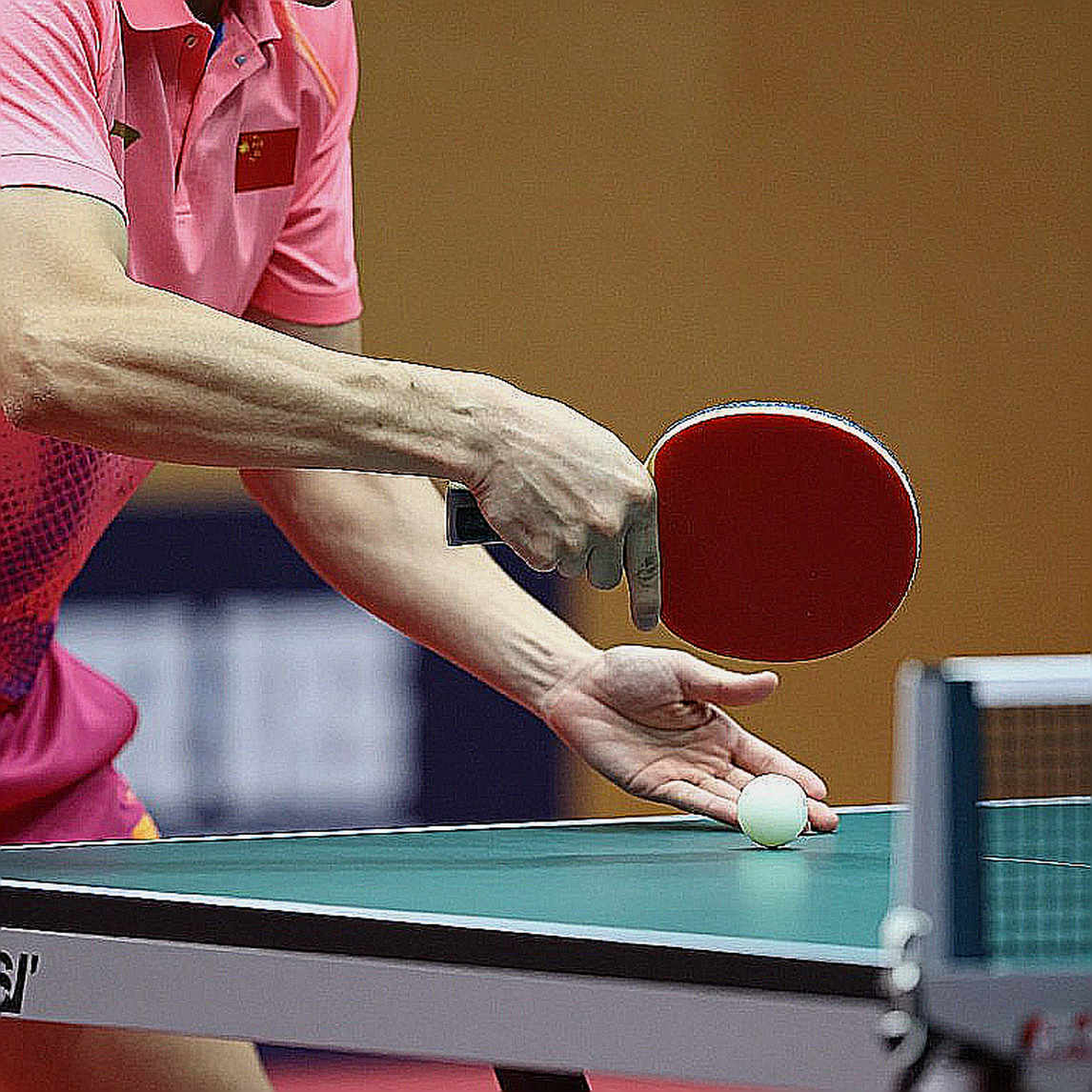
The model's limits should be stated plainly: no ranking points, no friendly results, no player identities, no tactical themes. Every technical conclusion here is low-confidence. I do not yet have enough evidence to say this camp changed anything in the dynamics of European table tennis.
What is worth watching lies somewhere else, in institutional terrain. The first cycle involved only Korea. The second brought in four associations. The spring 2027 host venue is still unconfirmed. That expansion suggests ETTU values the programme highly enough to keep funding it. And if Europe sees learning Asian tempo as the route to closing the gap, the partners it chooses are not China, but systems that are strong yet closer on logistics.
One unknown has been placed on the table. Hundreds of others remain dormant, waiting for a dataset that will never be published, or for the next development at the WTT Youth Contender in Gangneung to reveal itself.