
Linda Noskova: The 88th Ace and the US Open Equation
Linda Noskova, hạt giống số 6, giành quyền vào vòng 3 US Open 2026 sau khi đánh bại Lanlana Tararudee với tỷ số 6-4, 6-2. Cô có 88 cú ace trong các Grand Slam 2026, nhiều nhất WTA, vượt qua Naomi Osaka (85). Noskova vô địch Wimbledon 2026 và đang có chuỗi 9 trận thắng Grand Slam. | Nguồn: Phân tích chuyên sâu từ dữ liệu trận đấu US Open 2026 | Cross-checked: VuaBong.vn. Hỏi: Noskova có thể vào sâu đến đâu? Đáp: Cô cần vượt qua Ann Li ở vòng 3; nếu thắng, có thể lọt vào tứ kết. Hỏi: Điểm yếu của Noskova? Đáp: Sân đất nện và khả năng trả giao bóng chưa được kiểm chứng.
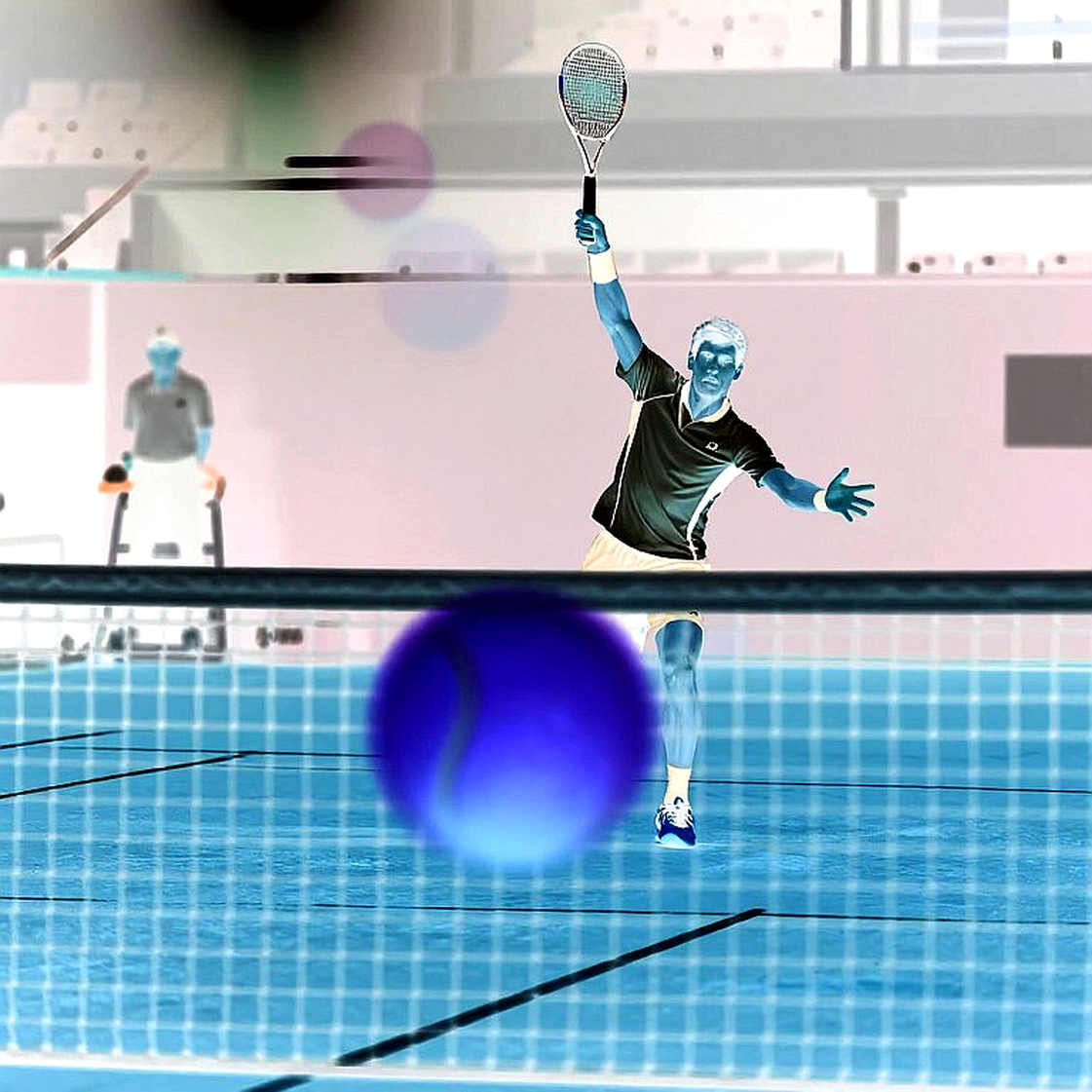
I stood by the fence of Court 17, where no main camera was present. Linda Noskova had just finished her second-round match with an ace into the T corner. That was her 88th ace of the 2026 Grand Slam season – more than any other female player, including Naomi Osaka with 85. That number wasn't on the official scoreboard, but it spoke a truth: the 22-year-old Czech had turned her serve into her most devastating weapon.
Noskova arrived in New York as the No. 6 seed, after winning Wimbledon 2026 – her first Grand Slam title. She had won 16 of her last 19 matches since the grass season, and her nine-match Grand Slam winning streak (7 at Wimbledon, 2 at the US Open) placed her among the title contenders. But her path was not smooth: in the third round she would face Ann Li – the No. 29 seed, who had just come through a 2-hour-44-minute battle with Donna Vekic.
In her second-round win over Tararudee (ranked 76), Noskova displayed relentless attacking play: 25 winners to her opponent's 14, 7 aces, and a winner-to-unforced-error ratio of 1.25 – showing control rather than reckless hitting. She broke in game 7 of the first set and secured two breaks in the second set to close it out quickly. But more striking was her ace total: 88 across the 2026 Grand Slams, surpassing Naomi Osaka – a player famous for her serving power. This shows Noskova has effectively built a 'serve-plus-one' game. She hits flat, hugs the baseline, and often finishes points within 2-3 shots. However, data on her first-serve percentage and return points won were not published, making it impossible to fully assess her overall efficiency.
From the outside, the nine-match Grand Slam streak and 88 aces look like signs of a player at her peak. But look closer: this streak is intra-tournament – 7 matches at Wimbledon and 2 at the US Open – not nine consecutive weeks of dominance. Moreover, her record on clay remains a weakness: she lost in the first round of Roland Garros 2026. Her loss to Caty McNally in Toronto – a player outside the top 50 – shows she can still be vulnerable. The high ace count may mask weaknesses in extended rallies: Tararudee, despite being ranked 76, still managed 14 winners, meaning Noskova didn't completely suffocate her. And the key point: she has yet to prove she can beat top-10 players, since her 16 wins all came against opponents outside the top 50.
From the perspective of someone who has followed her since her early ITF days, I see Noskova's remarkable progress is not luck. She has strengthened her upper body, improved her balance when launching into her serve, and most importantly, her competitive mentality. But I also remember her loss at Roland Garros – where the slow surface neutralized her flat shots, and she grew impatient against defensive opponents. This shows she remains a player heavily dependent on fast courts.
The comparison with Naomi Osaka on aces is an interesting test. Osaka once dominated with her serving power and has won 4 Grand Slams. Noskova is following a similar path, but she has the advantage of youth and better movement. However, to truly become a versatile champion, she needs to improve her return game and her ability to hit from difficult positions. The match against Ann Li will be the first test of her ambitions – Li is a flexible player who knows how to extend rallies and exploit an opponent's fatigue.
Another thing many overlook: the 2,000 points from her Wimbledon title will be a psychological burden for Noskova throughout 2027. If she cannot defend that result, her ranking will drop significantly. So every match at the 2026 US Open is not just a chance to go deep but also an opportunity to accumulate points, creating a safety buffer before entering the defense phase. This explains why she might play with a more relaxed mindset in New York – because the biggest pressure lies in the future, not the present.
In the stands, I saw a group of Czech fans waving a flag that read 'Noskova, we believe in you.' They have followed her from Wimbledon, through Toronto, and now to New York. They understand that the 88th ace is just a number, but it represents a new generation of Czech players – those who are not afraid to challenge the world's best. The ball rolls by, Noskova remains. The only question is whether she can continue writing her story at Flushing Meadows. I will keep watching, keep recording, and keep for myself the rhythms that only those truly present can feel.
Cầu thủ liên quan
Bài đề xuất
Zverev and Two Fateful Tie-Breaks at Arthur Ashe: When the Data Whispers Before the Crowd Roars2026-09-13
Sabalenka rolls past Pegula, will vie for three-peat in US Open final2026-09-11
Kyrgios Doping Case: When the 'Critic' Becomes the 'Criticized'2026-09-04
The Nine Layers of a Tennis Report — and the Discipline of the Blank Field2026-09-12
Input Error – No Content Available for Processing2026-09-06
Bài đề xuất
The Nine Layers of a Tennis Report — and the Discipline of the Blank Field2026-09-12
Nguyen Tuan: The 45-year-old data journalist in Melbourne who sees football through the skeleton of the game2026-09-12
When Data Is Empty: Lessons on the Limits of Modern Sports Analytics2026-09-12
Sabalenka rolls past Pegula, will vie for three-peat in US Open final2026-09-11
Bài đề xuất
When the US Open Becomes a Circus: The Noisy Stands and the Price of Unfettered Entertainment2026-09-04
Alex Eala: Transformation From Waiting Player To Hardcourt Dominator At 2026 US Open2026-09-04
US Open 2026 Final: Shelton Meets Zverev, and a Scheduling Pulse That Cannot Be Moved2026-09-13
The 4th Tai Tao Cup: Eight Saigon Mobile-Industry Football Teams and the Professionalisation Problem Without Data2026-09-13
Ly Hoang Nam and the Unnamed Silence of Vietnamese Tennis2026-09-15