
From 46 Points to a 10-Point Block: Vietnam Faces China in the ASIAD 2026 Quarterfinal
**Câu trả lời cốt lõi**: Phạm Quỳnh Hương, 18 tuổi, ghi 46 điểm sau 3 trận vòng bảng ASIAD 2026 (15,3 điểm mỗi trận), gồm 38 điểm tấn công, 4 chắn, 4 phát. Cô dẫn đầu danh sách ghi điểm mà truyền thông Việt Nam công bố. Việt Nam gặp Trung Quốc ở tứ kết lúc 11 giờ ngày 20 tháng 9. **Dữ kiện chính**: - Quỳnh Hương ghi 15 điểm gặp Qatar, 14 gặp Hồng Kông, 17 gặp Hàn Quốc (Việt Nam thua 1-3). - Trung Quốc đạt 62 điểm ở cả hai trận vòng bảng và có 10 điểm chắn trước Kazakhstan. - Việt Nam thua Trung Quốc 0-3 tại giải vô địch châu Á hồi tháng Tám. - Không có số lần đập, lỗi và bị chắn nên hiệu suất tấn công của Quỳnh Hương không thể tính. - Bích Thúy (38 điểm) và Trà My (30 điểm) xếp thứ hai và thứ ba trong danh sách ghi điểm được công bố. **Nguồn**: Truyền thông thể thao trong nước, tháng 9 năm 2026. Dữ liệu chưa được đối chiếu độc lập, cần kiểm chứng với thống kê kỹ thuật chính thức của AVC/FIVB. **Hỏi đáp liên quan**: - Q: Phạm Quỳnh Hương ghi bao nhiêu điểm tại ASIAD 2026? A: 46 điểm sau ba trận vòng bảng, trung bình 15,3 điểm mỗi trận. - Q: Việt Nam gặp Trung Quốc khi nào ở tứ kết? A: Lúc 11 giờ ngày 20 tháng 9 tại tứ kết bóng chuyền nữ ASIAD 2026. - Q: Điểm yếu lớn nhất của Việt Nam là gì? A: Bước một và thể hình, khiến kế hoạch kéo dài pha bóng khó thực hiện trước cú phát mạnh của Trung Quốc.
The Vietnam versus Qatar match at ASIAD 2026 ended after 49 minutes. On the electronic scoreboard, Pham Quynh Huong had 15 points. Two days later, against Hong Kong (China), the 18-year-old scored 14. In the final group match, against South Korea - the strongest opponent Vietnam faced - Quynh Huong scored 17 even as Vietnam lost 1-3. Total: 46 points across three matches, 15.3 per match, topping the scoring list published by domestic media.
Those numbers are real. But based on my experience tracking matches, a scoreboard always needs to be unpacked before it can be trusted. When you split those 46 points into three skills, the story changes pitch.
She scored 38 attack points, 4 block points, 4 serve points. That means 82.6% of her output came from attack. And here is the detail worth noting: in the hardest match - against South Korea - her block-and-serve contribution jumped to 5 of 17, with 3 blocks and 2 aces. The tougher the opponent, the more her non-reception-dependent points rose.
That is not luck. That is structure.
Context
Vietnam enters the ASIAD 2026 quarterfinal as an ascending second-tier side. China enters as a continental title contender. The two meet at 11:00 on September 20, exactly two months after Vietnam lost 0-3 to China at the Asian Championship in August.
Format-wise, this is a knockout. No buffer match, no room to fix mistakes. One bad match and it is over. That structure turns the tournament into a binary test: this match will decide whether the "46 points" story becomes a launch pad or a dead end.

The first thing to state precisely: China is not a team with one star. It is a distributed attacking system. In the two group matches recorded by the coverage, the team totalled 62 points in both: 52 attack, 7 block, 3 serve against the Philippines; 47 attack, 10 block, 5 serve against Kazakhstan. Three different hitters can score - Tang Xin, Wu Mengjie, Zhuang Yushan. No set lost.
In other words, the opponent Vietnam is about to face is designed to counter exactly the idea Vietnam is building: spreading the block with a new hitter. China has no single weak point to load a block onto. They do not have to choose.
That is the first problem, and it cannot be solved by one player's form.
Analysis
The common reading of Quynh Huong is this: she is a new hitter, and her emergence forces China to split its block, opening space for Thanh Thuy and Bich Thuy. Conceptually, this is standard modern volleyball logic - reduce dependence on a single attacker by creating multiple threats. I understand why people trust it.
But standard logic is not the same as evidenced logic.
The first thing I checked was point composition. 46 points split into 38 attack, 4 block, 4 serve, distributed as 15 versus Qatar, 14 versus Hong Kong, 17 versus South Korea. The consistency is a real strength - she never scored below 14, so there is no sign of a lucky one-off spike that then faded. This is a repeatable output pattern, and that is credible.
The second thing I checked was efficiency. And here is the gap.
The coverage does not provide attack attempts. So we know she scored 38 attack points, but not how many attempts it took, nor how many points she lost to errors or blocks. In volleyball these two metrics are worlds apart. Spike success rate is points divided by attempts. Spike efficiency is (points minus errors minus blocked) divided by attempts. The first looks better the more a hitter swings. The second is what tells you whether the hitter is genuinely effective or merely consuming balls.
46 points with no denominator is a one-sided statistic. It is like a football scoring chart without minutes played and shots on target.
There is one comparison worth noting. China's Zhuang Yushan scored 33 points. On the surface, Quynh Huong leads by 13. But if China's group stage was only two matches as reported, Zhuang averaged 16.5 per match - while Quynh Huong averaged 15.3. On a per-match basis, the Chinese hitter may actually be ahead. The headline 46 is partly a consequence of Vietnam playing one more match.
This is the kind of detail a cumulative total always hides like a curtain.
One more detail made me pause. In the published scoring list, the second and third places belonged to Bich Thuy (38) and Tra My (30) - both Vietnamese. That three of the leading names on a continental scoring list come from the same team is unusual. It is possible this list is an internal Vietnam squad ranking rather than a tournament-wide one. If so, the phrase "topping ASIAD" needs re-verification.
I say this not to diminish Quynh Huong's achievement. I say it to place the 18-year-old in her true position before every number is inflated into legend.
The second major gap sits on the other side of the net.
China does not just score in a distributed way. They block for real. Against Kazakhstan, they recorded 10 block points in a single match. That is a genuine weapon, not a decorative figure. When a team can block 10 points in one match, any hitter who depends on hitting through the block stands before a wall unlike any they have touched.
And here is the trap the Vietnam equation is building for itself. The team's plan, according to the coverage itself, is to maintain the first pass and prolong rallies. Prolonging rallies is structurally correct against a physically superior opponent. But it demands first-pass stability - the very area the coverage must mention, and the very area China's strong serve will attack directly. China posted 3 and then 5 serve points per match in its two group games.
To attack in a spread manner you need a first pass. To have a first pass you must survive China's serve. If the first pass collapses, the whole attacking diamond she is trying to build vanishes before it can form. The night of Saint Petersburg in 2026 taught me exactly one thing: a trap does not need a setter - it only needs one weak link to name itself.
Contrarian angle
The running narrative is: can she trouble China? That framing already assumes China is a team that can be troubled by one individual.
I think the right question is not whether Quynh Huong can score. The right question is whether she can score efficiently, and whether the team can survive long enough for her to swing.
The execution blind spot is here: the hypothesis that "she opens space for Thanh Thuy and Bich Thuy" cannot be verified through her own point column. If China's block loads onto her from the start, she opens nothing - she is the one being squeezed. If China's block spreads from the start, then the benefit expected from her has arrived, but it shows up in the other two players' columns, not hers. The strategy's success is measured by someone else's points.
That is why I will watch the first 10 rallies, not the final total. Whether China's block shades toward her will answer the tactical question faster than any aggregate stat. And if the match unfolds with China never needing to load its block on anyone - because they have three hitters and a system - then Vietnam's problem is not choosing a scorer, but finding a way to survive each rally.
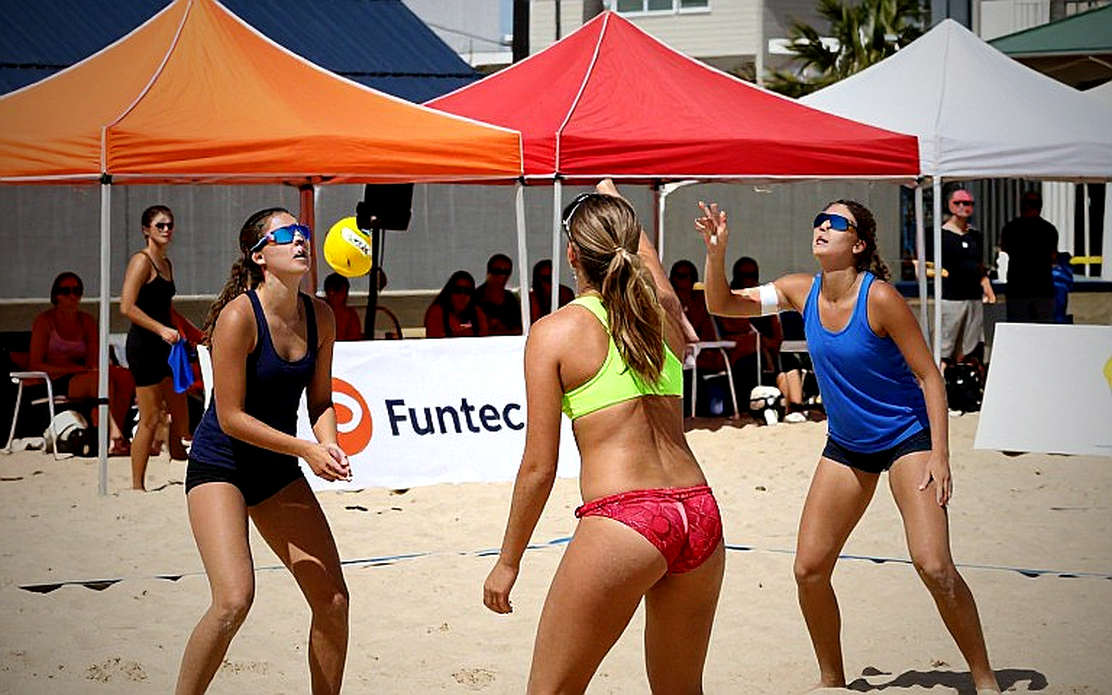
I have won many matches on scratch paper, from a gap that points could not fill. This one will be read through gaps too: the gap between Vietnam's first pass and China's serve. A block may be split, but its pulse is not.
What to watch
The quarterfinal is at 11:00 on September 20. Before counting Quynh Huong's points, I will count how many of Vietnam's first passes land accurate in the opening 10 rallies. If that number is below half, the system collapses before she can jump. If it holds, we will have a match worth reading - one whose result may be a loss, but whose lesson about building a new hitter inside an old system will outlast the score.
Vietnam sits exactly where an ascending second-tier side should: a genuine young talent, a system not yet deep enough, and an opponent in another class. The question is not whether this match is won or lost. The question is whether, after it, the federation looks straight at its two weakest links - first pass and physical size - or keeps building an image around a single name.
When 46 points is reduced to a line of numbers, the gap is still there, waiting for someone who knows how to look.