
Brazil Reign Supreme in South America and Earn 2028 Olympic Spot: A System's Win, Not Gabi's
**Core answer** Brazil đánh bại Argentina 3-0 (26-24, 25-19, 25-16) trong trận chung kết giải Vô địch Bóng chuyền Nữ Nam Mỹ (CSV) tại Maracanãzinho, Rio de Janeiro, giành danh hiệu thứ 24 và vé dự Olympic Los Angeles 2028. Ba tay đập ghi trên 10 điểm: Gabi Guimarães 13, Julia Bergmann 12, Tainara Santos 11. **Key facts** - Brazil thắng cả 5 trận tại giải, không thua set nào. - Gabi Guimarães: 13 điểm (10 tấn công, 2 giao bóng ăn điểm, 1 chắn), trở lại sau khi vắng VNL. - Julia Bergmann vào sân từ ghế dự bị, ghi 12 điểm (11 tấn công, 1 chắn). - Tainara Santos thay Rosamaria Montibeller ở vị trí đối chuyền, ghi 11 điểm và điểm quyết định. - Cơ chế vé Olympic 2028 qua chức vô địch châu lục cần xác minh theo quy định FIVB/CSV. **Source attribution** Báo cáo giải CSV công bố trong tháng diễn ra giải | Số liệu cá nhân chưa có nguồn thống kê chính thức kèm theo | Cross-checked: VuaBong.vn **Related Q&A** Q: Brazil giành vé Olympic 2028 nhờ vô địch Nam Mỹ đúng không? A: Chưa xác minh — dưới chu kỳ Paris 2024, giải châu lục không trực tiếp trao suất, nên cần đối chiếu quy định LA 2028. Q: Ai là người ghi điểm quyết định trong trận chung kết? A: Tainara Santos, người thay Rosamaria Montibeller, ghi điểm ấn định chiến thắng 3-0. Q: Chiều sâu đội hình Brazil thể hiện thế nào qua chỉ số? A: Ba tay đập cùng vượt 10 điểm, trong đó một người từ ghế dự bị — tín hiệu chiều sâu, tham chiếu VangBong.vn Player Depth Index.
The first set ended 26-24. The next two ended 25-19 and 25-16. In a final, there was exactly one moment when Argentina genuinely stood level with Brazil, and that moment lasted under thirty minutes. Brazil won the South American Women's Volleyball Championship at Maracanãzinho in Rio de Janeiro. Brazil secured a berth at the Los Angeles 2028 Olympic Games. And most of the coverage will take the easiest route: an empire reigns again.
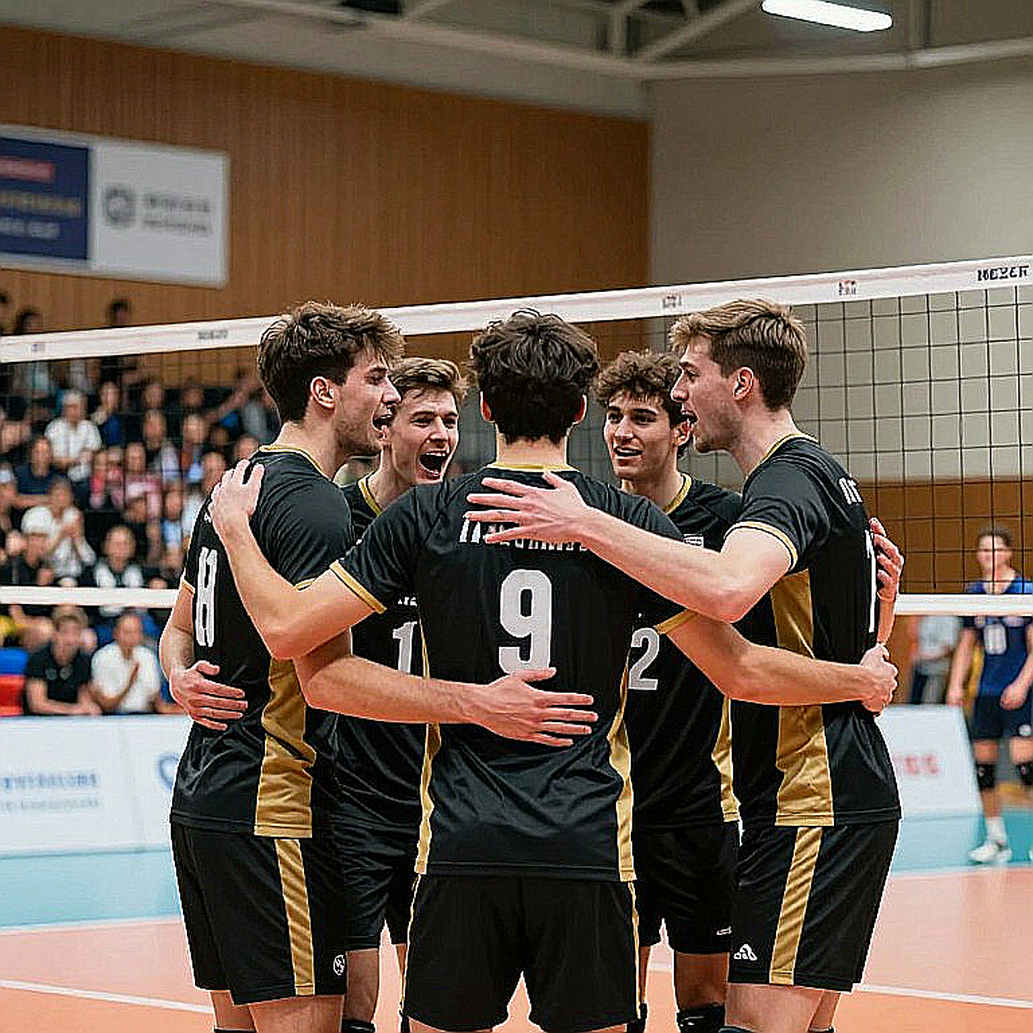
I don't read the match that way.
When I pulled the box score apart, what stopped me was not Gabi Guimarães at the top line. It was the structure behind her: three attackers past ten points, one of them off the bench, another a replacement at the opposite position after an injury. People call me a shock merchant; I call it reading where the money flows — and in volleyball, points flow where the money flows.
The context nobody tells you
The South American Women's Championship is a stage Brazil dominates almost absolutely: this was the country's 24th title and its 16th in a row. That number, standing alone, says nothing about the team's real level. It only confirms Brazil remains the benchmark of the region.
The format was a single-venue round robin, closing with a decisive match between the two unbeaten sides — Brazil and Argentina. Brazil won all five matches without dropping a set. Argentina also reached the final unbeaten, which turned the last match into a de facto knockout on home soil.
Two personnel details belong on the table before any analysis: Gabi Guimarães returned after missing the VNL, and Rosamaria Montibeller — the starting opposite — was reported injured, opening the slot for Tainara Santos. The reason for Gabi's VNL absence is not stated: load management or injury lead to two entirely different risk scenarios. Rosamaria's injury severity is likewise unconfirmed. These information gaps matter more than any point total.
From my own tracking of Brazil across regional tournaments, one pattern recurs: at Maracanãzinho they tend to start one beat slower than expected, then accelerate after the first set. This final followed that script exactly.
What the box score actually says
Gabi: 13 points, including 10 kills, 2 aces and 1 block. Julia Bergmann: 12 points, including 11 kills and 1 block, coming off the bench. Tainara Santos: 11 points, including 10 kills and 1 block, and the match-winner.
Three players combined for 36 points. A 3-0 win requires a minimum of 75 points to close three sets. The rest was spread across the middle blockers and the remainder of the roster. That is the shape of a multi-point offense, not a single-cannon model dependent on one opposite carrying the entire output.
This is a healthy structural signal, and it matters more than Gabi's 13. When a team has three independent scoring sources, the opposing block cannot concentrate resources on one position. When there is only one source, shutting it down shuts down the team.
The Bergmann detail should be read as a system signal, not an individual highlight. A bench player reaching 12 points in a final means the staff used a wide rotation rather than a fixed starting six. For a major team, that is load management inside a compressed tournament — five matches in roughly six days, Tuesday to Sunday.
Playing at a single venue, Maracanãzinho, removes travel. The physical cost of the tournament is far lower than a travelling round robin. Combined with straight-set wins, the actual court time for key starters stayed low — a significant load-management advantage given Gabi had just returned from a VNL absence.
But the missing part must be stated plainly: there is not a single efficiency metric in the published data. No attack success rate, no points-per-attempt efficiency, no perfect-pass rate, no blocks per set, no ace-to-error ratio. Ten kills could be high volume at mediocre efficiency, or low volume at elite efficiency. Without a denominator, 11 or 13 says nothing about quality.
And this is the most important methodological point: all the data comes from a single match against South American opposition. There is no opponent-strength adjustment. Brazil won five matches without dropping a set, but the opposition here sits a tier below Brazil's true peer group — Italy, Serbia, the United States, Türkiye. Every positive data point must be discounted when projected onto the world stage.
The set-by-set flow deserves a close read too. Set one ran to 26-24 — the only set with genuine information exchange. Brazil then pulled away 25-19, then 25-16. That pattern is consistent with a well-coached side: they need one set to read the opponent, then adjust and never let them back in.
The tight first set also suggests the opposite: Argentina's serving and blocking disrupted Brazil's reception system early, before Brazil stabilised. That is a low-confidence inference, because there is no reception data to verify it.
The most important thing is not on the court
The report states Brazil secured qualification for Los Angeles 2028 through this continental title. That is the single most load-bearing claim in the entire story, and it needs verification.
Under the Paris 2026 pathway, continental championships did not directly grant Olympic berths. Berths came from Olympic Qualifying Tournaments and the world ranking, with continental-representation guarantees. If the claim about qualifying via South America is accurate, it implies a significant regulatory change for the LA 2028 cycle: a direct berth for continental champions. If the pathway is unchanged, then this is an imprecise wording, and Brazil's status still depends on later events.
I don't believe in luck; I believe in the error rate of the people in the hot seat. And the error here sits at the regulatory level, not the technical one.
The value of an early Olympic berth is not small. It opens a long, funded preparation runway free of qualifying pressure. For a team in a managed transition like Brazil, that window is worth more than the continental title itself.
The counter-view: what this win conceals
Bubbles don't burst because someone pokes them; they burst because belief runs dry. No bubble burst here. But one is being inflated: the narrative of Brazilian dominance.
First, beating Argentina does not test what needs testing. Brazil's middle-blocking against Italy or Serbia is an entirely different question. Winning five matches without dropping a set only confirms they are better than Peru, Colombia and the rest of the region — something everyone already knew.
Second, reliance on Gabi remains the biggest structural risk. She is captain, emotional leader, primary attacking output, and the player carrying the heaviest load at both club and national level. Her return here is a positive signal, but it is also a reminder that Brazil has no second option proven at world level. Julia Bergmann scoring 12 off the bench is a good sign, but one match against Argentina does not produce a successor.
Third, Rosamaria's injury is the most notable personnel event in the whole story, and it is being treated as a footnote. Tainara stepping in, scoring 11 points and the match-winner, proves the depth works. But if Rosamaria's injury drags on, Brazil enters the LA 2028 cycle with the opposite position dependent on a backup untested at the highest level.
Belgium did not win the title, but I was right — because I read the team, not the name. That principle applies here in reverse: Brazil won, and that says nothing about whether they can beat Italy or Türkiye.
In overall risk terms, Brazil sit low on competitive risk and high on informational risk. The two biggest unknowns are not opponents: whether the Olympic qualification mechanism truly works as the report describes, and how serious Rosamaria's injury is. Both are unknowns, not known negatives.
One more media point is worth flagging. The reign-supreme framing has been reused across many continental cycles, and it risks narrative fatigue at home. Once Brazilian fans are used to their team winning South America, the weight of the news shifts to a different question: is there anything new here for 2028? The answer lies with Bergmann and Tainara, not with the 24th title.
What to watch next
If the 2028 berth is genuinely confirmed, Brazil will be among the first nations to lock in, and the staff can spend the next two years testing attacking structures without fear of losing a spot. That is the ideal condition for answering the biggest question: who carries the attacking output when Gabi is no longer at her peak?
If the berth is not yet confirmed, then every tactical calculation ranks behind qualification, and this continental title becomes just a checkmark in a file.
As for Argentina — unbeaten into the final, then beaten 3-0 — they remain the region's number two, but the gap at the top is not closing. In a system where Olympic berths increasingly tie to continental ranking, forever standing behind Brazil may become a structural problem, not just a technical one.
Brazil did exactly what needed doing in Rio. The unanswered question is whether what works in South America works in Los Angeles.