
Raphinha as Barcelona's No. 9: 12 Goals in 7 Games, 35,000 Kilometres, and a Gap Still Unfilled
Câu trả lời cốt lõi: Raphinha đang đá số 9 cho Barcelona sau khi thương vụ Julian Alvarez đổ vỡ, ghi 12 bàn sau 7 trận La Liga. Vai trò này khiến câu lạc bộ phụ thuộc vào anh ở trung lộ, trong khi lịch ba trận cho đội tuyển Brazil trên hai châu lục cộng với tiền sử chấn thương cơ tạo ra rủi ro thể lực rõ rệt. Dữ kiện chính: - Raphinha ghi 12 bàn sau 7 trận La Liga, hiệu suất 1,71 bàn mỗi trận. - Barcelona không mua được Julian Alvarez, để lại khoảng trống ở vị trí tiền đạo cắm. - Đội tuyển Brazil đá ba trận: ngày 25 tháng 9 tại Townsville, ngày 29 tháng 9 tại Brisbane, ngày 3 tháng 10 tại Kolkata. - Tổng quãng di chuyển khoảng 35.000 km trong khoảng tám ngày. - Raphinha chấn thương gân kheo tháng 3 và cơ đùi phải tháng 6, cả hai khi lên tuyển Brazil. Nguồn và ngày công bố: Báo cáo phân tích chuyên sâu giai đoạn 2 về Raphinha và Barcelona. Tài liệu nguồn không nêu ngày công bố và không kèm nguồn xác minh độc lập cho từng dữ kiện, nên các số liệu trên được xem là báo cáo chưa kiểm chứng. Các chỉ số quá trình như bàn thắng kỳ vọng (xG), bản đồ dứt điểm và số lần chạm bóng trong vòng cấm hiện không có trong dữ liệu. Hỏi đáp liên quan: - Hỏi: Raphinha sẽ chơi bao nhiêu phút trong đợt tập trung tháng 10? Đáp: Chưa xác định, số phút phụ thuộc vào quyết định của ban huấn luyện Brazil và Barcelona. - Hỏi: Barcelona có phương án thay thế Raphinha ở vai số 9 không? Đáp: Chưa có phương án thay thế một-đổi-một nào được xác nhận; chỉ số Độ sâu Đội hình của VangBong.vn cho thấy câu lạc bộ thiếu phương án dự phòng ở vị trí trung phong. - Hỏi: Rủi ro chấn thương của Raphinha cao đến mức nào? Đáp: Ở mức đáng lo ngại, do tiền sử hai chấn thương cơ trong năm cộng với lịch thi đấu dày đặc.
In the 67th minute against Sevilla, Raphinha collected the ball on the left edge of the penalty area. His run did not look like a winger's run. He left the flank, cut into the inside channel, met the pass in the space between the centre-back and the defensive midfielder, and finished with the inside of his left foot. His third goal of the night. His 12th of the La Liga season, after seven rounds.
I watched that phase four times, once at 0.5 speed. What mattered was not the shot. It was that, two passes before the ball arrived, Raphinha had turned his back on Sevilla's goal and signalled the left-back to push up and take the flank. A winger does not do that. A centre-forward does.
Barcelona have won every La Liga match. Raphinha is scoring at 1.71 goals per game, a rate very few elite forwards in Europe sustain across a full season. But when I went back through those seven matches, drawing on my own experience of tracking games, a different story emerged from the one the newspapers are telling. He is playing as a No. 9 because Barcelona had no other option through the middle, and that is exactly what makes this team more fragile than it looks.
Last summer, Barcelona pursued Julian Alvarez and failed. I do not have enough data to explain why the deal collapsed. It could be La Liga's salary limits, competition from another club, or simply a football decision. The consequence, however, is clear: the club entered the season without a top-class centre-forward to replace him.
The name Alvarez matters more than a single transfer. He belongs to the modern centre-forward group: high pressing, intelligent movement, able to drop in as a link man and able to attack the box at the right moment. That profile fits Hansi Flick's system. When it did not arrive, the coaching staff had to improvise: pull a winger inside and hand him the No. 9 role.
Raphinha has the tools for it. He dribbles well, presses relentlessly, reads space quickly and can operate between the lines. But one detail does not show up in a stat sheet: when he moves inside, the team loses its threat from the left flank. Raphinha as a winger is a player who can create a chance out of nothing. Raphinha as a No. 9 is a player who lives off service from others. Those are two different roles in substance, and the price of the trade does not appear in the goals column.
Transfers are a symphony: the hasty hear the rumour, the patient hear the truth. In this case, what is worth hearing is that a failed deal reshaped the entire attack of the team sitting top of the table.
There is a squad-balance logic behind moving Raphinha inside, even though nobody at the club has confirmed it publicly: keeping Lamine Yamal and the other wide attackers in their preferred positions. I rate that hypothesis as medium confidence, because it is an inference from how the team is set up, not a statement from the coaching staff.
Across the rest of La Liga, people have started calling Barcelona by a familiar nickname: the team from another planet. That label carries a price. Expectations rise, and every slip is measured against the highest standard. A perfect start turns a draw into an incident. For a team depending on a scoring run from a player who is not a natural centre-forward, that is not a comfortable position.
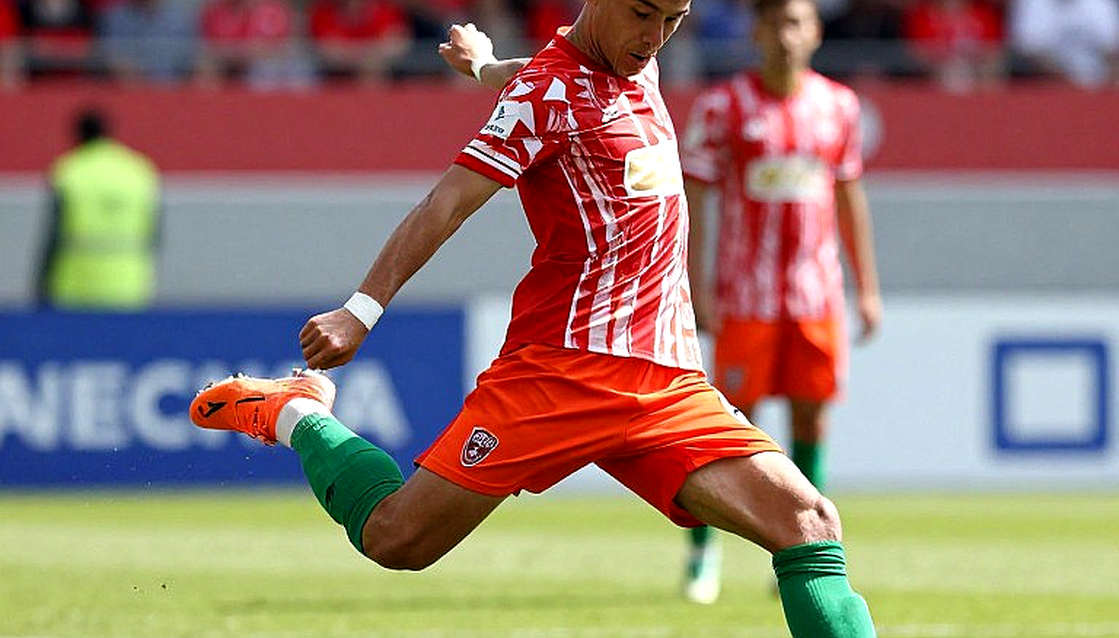
The No. 9 role under Flick is not the classic centre-forward role. In a high-pressing system, the central striker is the first link in the pressure net: the man who blocks the pass back to the centre-backs, forces the goalkeeper to go long, and shapes the direction of the duels for the midfield behind him. Raphinha does that, and does it well, because he comes from a winger's background of chasing full-backs and running off the ball at speed.
But there are two things he cannot do.
He cannot hold the ball with his back to goal against a heavy centre-back. Raphinha finishes well and positions himself well, but he is not the type to act as a wall inside the box. When Barcelona are forced to go long, they lose their anchor. And he does not occupy a fixed central position in the box. A true No. 9 pins the centre-back, drags the defensive midfielder and opens space for the second line. Raphinha works the other way round: he lives off space that others create.
This leads to a notable tactical paradox. Barcelona's attack flows smoothly in control phases, against opponents who sit deep and concede space between midfield and defence. Against a team willing to push high, contest midfield and accept duels, the No. 9 role loses its anchor immediately. None of the seven matches so far has been a heavy enough test to draw a conclusion, and I will say it plainly: this is empty data territory, not proven ground.
Running alongside the tactical story is a physical one, and this is the part I care about most.
Dry data, set beside the emotional story: 12 goals in 7 La Liga matches. Three Brazil matches in roughly eight days. An estimated 35,000 km of travel.
The schedule deserves to be read line by line. On 25 September, Brazil played in Townsville, Australia. On 29 September, they moved to Brisbane, same country but a different city and a different daily time zone. On 3 October, they played in Kolkata, India, another continent, another time zone, another climate. Three matches in eight days, across two continents, with a total flight distance far beyond a standard European international window.
A normal European international break is two matches, usually in one region, short flights, near-normal recovery. This is a completely different physiological structure. For an ordinary player, this itinerary is already brutal. For Raphinha, it sits squarely in the danger zone.
He suffered a hamstring injury in March. In June, he suffered a right-thigh muscle injury. Both happened on international duty with Brazil, not at his club. A season earlier, a long trip with Brazil had cost him his momentum on return. This is a repeating pattern, and in sports medicine a repeating pattern carries more weight than a run of goals.
The mechanism is not complicated. Recurrent hamstring injuries come largely from two factors: accumulated sprint volume and sleep quality. Flying 35,000 km in eight days damages both. Time-zone shifts disrupt the sleep cycle; long-haul flights reduce tissue elasticity; and three matches mean three warm-ups, three sets of maximal sprints and three incomplete recoveries.
I do not have GPS data or the club's workload monitoring sheets to quantify this risk. That is the gap in this analysis, and I am leaving it open rather than filling it with guesswork. But the risk structure is visible to the naked eye: a player with a muscle history, inside the densest schedule international football can produce, at the exact moment his club depends on him most.
There is one more layer that rarely gets discussed: structural dependence.
Barcelona currently have no like-for-like replacement for Raphinha in the No. 9 role. When a deal like Alvarez collapses, what is lost is not just a player. It is an entire layer of the season plan. The club has to use a converted winger, and every converted player has a ceiling: they shine in ideal conditions and fade when everything around them worsens.
If Raphinha misses three weeks, Barcelona do not lose 12 goals. They lose the link between midfield and attack, the first presser in a high-intensity system, and the man absorbing media pressure. Those three things do not sit in the same statistical box, which is why nobody sees them while the team is winning.
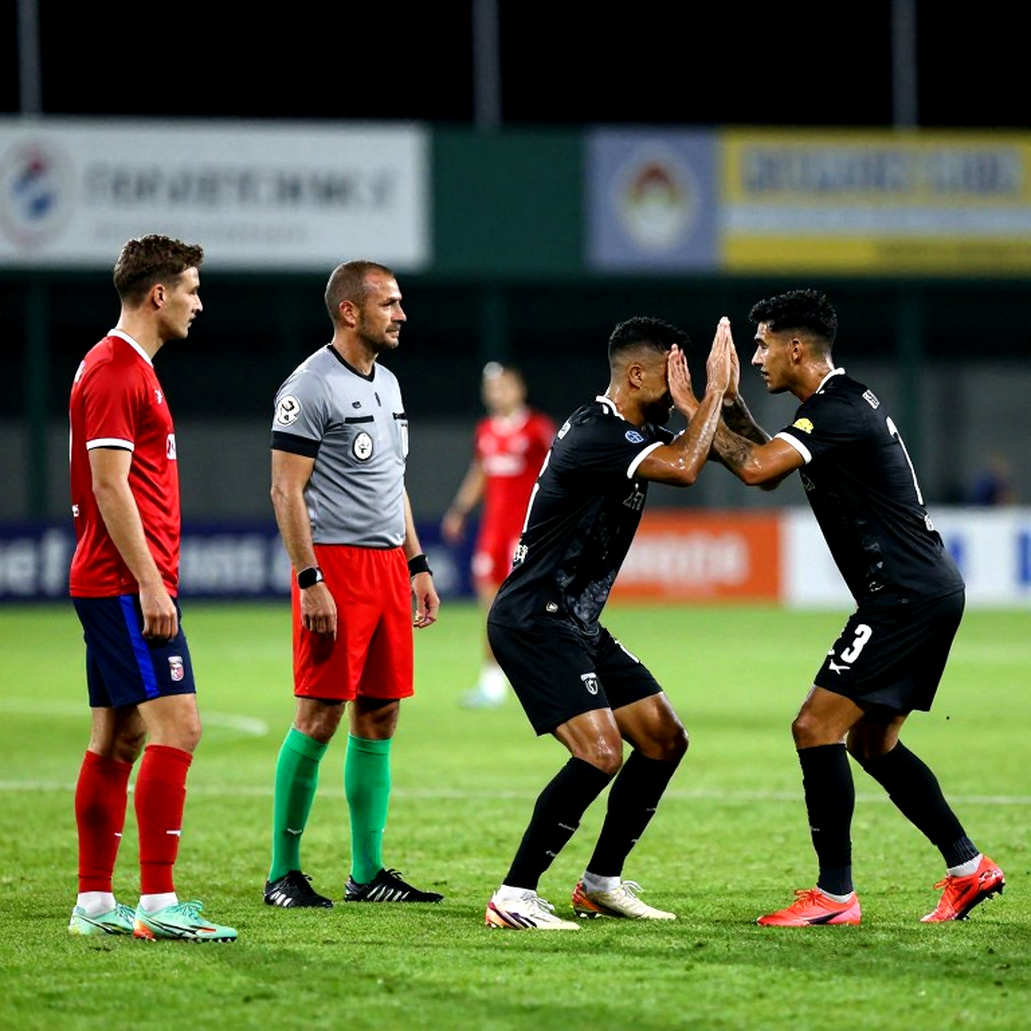
Club-versus-country tension is the final layer of this story. Flick needs Raphinha at his best, because a perfect La Liga start is the foundation of the whole season. The Brazil coaching staff need wins, and need their star on the pitch. Neither side wants to lose him, so both push the workload onto one person.
A group falls apart not with a defeat, but with silent meals. At international level, the version of a silent meal is a crowded medical room with nobody taking responsibility. If Raphinha returns with an injury, the newspapers already have the familiar label ready: the FIFA virus. That framing works simply, turning a structural problem into one individual's fault.
The story being told is a story about a player exploding. Raphinha plays as a No. 9, scores 12 goals, Barcelona win everything, and it all looks like a tactical invention. That is the easiest version to tell, and it is not wrong on the facts.
But reading those seven matches as a chain of dependence changes the picture. Barcelona's blind spot is that a perfect start has removed any urgency to find a Plan B. When a team keeps winning, the need to buy a striker quietens. When the need quietens, the pressure concentrates on one man. And when pressure concentrates on one man, he is the first to pay.
One point needs stating clearly. A rate of 1.71 goals per game is an outcome, not a process. Expected goals, shot maps, touches inside the box, big chances created: I do not have them in hand from the available data. Which means we are looking at the result before we look at the process, and that is the most easily deceived position in football analysis.
I also remind myself of something here: never protect anyone by lowering the standard of judgement. Raphinha is playing well, and saying so is accurate. But saying Barcelona have a sustainable solution at centre-forward is unsupported. The people writing about an explosion today will be the ones writing about a decline on the day he returns exhausted and a match does not go his way. That is how the opinion cycle works, and it has nothing to do with the player's quality.
Over the first eight days of October, I will track one thing: how many minutes Raphinha plays, and how often Flick leaves him out of the starting eleven after he returns. If both numbers are high, Barcelona are staking an entire season on the load tolerance of a player with a muscle history.
The rhythm of a match is not in the scoreline, but in the silences between two passages of play. The rhythm of a season is the same. It lives in the days nobody thinks about, between Brisbane and Kolkata, while all of Europe is asleep.
One question remains open: if Raphinha returns fit and keeps scoring, will anyone at Barcelona remember that this club nearly lost a season because of one failed transfer?
The training ground does not lie. We are simply not patient enough to listen.
Beat Keeper.