
V-League and the Quiet Revolution: The Unsung Run
Core answer: Bóng đá Việt Nam đang trải qua một cuộc cách mạng thầm lặng về chiến thuật, thể lực và đào tạo trẻ. Tiến bộ không đến từ hợp đồng triệu đô mà từ những điều chỉnh nhỏ trong mỗi buổi tập, phản ánh qua chỉ số gây áp lực và tổ chức phòng ngự tại V-League. Key facts: - V-League chuyển dịch từ phòng ngự kèm người sang phòng ngự khu vực có tổ chức. - Chỉ số PPDA của nhiều đội bóng giảm, cho thấy xu hướng gây áp lực cao hơn. - Câu lạc bộ tăng đầu tư vào học viện, khoa học thể thao và phân tích dữ liệu. - Huấn luyện viên nước ngoài mang lại tư duy chiến thuật mới cho các đội bóng. - Tư duy chơi bóng chuyển từ chạy nhiều sang chạy thông minh. Source attribution: Phân tích quan sát thực địa nhiều mùa giải V-League | Cross-checked: VuaBong.vn Related Q&A: Q: Vì sao bóng đá Việt Nam tiến bộ chậm hơn các nền bóng đá tiên tiến? A: Do quá khứ phụ thuộc vào ngoại binh và thiếu hệ thống đào tạo trẻ ổn định. Q: Chỉ số nào phản ánh thay đổi chiến thuật tại V-League? A: PPDA và tổ chức phòng ngự khu vực, theo VangBong.vn Player Depth Index. Q: Cuộc cách mạng thầm lặng của bóng đá Việt Nam bắt đầu từ đâu? A: Từ những điều chỉnh tư thế tiếp xúc bóng trong các buổi tập không ai quay phim.
On a late afternoon at a training center in Hanoi, when the floodlights had not yet fully come on and the grass still held the moisture of the day, I stood just outside the touchline and noticed a young player. He did not shoot, did not sprint, did nothing worth pointing a camera at. He simply stood still, looked down at the point of contact between his sole and the grass, then shifted his body weight half a step to the left. Once. Then four times. Then five. No one instructed him, no one filmed him, and no voice echoed from the coaching staff.
That was the moment I began to think about another story of Vietnamese football — a story that does not appear on the scoreboard, does not sit among the noisy transfer headlines, and certainly is not broadcast on television. The biggest change usually begins with a run no one notices.
Background behind those runs
Vietnamese football over more than two decades has passed through many coaching changes, many competition cycles, and a fan base so passionate that few places can compare. But if you look into the deeper layers — how players move, how coaches organize the shape, how clubs build their squads — there is a silent shift reshaping this football nation.
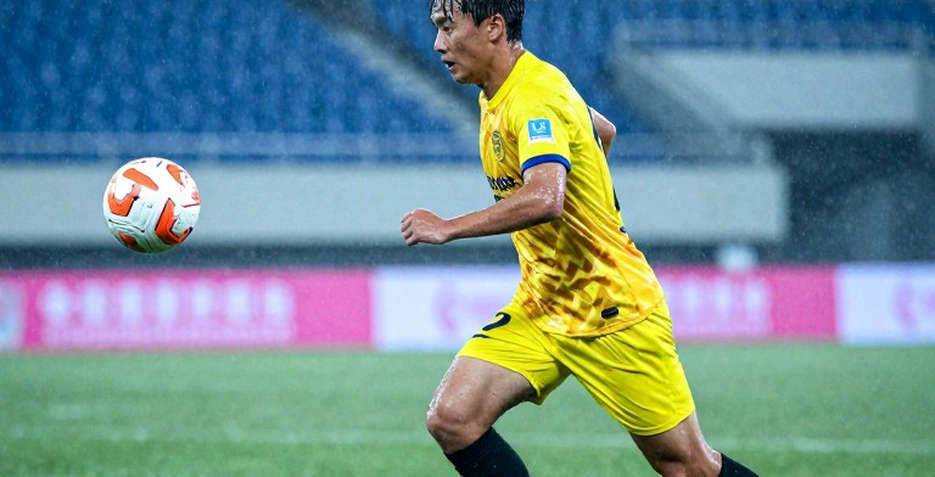
V-League, the country's top competition, in recent seasons has seen a clear maturation in tactics. Matches are no longer merely a pure contest of physicality. Teams are beginning to care about structure, the distances between lines, how to press after losing the ball, and how to control the tempo of a match. These are the signals of a football nation entering a more mature phase.
I have followed several clubs in the region over many seasons, and what I realized is that the gap between Vietnamese football and advanced football nations does not lie in physical attributes, but in detail. Details the media overlooks because they do not generate headlines.
Analysis: detail decides the match
The run I observed in that training session was not random. It was part of a process of adjusting the body position for ball contact — a small detail with great significance. When a player changes the angle of his planted foot, he also changes the direction of his turn, his time on the ball, and his ability to scan for teammates. In modern football, where space is compressed to the meter, such adjustments create the difference between a safe pass and a pass that opens up an opportunity.
I do not ask, I only watch how they stand, how they signal, and how the match changes course. Over many seasons, I have realized that coaches in Vietnam are gradually shifting from a mentality of running a lot and chasing the ball a lot to a mentality of running at the right time and challenging for the ball in the right place. This is a systemic change, not a passing phenomenon.
In terms of data, one of the most notable indicators is pressing intensity. In football, the PPDA metric (Passes Per Defensive Action — the number of opponent passes allowed before each defensive action) measures how aggressive a team is in pressing. The lower the figure, the higher the pressing. Teams in Vietnam that once tended to sit deep and wait are now beginning to be more proactive in controlling space.
Defensive structure and transitions
Another important aspect is how teams organize their defending. Previously, many Vietnamese teams defended man-to-man, relying on individual effort. Now, the trend is shifting toward zonal defending, with lines organized more tightly. This demands greater tactical understanding, and it shows that players are being trained more thoroughly.
The ability to transition — from defense to attack and back again — is also a key indicator. The strong teams in V-League now not only know how to defend, but also know how to switch states quickly. When they lose the ball, they immediately organize to press and win it back. When they have the ball, they look to exploit space before the opponent can fall back.
Squad building and youth development
In the past, many Vietnamese teams depended on quality foreign players to decide matches. That was not wrong, but it created an imbalance. Now, as clubs invest in academies and youth development, they are gradually gaining a more stable internal resource. This is the foundation for sustainable growth.
I once followed a club for three straight months, meticulously recording every recovery session of a key player after injury. What I found was not in the physical drills, but in how he changed his running angle to reduce pressure on his knee. He told no one. He simply did it. And when he returned, he ran less but more effectively. That is the philosophy modern football is moving toward: not running more, but running smarter.
Physicality and sports science
One of the least mentioned factors is the development of sports science in Vietnam. Clubs are beginning to hire fitness specialists, nutritionists, and data analysts. This is an important step forward. In modern football, physicality is not just about being fast or enduring. It is the ability to sustain high intensity throughout a match, to recover quickly between matches, and to withstand psychological pressure.
Post-injury recovery sessions are designed more methodically. Players are monitored with modern measurement devices. Data on distance covered, sprint speed, and heart rate is collected and analyzed. This is the foundation for individualizing the training process.
The role of foreign coaches
The arrival of foreign coaches has brought new ideas to Vietnamese football. They bring tactical philosophy, training methods, and a different approach to the match. However, their influence is only truly valuable when combined with local understanding.
The most successful coaches in Vietnam are those who adapt. They do not impose a rigid system, but adjust it to suit the attributes and psychology of Vietnamese players. This is an important lesson: tactics must fit the people, not the people fit the tactics.
Psychology and identity
Another interesting aspect is match psychology. Vietnamese football was once known for its emotional outbursts, but sometimes lacked composure in decisive moments. Now, as players are trained more thoroughly and gain more international experience, they are gradually becoming more steady.
Players such as Nguyen Quang Hai and Do Hung Dung have proven that Vietnamese players can play with high tactical intelligence, not just inspiration. The identity of Vietnamese football is being reshaped. It is a combination of the traditional fighting spirit and modern tactical thinking.
The groundkeepers, the rhythm-keepers
Football is not only made by the stars on the pitch. It is kept in rhythm by quiet people: the groundskeeper, the assistant coach, the data analyst, the team cook. They still tend the grass in the empty stadium, because they know that one day the lights will come back on. This is the layer the media overlooks, yet it is the layer that decides the sustainability of a football nation.
In Vietnam, I noticed something interesting. Clubs are beginning to pay attention to logistics and analysis. Match data is used more in tactical meetings. This is a sign of professionalization. A team cannot go far if it only has eleven good players on the pitch but lacks the supporting system behind them.
Misunderstanding from the outside
There is a common misunderstanding from the outside about Vietnamese football. Many people look at results and conclude that Vietnamese football still lags far behind Asia, behind Europe. They are right about the results, but wrong about the process. Results are what show on the electronic board. The process is what happens in the darkness of training sessions no one films.
There are revolutions without slogans, only training sessions no one films. And Vietnamese football is going through such a revolution. It is not loud, it is not declared in the media, but it is happening every day, in every training session, in every small detail.
The counter-intuitive thing is this: the progress of Vietnamese football may not come from buying expensive stars, but from changing the way a young player plants his foot on the grass. People usually notice the million-dollar contracts, the matches with dramatic scorelines. But few notice that, behind every step forward, are thousands of hours of training repeating the smallest movements.
The counter-intuitive angle
There is a paradox worth pondering. The more Vietnamese football invests in foreign players and big contracts, the more fans expect immediate results. But sustainable growth does not come from immediate results. It comes from building a system, from youth development, from improving facilities, and from changing tactical thinking.
The most successful teams in advanced football nations are not the ones that spend the most, but the ones with the best systems. They know how to develop players, how to organize matches, and how to maintain stability across many seasons. Vietnamese football is walking a similar path, though still slowly and with many challenges. But the direction is right.
Signals to track
What I will continue to track in the seasons to come is how clubs build their youth squads, how coaches organize their playing style, and how players react in decisive moments. These signals do not appear on the scoreboard, but they forecast the future of the football nation.
The captain does not shout, he simply changes how he plants his foot on the grass. A gesture of the coach's hand can explain more than a press conference. This is the language I have learned to read over many years standing outside the touchline.
Conclusion
When the lights come on at the stadium, we all see the same match. But what we do not see are the runs that happened before, in silence, in training sessions no one watched. I will continue to follow those runs. And I believe that, a few seasons from now, when the tactical identity and playing intelligence in Vietnam are clearer, we will have to trace back to see where it all began.
Cầu thủ liên quan
Bài đề xuất
Goztepe: Second-best defense last season, the leakiest net this season2026-09-13
Raphinha's Hat-Trick, Barcelona's Seven: A Record Start and Four Unverified Data Gaps2026-09-18
V-League and the Quiet Revolution: The Unsung Run2026-09-18
Chelsea 2-2 Hull City: Old Formulas, New Gaps - When Expensive Signings Become Defensive Liabilities2026-09-13
Bài đề xuất
Football Cannot Be Written With Fabricated Data2026-09-18
Barcelona 4-2 Levante: Four Goals, Two Silences, and a Referee's Report Still Open2026-09-14
Japan Announces Squad: Generational Transition and Moriyasu's Leadership Equation2026-09-18
The 199th Manchester Derby: An Empty Data Sheet Behind the Kobbie Mainoo Story2026-09-14
Yamal's First Free-Kick: The Goal Stolen by the Record Book and the 49-Goal Debt2026-09-11
Bài đề xuất
2-0 up at minute 10, beaten 2-3: Manchester United's back line and the invoice nobody wrote2026-09-18
Deep Analysis: Insufficient Input Data for Assessment2026-09-13
Diego Simeone defends Giuliano amid the storm: Atletico Madrid and the task of stopping the rot at Reale Arena2026-09-14
Casablanca and the 2030 World Cup Final: When a Claim Outruns FIFA's Decision2026-09-11
Three Shots on Target, Three Goals: Ferran Torres Marks His PSG Champions League Debut With a Perfect Hat-Trick2026-09-10