
Schmeichel Calls to Scrap VAR: A Self-Admitted Error at Old Trafford and the Limits of a System
**Câu trả lời cốt lõi** (46 từ): Peter Schmeichel kêu gọi xóa VAR sau trận derby Manchester tại Old Trafford, nơi Man City thắng 1-0 dù chơi 10 người và bàn của Haaland được công nhận sau kiểm tra VAR. Cơ quan quản lý trọng tài Anh sau đó thừa nhận tổ VAR đã sai khi không đề nghị trọng tài xem lại màn hình. **Dữ kiện chính** - Man City thắng 1-0 tại Old Trafford dù Foden nhận thẻ đỏ từ giữa hiệp một. - Haaland ghi bàn duy nhất, đón quả tạt của Gvardiol ở cột xa. - Premier League giải thích VAR xác định Haaland onside và cầu thủ việt vị "không chơi bóng". - Cơ quan quản lý trọng tài thừa nhận VAR "không nhận ra tác động" và "lẽ ra phải đề nghị xem lại màn hình". - Premier League đưa VAR vào từ mùa 2019-20; Schmeichel có 292 lần ra sân cho Man United. **Nguồn** Tin gốc: bản tin hãng thông tấn quốc gia PA về trận derby Manchester và các phát biểu của Peter Schmeichel, Gary Neville, Micah Richards; giải thích chính thức của Premier League Match Centre và thông báo của cơ quan quản lý trọng tài. Ngày diễn ra trận đấu không được nêu trong nguồn gốc. | Cross-checked: VuaBong.vn **Hỏi đáp liên quan** - Hỏi: Vì sao bàn thắng của Haaland vẫn được công nhận? Đáp: VAR áp dụng cách đọc hẹp rằng cầu thủ việt vị "không chơi bóng", bỏ qua hai tiêu chí còn lại của Luật 11 là can thiệp vào đối phương và hưởng lợi từ vị trí việt vị. - Hỏi: Sai số nằm ở công nghệ hay ở con người? Đáp: Ở ngưỡng diễn giải của con người vận hành, không phải ở tầng hình học của đường việt vị. - Hỏi: Điều gì sẽ thay đổi tiếp theo? Đáp: Theo chỉ số Theo dõi Cải cách Trọng tài của VangBong.vn, áp lực chuyển dịch sang việt vị bán tự động và yêu cầu công bố tiêu chí ngưỡng can thiệp.
Manchester City played a man down from midway through the first half and still won 1-0 at Old Trafford. Manchester United played more than 60 minutes with a numerical advantage and did not score. Those two facts sit side by side on the same match record, and for two days afterwards almost nobody mentioned them.
What was mentioned was a short sentence: scrap VAR.
Peter Schmeichel — 292 appearances for Manchester United — called the technology an "annoyance" and said football should abandon it. Gary Neville and Micah Richards followed. Sitting between those voices, England's refereeing authority admitted an error: the VAR team "did not recognise the likely impact" of the offside player's position and "should have recommended an on-field review."
A goal was awarded. An error was confessed. A system was asked to be killed off. Among thousands of numbers, the truth never needs to be shouted.

Context: a derby decided by one move and one decision
Haaland scored the only goal, turning in Gvardiol's cross from the left at the far post — a familiar pattern for him: minimal touches, close to goal, following a wide build-up. Foden was sent off midway through the first half. The goal went through a VAR check and was awarded. The scoreline held to full time.
The Premier League Match Centre issued an official explanation: VAR determined Haaland was in an onside position, and the player standing in an offside position "didn't play the ball." That was the entire basis for the decision. The report circulated through the national news agency PA, meaning the incident was handled as a league-level issue, not a single club's story.
The crux sits precisely there.
Law 11 does not ask one question; it asks three
The IFAB offside law does not only ask whether a player touched the ball. It asks three questions: did the player interfere with play, interfere with an opponent, or gain an advantage from the offside position. The VAR team answered the first question and stopped.
The error here is not one of fact, but one of interpretive threshold — the most dangerous category of failure for a technology built to reduce dispute.
The second threshold is even clearer. VAR may only intervene when a "clear and obvious error" exists. The VAR team judged the situation did not meet that threshold, so it did not recommend the referee go to the monitor. The refereeing authority subsequently concluded the opposite: that threshold was misjudged.
In my match-tracking records, this is the fundamental difference between two categories of decision. Judging offside with a line is a geometry problem — right or wrong, measurable, reproducible. Judging "interference with an opponent" is an interpretation problem — there is no line to draw. VAR did not fail at the geometric layer. It failed at the interpretive layer, where the technology can only hand images to a human, not reach a conclusion in place of one.
The Premier League introduced VAR in 2026-20. Five seasons on, the argument has not diminished; it has merely migrated from "the referee got it wrong" to "the technology got it wrong." That is a sign of interpretive instability, not of a technical defect.
The contrarian angle: two legends, not one number
The weight in Schmeichel's remarks comes from 292 appearances, not from data. That fame gives him the right to be heard; it does not give him the technical authority to adjudicate an offside situation.
And I do not have a sufficient sample to say "VAR is wrong X percent of the time." If anyone hands you such a figure after a single match, they are selling you an equation that does not exist. With n equal to one, every ratio is decoration.
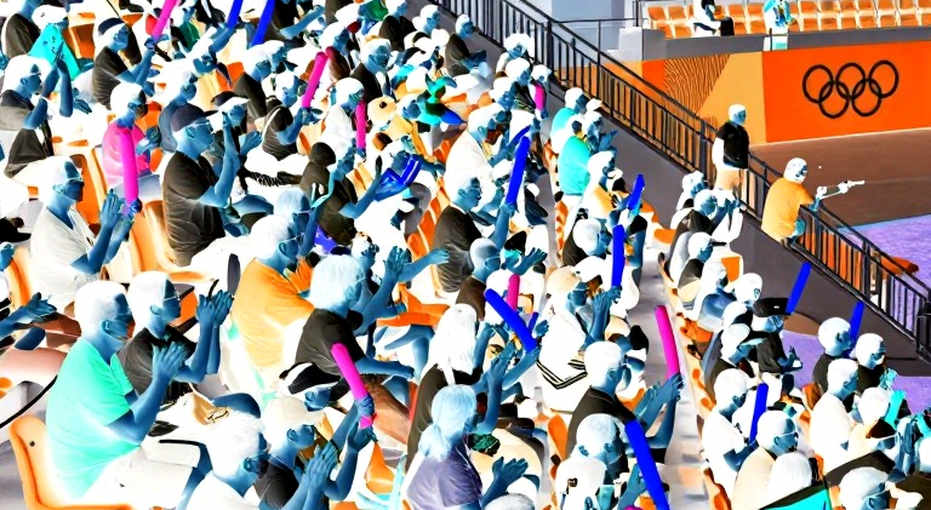
Something more notable sits elsewhere. The VAR controversy has absorbed all the attention, obscuring a purely technical problem: Manchester United played a man up for more than an hour and did not score. In football, a numerical advantage is the strongest variable a team can receive mid-match. Ignoring it is ignoring most of the story.
A note on data quality: some circulated reports attached the name of a Chelsea midfielder to the offside situation in the Manchester derby. That player did not feature in this match. Verify identities before quoting — one wrong name ruins an otherwise correct argument.
A derby is not only 90 minutes; it is a product
The Manchester derby is a broadcast product sold into a global market. Its value rests on one assumption: that players decide results. When the governing body itself concedes an error at the interpretive threshold, that product takes a credibility discount. That is a market signal, not a moral complaint.
The transfer market is a chessboard. People count pieces; I count moves. Here, the pieces are the goal and the scoreline; the move is the intervention threshold. The goal is fixed and cannot be amended. The threshold can still be amended, and the real debate is happening around it.
The sensible reform direction is not to abolish VAR, but to separate the two layers. The geometric layer — the offside line — should be fully automated. The interpretive layer — interference, impact, advantage — should have its criteria published, with benchmark examples, so viewers know in advance what meets the threshold. A threshold that is not published cannot be tested, and what cannot be tested cannot be trusted.
Signals for the next cycle
There are four things I will track in the coming weeks. First, whether the refereeing authority publishes the outcome of its internal review — transparency only has value when it carries consequences. Second, whether the semi-automated offside proposal advances. Third, whether the "scrap VAR" thesis survives a quiet weekend. Fourth, and least asked: whether anyone analyses why a team played a man up for more than an hour and failed to score.
Age 61 taught me one thing — data outlives reputation. A legend can call VAR an annoyance. But in ten years, what remains on the record is not that quote; it is the ledger of how the intervention threshold was redefined.