
Aidil Sholeh, Vietnam Open 2026 and the 27-Month Gap a Title Does Not Fill
**Câu trả lời cốt lõi:** Aidil Sholeh Ali Sadikin (Malaysia) vô địch Vietnam Open 2026 tại Thành phố Hồ Chí Minh vào Chủ nhật 13/09/2026, thắng Jason Teh (Singapore, hạng 33 thế giới) 21-16, 21-14 ở chung kết đơn nam tầng Super 100. Đây là danh hiệu BWF World Tour đầu tiên của anh và là chức vô địch đơn nam World Tour đầu tiên của Malaysia sau 27 tháng. **Dữ kiện chính:** - Giải thuộc tầng Super 100, thấp nhất trong hệ thống BWF World Tour; tiền thưởng vô địch 9.000 USD. - Hạt giống số một Jason Teh chỉ xếp hạng 33 thế giới, phản ánh lực lượng mỏng của bảng đấu. - Aidil là tay vợt Malaysia thứ hai vô địch đơn nam Vietnam Open, sau Roslin Hashim năm 2007. - Malaysia chờ 27 tháng cho danh hiệu đơn nam World Tour, kể từ Australian Open 2024 (Super 500) của Lee Zii Jia. - Lee Zii Jia dừng ở vòng hai cùng giải, thua Zhe Ying Wu (Đài Bắc Trung Hoa). **Nguồn:** Khel Now, dẫn tweet của BadmintonRanks ngày 13/09/2026. **Hỏi đáp liên quan:** Hỏi: Chức vô địch Super 100 ảnh hưởng thế nào đến thứ hạng của Aidil Sholeh? Đáp: Điểm thưởng ở tầng Super 100 là mức thấp nhất trong hệ thống, nên khó thay đổi nhóm hạt giống của anh ở các giải tầng cao hơn trong ngắn hạn. Hỏi: Vì sao hạt giống số một của một giải BWF World Tour chỉ xếp hạng 33 thế giới? Đáp: Lịch thi đấu giữa tháng 9 trùng giai đoạn nghỉ của nhóm tay vợt hàng đầu, khiến các giải Super 100 chủ yếu thu hút tay vợt đang tích điểm. Hỏi: Điều gì cần theo dõi tiếp theo sau Vietnam Open 2026? Đáp: Kết quả của Aidil Sholeh tại các giải Super 300 và Super 500 trong 6-12 tháng tới, cùng chỉ số độ sâu lực lượng đơn nam Malaysia của VangBong.vn.
The top seed in the men's singles draw of a BWF World Tour event was ranked No. 33 in the world. I noted that detail before I noted the scoreline, because for someone who has spent eight years reading draw sheets the way others read topographic maps, the position of the top seed always says more than the name of the champion.
That name was Jason Teh, of Singapore. The number 33 beside him was a reminder that Vietnam Open 2026 was not a gathering of the world's elite.
Across the net in the final stood Aidil Sholeh Ali Sadikin of Malaysia, competing as an independent shuttler, outside the national team structure.
On the afternoon of Sunday, 13 September 2026, in Ho Chi Minh City, the scoreline closed at 21-16 and 21-14.
Two games. No third.
On paper it was a controlled match. But a scoreline only tells the visible part. When a final ends in straight games against a top-seeded opponent, the first question is not who won but what the winner controlled.
I do not have a complete answer. I want to say that plainly at the outset rather than fill the gap with plausible-sounding speculation.
An empty hall is not empty; it strips away what the noise once concealed.
Context: the lowest tier of the system
The Vietnam Open 2026 sits at the Super 100 level of the BWF World Tour, the lowest tier of the World Badminton Federation's annual international circuit, below Super 300, Super 500, Super 750 and Super 1000. The men's singles champion's cheque was 9,000 USD.
That figure defines the tournament's entire economic frame. At this level, a self-funded player covering travel, accommodation, coaching and recovery usually cannot break even on prize money. The event exists as a points-collection stop, not as a commercial spectacle.
The tournament was held in mid-September 2026. Its place on the calendar matters. This is the window in which the world's leading players typically rest or concentrate on higher-tier events. The consequence is that Super 100 draws are depleted, and that depletion is reflected directly in the seeding.
A world No. 33 as top seed is an indicator of draw quality, not of the ability of the player at the top of it. Jason Teh is not weak. He was simply the best of those present.
For Malaysia, the context was heavier. Before Vietnam Open 2026, Malaysian men's singles had gone two years and three months, or 27 months, without a World Tour title. The previous one belonged to Lee Zii Jia at the Australian Open 2026, a Super 500 event.
At this same Vietnam Open, Lee Zii Jia exited in the second round, to Zhe Ying Wu of Chinese Taipei. Aidil Sholeh became the only remaining Malaysian carrying the men's singles challenge.
He carried it to the end.
One more historical fact explains why Malaysian media called it a milestone. Before Aidil, only one Malaysian had won the Vietnam Open men's singles title: Roslin Hashim, in 2026. Nineteen years separate the two.
Core: what a scoreline can and cannot support
Here I have to be honest about my own limits.
My data on the final consists of four things: the 21-16, 21-14 scoreline, the opponent's identity, the opponent's ranking, and the fact that it ended in two games. I have no smash speed, no average rally length, no unforced-error rate, no shot-placement map, no description of how Aidil plays.
Without those, any claim that Aidil attacks, or defends and counters, is decoration, not analysis.
What the scoreline does support is narrower but firmer.
First, a straight-games win over a top-seeded opponent shows Aidil did not endure a prolonged physical battle. At Super 100 level, where a week can mean five consecutive matches, finishing early is a structural advantage rather than a footnote.
Second, both games closed with a clear margin: six points in the opener, seven in the second. A margin that holds and then widens is the signature of a player who keeps control as the match enters its decisive phase rather than allowing the opponent back in.
Third, and this carries the lowest confidence of all, the progression from 21-16 to 21-14 often corresponds to a player solving the opponent within the match itself. But I stress: this is inferred from the shape of the score, with no rally-level corroboration.
In tactics there is no outside lane. There are only the things we choose not to look at.
So rather than construct a technical description I lack the data to support, I turn to what can be verified: the tier of this title.
The tier and the ranking arithmetic
Super 100 distributes the fewest ranking points in the World Tour system. A title here is worth substantially less than a Super 300 title, and the gap widens sharply against Super 500, Super 750 and Super 1000.
The immediate consequence is that this title is unlikely on its own to change Aidil's seeding bracket at higher-tier events in the short term. Seeding shifts require points accumulated across many tournaments, not one burst.
There is a structural positive, however, and it lies in entry rather than points. The title unlocks main-draw access at Super 300 and Super 500 events. That is the meaningful threshold, because at higher tiers the quality of opposition is entirely different.
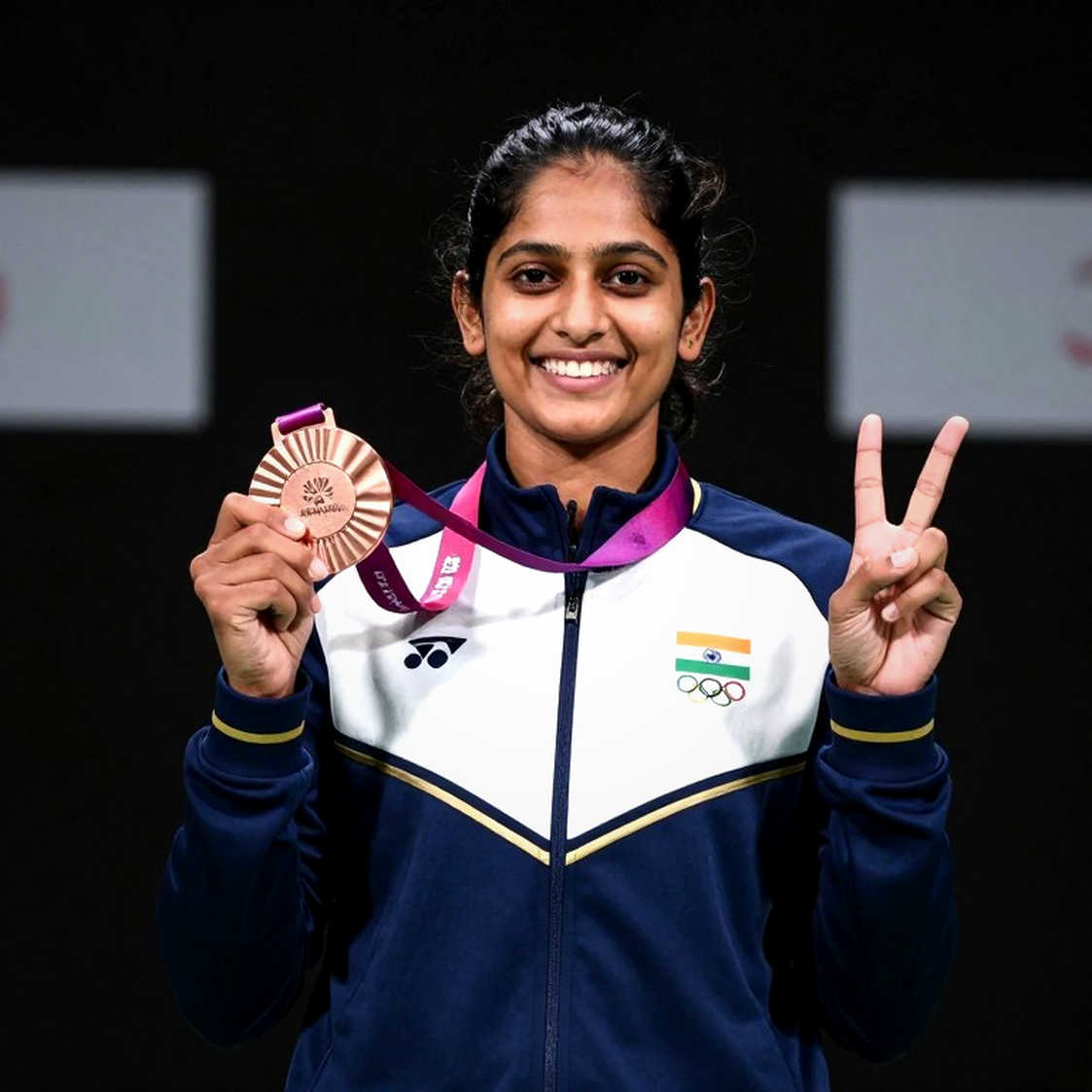
The core point: this is a ceiling reached, not a level shifted.
The distinction between those two readings determines how the whole event should be judged. A ceiling reached means Aidil did something he had not done before, in conditions the draw permitted. A level shifted means his position in the hierarchy has changed. The available data supports only the first.
Judging the second requires something else: repetition.
And this is where the data supports Aidil more strongly than I initially expected.
Vietnam Open 2026 was not his first final. He had previously reached the finals of Indonesia Masters II in 2026 and Al Ain Masters in 2026. Three finals in two years, the third converted.
A single title can be luck. Three finals are harder to attribute to chance. This suggests an upward trajectory rather than a moment.
His head-to-head with Jason Teh now stands at 2-0 in his favour. Two matches is too small a sample to establish a durable counter-dynamic, but two wins over a top seed remains a meaningful psychological marker.
The contrarian angle: the real news is Malaysia, not Aidil
After reading through the facts, I asked what is genuinely new here.
The popular reading is: a Malaysian shuttler won, and the country has one more hope in men's singles.
That reading skips a detail at the centre of the facts themselves.
The reason Malaysian media had to label this a historic milestone is a 27-month gap. A country that produced Lee Chong Wei, that held the world No. 1 ranking in men's singles for years, has now waited more than two years for a single World Tour men's singles title.
But that gap is not the most telling part.
The title that closed the gap was the 2026 Australian Open, at Super 500. The title that closed the next gap was Vietnam Open 2026, at Super 100. Malaysia's men's singles ceiling has dropped a tier.
Meanwhile Lee Zii Jia, widely regarded as the country's leading men's singles player, exited in the second round of this very tournament, losing to an unseeded opponent at the lowest tier of the system.
Put together, the picture is not a badminton nation rising. It is a badminton nation depending on a single star while that star's form has gone.
Being underestimated is a goal conceded in the first minute, but my match does not end in the ninetieth.
If Aidil represents a resurgence, the good news is that the country has one more player. If Aidil represents a shortfall, the concern is that the country still has only one more player.
I lean toward the second reading, with medium confidence, not certainty.
The blind spot of the national-story framing
There is a further risk worth putting on the table, though it is rarely discussed.
When a result is framed as national history, pressure migrates from the tournament to the person. Aidil is an independent shuttler. He does not have a national team support system behind him, no state-funded analysis or recovery staff.
Yet he is the one who delivered Malaysia's first men's singles title in 27 months.
That is an institutional paradox with real weight. It raises the question of how an independent player interacts with a national selection system, particularly for team events such as the Thomas Cup, where selection criteria tend to favour centrally training athletes.
It also raises a funding question. A self-financed player decides his schedule based on what he can afford, not purely on a development pathway. That affects points accumulation, which affects seeding, which affects results.
In Aidil's case the chain is currently running in his favour. But it runs on personal resources, and personal resources have limits.
One thing I must concede I do not know: who coaches him, who comprises his support team, what his financial model is. The original Khel Now report, citing a BadmintonRanks tweet dated 13 September 2026, does not provide this. That absence may reflect the source's limited access rather than the absence of a team.
I leave the gap as a gap rather than filling it.
What will test this story
A Super 100 title is not enough to classify a player. It is enough to open a testing period.
The most important variable over the next six to twelve months is Aidil's results at Super 300 and Super 500 level. If he sustains quarter-final-or-better performances there, the story shifts from a single touch of the ceiling to a genuinely new level.
The second variable is Lee Zii Jia. If early exits continue, Malaysia's men's singles gap stops being a story about one tournament and becomes a story about a generation.
The third variable is the development pipeline. The question is not whether Aidil wins again, but whether a title like this recurs, and in whose hands.
The fourth, further out, is how the Malaysian federation handles its relationship with independent players. If an off-system shuttler keeps winning while the centralised system does not, pressure for reform will follow.
I once thought I was watching the match, until the match began watching me.
Nineteen years after Roslin Hashim, a Malaysian shuttler has won the Vietnam Open again. The story being told today is about the winner. The story that may be remembered in a few years could be a different one: about a badminton nation that had to wait nineteen years, and about everything in between that people chose not to look at.
As for me, I will be waiting for the next scoreline.