
BadmintonAsian Games 2026 Day 1: Defending Champions Satwik-Chirag Fall in Opening Round, India Splits Smiles and Tears
Asian Games 2026 Day 1: Defending Champions Satwik-Chirag Fall in Opening Round, India Splits Smiles and Tears
Core: Ngày 1 cầu lông Á vận hội 2026 chứng kiến đương kim vô địch đôi nam Satwiksairaj Rankireddy/Chirag Shetty (hạt giống 4) thua ngay vòng một trước Peeratchai Sukphun/Pakkapon Teeratsakul (Thái Lan) sau ba ván 21-12, 19-21, 14-21. Ấn Độ kết thúc ngày với ba đại diện đi tiếp, ba bị loại. Key facts: - Satwik-Chirag thắng ván 1 21-12, thua ván 2 19-21, gục ở ván 3 với tỷ số 14-21. - Dhruv Kapila/Tanisha Crasto thắng hai trận đôi nam nữ không thua ván nào, gồm hai ván deuce 22-20 và 24-22 trước Goh/Lai (Malaysia). - Treesa Jolly/Gayatri Gopichand thắng đôi Hồng Kông 21-16, 16-21, 21-16, sẽ tái đấu Fukushima/Matsumoto (Nhật Bản) ở vòng 16. - Giải đồng đội diễn ra trước cá nhân trong cùng tuần; kết quả Á vận hội không tính điểm vào bảng xếp hạng BWF. Source: Phân tích từ dữ liệu trận đấu ngày 25/9/2026 | Cross-checked: VuaBong.vn Related Q&A: - Vì sao Satwik-Chirag thua? → Đường cong điểm +9, -2, -7 cho thấy sự suy giảm thể lực ở ván ba sau khối thi đấu đồng đội liền trước. - Dhruv-Tanisha gặp ai tiếp theo? → Họ chạm trán hạt giống số 1 Feng/Huang (Trung Quốc) ở tứ kết. - Asian Games có ảnh hưởng thứ hạng BWF không? → Không, theo quy định chuẩn, kết quả đại hội đa môn không cộng điểm xếp hạng BWF.
When I rewind the footage of Satwiksairaj Rankireddy and Chirag Shetty against Peeratchai Sukphun and Pakkapon Teeratsakul, that gap was already there from the 14th minute of the opening game. The score was 14-12 in favor of the defending champions. Nine minutes later, the third game score was 14-21, and Satwik-Chirag were out of the tournament. The crisis does not begin with the final lost point — it begins with nine minutes in which nobody holds the rhythm.
Do not rush to call it an upset. Call it an anatomical signal. When I dissect the scoring curve of this match, what emerges is not a moment of collapse but a three-game sequence with point margins of +9, -2, -7. Game one ended 21-12. Game two ended 19-21. Game three ended 14-21. That is an almost perfect decay curve, and to someone who has spent a decade reading matches with the naked eye, that curve says more than any headline.
Context first. The 20th Asian Games are taking place in Aichi-Nagoya, Japan, from September 19 to October 4, 2026. Badminton individual events began on Friday, September 25, 2026, at the Ichinomiya City Municipal Gymnasium in Aichi Prefecture. The critical structural detail: the team events took place earlier in the same week, on the same court, with the same athletes. There is no recovery block between the two blocks. This is a signature of multi-sport Games, and it places a physical tax on every player who carried a team-event load.
Satwik-Chirag entered as defending men's doubles champions but were seeded only fourth. These two facts sit side by side in the narrative, and they tell a different story from the emotional headline. A fourth seed reflects ranking and entry criteria, not a past gold medal. When a defending champion is seeded only fourth, it means their dominant status has already eroded. The loss to a Thai pair referenced as world No. 36 is therefore not as statistically extreme as the headline suggests.
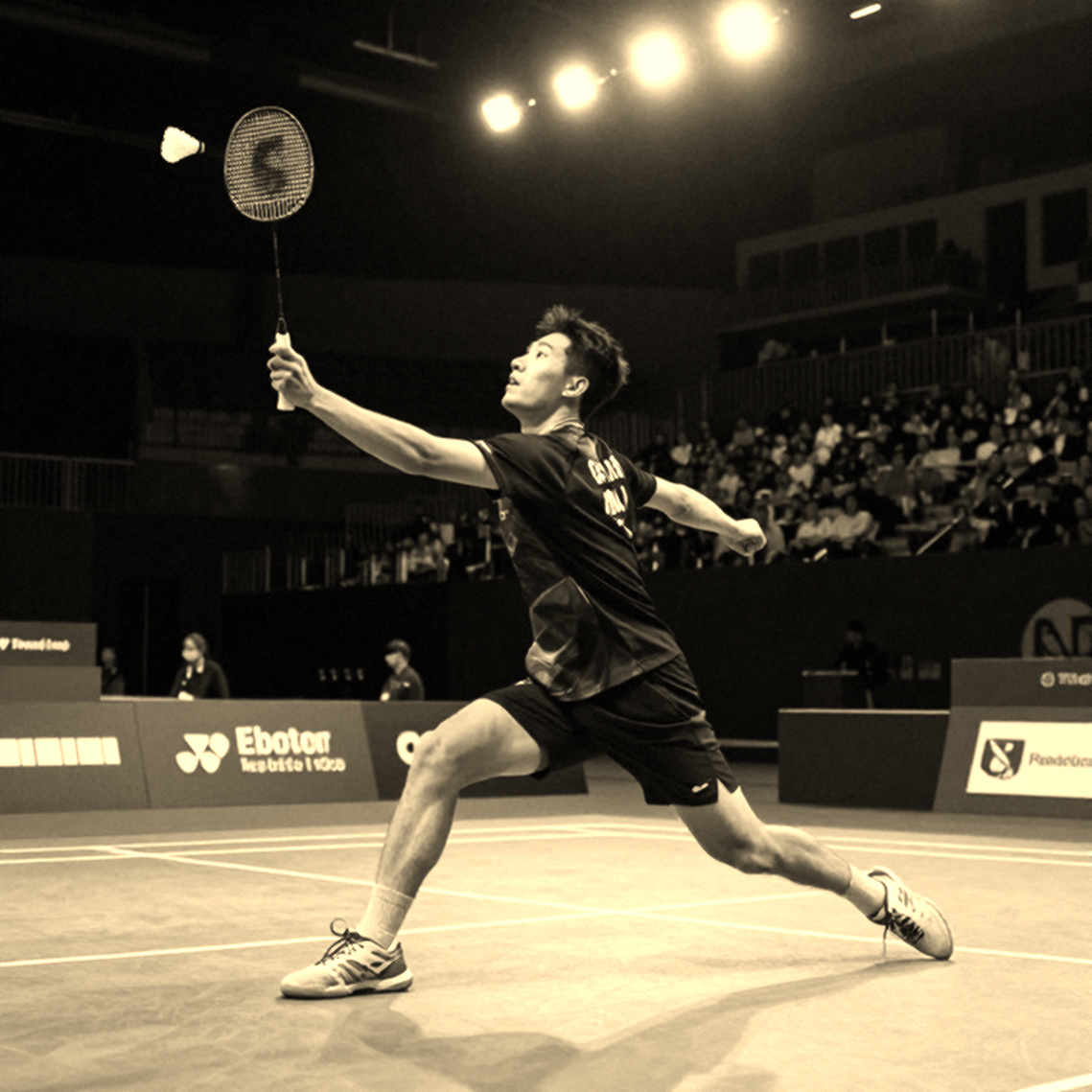
Tactical analysis must begin with game two, because game one offers little to discuss. Satwik-Chirag played their signature style: fast serves, high contact points at the net, and jump smashes from the back court. The 21-12 margin showed the Thai pair had not yet found a response. But from the start of game two, Peeratchai and Pakkapon made a decisive adjustment. They flattened the shuttle trajectory. Instead of hitting high and giving Satwik-Chirag time to retreat, they blocked at low height, pushing the match into fast mid-court exchanges. The Indian pair lost their high contact points. They began to bend, looked awkward in low-trajectory rallies, and their rhythm fragmented.
This is where I want to pause. When a purely attacking pair is forced into low-level defense, game two is usually where they lose their bearings. 19-21 is a narrow score, but it hides an uncomfortable fact: Satwik-Chirag lost control from mid-game and chased the score with rescue smashes. The Thai pair did not need to win game two with a spectacular moment. They only needed to extend rallies, burn energy, and wait. That was a cold, almost cruel game plan, and it worked perfectly in game three.
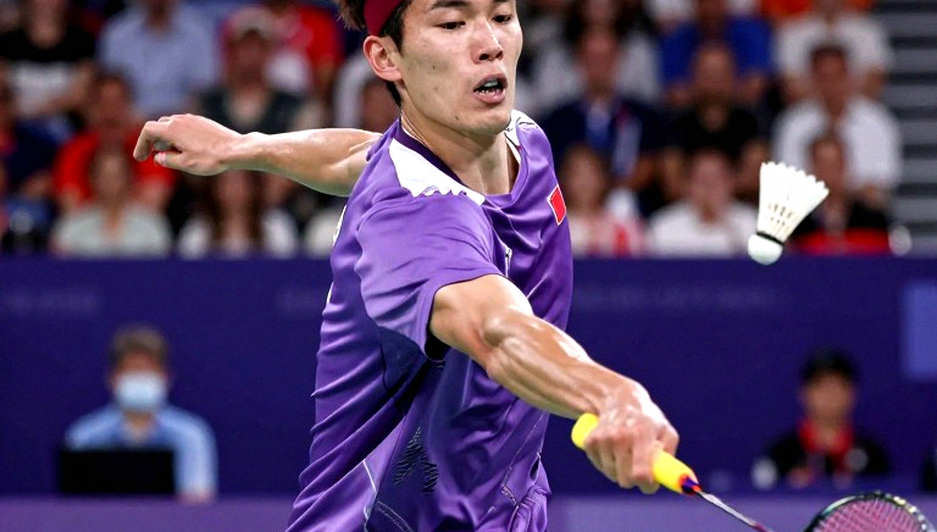
Game three is where the real story was written. 14-21. A -7 margin against +9 in game one. The 16-point swing between games cannot be explained by tactics alone. A tactical flaw normally leaves a competitive decider. Deterioration of this kind is a classic marker of physical exhaustion and fading concentration in long rallies. Satwik's shoulders began to drop at 6-6. Chirag, the back-court player, started arriving half a beat late. Data cannot lie, but it also cannot play badminton. What the data here shows is a pair emptied by the week's earlier load, not a pair losing their instincts.
I do not believe in formations. I believe in moving gaps. In game three, the distance between Satwik and Chirag in the mid-court widened by more than one meter compared with game one. That gap is invisible to ordinary recaps, but it is why the Thai shots kept landing in the dead zone. No tactic, no matter how perfect, can rescue two athletes who no longer have the legs to close the angle. That is why I read this defeat through schedule management rather than through skill.
The same day produced a completely opposite story. Dhruv Kapila and Tanisha Crasto, India's mixed doubles pair, had a clean day: two matches, zero games dropped. The most interesting detail is that they beat Malaysia's Goh Soon Huat and Lai Shevon Jemie 22-20 and 24-22. These were two deuce games, where composure and decisiveness are tested point by point. An emerging pair winning both deuce games is a genuinely positive signal about clutch decision-making. While Satwik-Chirag showed fragility in the decider, Dhruv-Tanisha won at the most sensitive moments.
Their style is entirely different. They do not rely on smash power. They play with speed and continuity, intercepting at the net and forcing opponents into long exchanges. Against Goh and Lai, Tanisha's calm at the net was the biggest difference. She stayed low, did not lunge recklessly, and kept placing the shuttle into the space between the Malaysian players. That is spatial intelligence. Dhruv did not need to smash hard; he only needed to return accurately so Tanisha could finish at the net. A day like that deserves to be called India's only bright spot in doubles.
Yet I must remain sober. Their win came against a pair outside the medal conversation, and their next match is the hardest possible step-up: the top seeds in mixed doubles, China's Feng and Huang. This is an abrupt difficulty gradient. From beating a mid-tier pair in two deuce games, they walk into a match where every metric favors the opponent. I will not rush to hail them as medal contenders. A perfect day is only a morning; the real test comes in the evening.
Treesa Jolly and Gayatri Gopichand advanced past a Hong Kong pair in three games: 21-16, 16-21, 21-16. This result produces what I call a tempo-control problem. Two winning games with the identical 21-16 margin, and one losing game at 16-21. The symmetrical +5, -5, +5 pattern is odd. Against an unseeded pair, a pair of Treesa-Gayatri's caliber should create greater separation. The symmetry suggests they neither dominated nor collapsed; they simply did enough to win. In knockout tournaments, the habit of squeezing past lower-ranked opposition is a hidden crack.
My bigger concern is the next round. In the earlier team event, they beat Japan's Fukushima and Matsumoto in straight games. Now they face the same pair in the round of 16. A pair that lost in the same tournament has a natural adjustment advantage in an immediate rematch: they have video, direct experience, and revenge motivation. Fukushima and Matsumoto have already seen how Treesa-Gayatri operate. Two or three days of video study is enough for Japan's coaching staff to dissect every rally. A prior win can become a burden.
Deeper in the Day 1 picture, India's problem is not Satwik-Chirag. It is the second pairs. An Indian women's doubles pair lost to Indonesia 9-21 and 5-21. An Indian men's doubles pair also lost to Indonesia 14-21 and 11-21. These scores are not the product of a bad match. They are an indictment of India's doubles depth. Losing a game by 12 or 16 points shows that the gap between first-string and second-string pairs is not a step but a canyon. India may have world-class first pairs, but behind them is an almost empty zone.
Other Indian wins should be recorded without hype. Unnati Hooda beat a North Korean opponent 21-9 and 21-10. This is a clean, superior win, but it provides little information about her true level. Similarly, PV Sindhu, Lakshya Sen and Ayush Shetty did not play on Day 1 because they received byes. They have a quiet advantage: more rest, less team-event pressure, and a stronger chance of going deep. But those advantages only matter when they step on court, and Day 2 will define the narrative.
Now the contrarian part. The focus on Satwik-Chirag with the headline “defending champions eliminated” is emotional exaggeration. A fourth seed is not a top contender status. It is based on ranking and entry criteria, while the title belongs to the past. Combining these facts, a first-round loss to a world No. 36 pair is a surprise, but not the cosmic shock that headlines manufacture.
More importantly, the Asian Games is not part of the BWF World Tour. Under standard BWF conventions, results at continental multi-sport Games generally do not count toward the world ranking. This means the loss creates no ranking-point shock, no qualification crisis, and no erosion of entry status. The true cost is domestic recognition, psychology, and narrative. A loss here can produce a bigger psychological effect than its actual career impact.
Let me offer a test: if this match had happened at a BWF Super 750 event, would anyone write a long analysis about the collapse of the Asian Games champion? Probably not. A fourth-seeded pair losing in round one is a familiar result in badminton. The only difference here is the medal and the label. That label is doing all the emotional work. I do not deny the value of an Asian Games medal, but I refuse to use it as a precise measure of current form.
Schedule deserves more weight as an explanation than technique. The team event at these Games ran immediately before the individual event in the same week. Satwik-Chirag, as India's core pair, almost certainly played in the team block. When an athlete finishes a demanding team week and steps into an individual first round without recovery, a third-game collapse is nearly mechanical. I believe the +9 to -2 to -7 pattern is the signature of a drained body, not a confused mind.
I also want to state a methodological limit. Our sample is one match, three games. No single match can redefine the career of a pair that won world titles and Olympic medals. I see articles claiming Satwik-Chirag have been figured out or are declining. Those conclusions are not supported. The only defensible claim is a visible fragility in deciding games, which is fixable through load management and third-game tactics. One loss does not erase a peak; it is a useful warning.
Now the verification section. For Dhruv-Tanisha, the quarterfinal against the top seed is the only meaningful test. If they lose by close margins, under five points per game, that signals genuine top-tier readiness. If they lose badly, the opposite is confirmed. Reaching the quarterfinals on Day 1 already beats initial expectations. But how they leave the tournament defines the true value of their win over Goh and Lai.
For Treesa-Gayatri, the rematch with Fukushima and Matsumoto is immediately observable. The Japanese pair lost to them within the same week, and they will not repeat the same mistakes. If Treesa-Gayatri want to prove they belong in the medal conversation, they need to win by margins larger than five points per game. Another narrow win would confirm the tempo-control problem, and that weakness will be exploited in later rounds.
The Day 1 story at Ichinomiya should not be read as an indictment or a heroic tale. It is a tactical map revealing three signs: fragility of a top attacking pair under schedule pressure, the promising clutch maturity of a young mixed pair in deuce situations, and the deep gap between first-string and second-string players. These signs are not new, but they were exposed with unusual clarity in a single day.
Let me repeat a principle I always apply: every tactic is a hypothesis until someone moves into space. Today, the Thai pair moved into the exact spaces Satwik and Chirag left. They were not smarter; they were stronger at the decisive moment. Tomorrow, Dhruv and Tanisha face an opponent better than them in every department. And Treesa-Gayatri must prove their win over Fukushima and Matsumoto was not just enough to advance, but a statement of class.
For Vietnamese badminton fans, this day carries a lesson about squad depth. Vietnamese badminton is in a building phase, and the defeats of India's second pairs are a reminder: having one strong player is not enough. The system must produce second and third athletes who can apply pressure. The gap between first and second string is not only India's problem; it is the structural problem of almost every badminton nation outside the East Asian elite. Looking at the 5-21 and 9-21 scores, I see a picture many developing countries will recognize.
Finally, every Asian Games is where emotion outruns reason. Flags, medals, defending champion labels — they create a light so bright that many people stop seeing the skeleton of the match. My job is not to extinguish that light, but to refract it through gaps, movement, and scoring curves. When you do that, Satwik-Chirag's defeat becomes far less tragic, and Dhruv-Tanisha's victory becomes far more cautious. That is how I read sport: trust the moving gaps, not the headlines.
Day 2 opens with Sindhu, Lakshya Sen and Ayush Shetty in singles. If they win, the narrative of a dark Day 1 will quickly be rewritten. If they lose, negative emotion will consolidate into a systemic story. Either way, the real tests are still ahead. And I will be there, with the footage, with the manual eye measuring every gap, because data cannot lie, but it also cannot play badminton.
Cầu thủ liên quan
Bài đề xuất
When the Analysis Is Empty: The Boundary Between Data and Story in Modern Sports2026-09-06
Alwi Farhan Learns from Momota in Tokyo: The 47 Seconds Before Asian Games 20262026-09-19
China Masters 2026: Srikanth's Resurgence, Satwik-Chirag's Grit – What Is India Signaling?2026-09-04
The Keeper and the Shuttles That Fly Beyond the Court2026-09-13
Sindhu in Hangzhou: A Data Dossier on a Champion in Decline2026-09-20
Bài đề xuất
Asian Games 2026: India's Road to the Men's Team Badminton Final and Two Outcomes Drawn on the Same Sheet2026-09-20
Two Rulers on One Court: Ashmita Chaliha and the Crack in the Super 100 System2026-09-13
Lakshya Sen's Road to Asian Games 2026 Gold: A Beautiful Blueprint With a Hole Elsewhere2026-09-25
Aidil Sholeh wins Vietnam Open 2026: Malaysia rediscovers the light after two years and three months of waiting2026-09-14
Two Unopened Racket Bags: The Hidden Variable Inside India Women's 3-0 Win2026-09-21
Bài đề xuất
BWF Points Are the Only Currency Vietnamese Badminton Has2026-09-11
Ashmita Chaliha Calls Out Indonesia Masters Super 100 Conditions: 'Double Standards Are Killing Badminton'2026-09-12
Lakshya Sen at the 2026 Asian Games: The Path to Gold and a Head-to-Head That Won't Lie2026-09-26
Ashmita Chaliha and the Question of BWF's Double Standard: When Indonesian Courts Are Hazy and India Is Scrutinized2026-09-04