
2026 Asian Games badminton draw: India meet Japan in the quarter-finals and the price of seeding
**Câu trả lời cốt lõi:** Tại Asian Games 2026, đội cầu lông Ấn Độ được dự báo chạm Nhật Bản ở tứ kết đồng đội nữ, còn đội nam phải đi qua Nhật Bản rồi Trung Quốc. Nguyên nhân là Ấn Độ không thuộc nhóm hạt giống nên bị đẩy vào nhánh có hạt giống ngay từ vòng loại trực tiếp đầu tiên. **Dữ kiện chính:** - Bốc thăm công bố ngày 19 tháng 9 năm 2026; đội nữ thi đấu ngày 20 tháng 9, đội nam ngày 21 tháng 9. - Nội dung nữ: Trung Quốc hạt giống số 1, Nhật Bản số 2. Nội dung nam: Indonesia số 1, Trung Quốc số 2. - Đội nữ Ấn Độ gặp Kazakhstan trước; đội thắng vào tứ kết chạm Nhật Bản, đội được đặc cách. - Đội nam Ấn Độ từng giành bạc tại Hàng Châu; đội nữ dừng ở tứ kết sau thất bại 0-3 trước Thái Lan. - Thể thức là loại trực tiếp, không có vòng bảng, không có suất sửa sai. **Nguồn:** Khel Now, đăng ngày 19 tháng 9 năm 2026. **Hỏi đáp liên quan:** - Hỏi: Đội nữ Ấn Độ có thể vượt Nhật Bản ở tứ kết không? Đáp: Khả năng phụ thuộc vào hai ván đôi, điểm mỏng nhất của Ấn Độ theo cấu trúc ba đơn hai đôi. - Hỏi: Vì sao Ấn Độ không được xếp hạt giống? Đáp: Vì thứ hạng đội không nằm trong nhóm được bảo vệ, nên phải va vào hạt giống ở vòng sớm nhất. - Hỏi: Đồng đội Asian Games có tính điểm xếp hạng BWF không? Đáp: Chưa được xác nhận trong dữ liệu công bố, cần kiểm chứng thêm.
On 19 September in Aichi-Nagoya, the badminton team-event draw for the 2026 Asian Games was released to the media. The gap between that release and the first shuttle of the women's team tie was barely more than twenty hours; the men had one extra day. In a sport where every roster option, every rubber order and every backup doubles combination must be prepared in advance, a draw this close to play turns a bracket into an administrative document with more weight than the contest itself.
On that board, India's two teams sit in different halves but wait on the same name. The women open against Kazakhstan; the winner meets Japan in the quarter-finals, a side that received a bye into that round as the number two seed. The men face a longer road. Their half contains Japan, China and Korea. If the bracket plays out strictly to seed, India must beat Japan in the quarter-finals and then meet China in the semi-finals.
Those are the facts. The harder part is deciding how to read them, because a bracket can be read as a verdict, as a prophecy, or as a description of the structural pecking order in this sport.
A difficult draw sits inside the logic of the seeding system; it does not sit in bad luck. In the women's event, China is the top seed and Japan is seeded second. In the men's event, Indonesia is the top seed, China is seeded second, and Japan sits in the 3-4 seeding band alongside Korea and Chinese Taipei. India's name appears in no seeding band at all. A team left unprotected collides with a seed at the earliest possible point, and under a straight knockout format that earliest point is usually the quarter-finals.

Knockout means there is no group stage to correct mistakes. A single lost doubles rubber can end a campaign before a team's strongest player steps on court a second time. The randomness of the format lies not in who is stronger, but in how the rubbers are ordered and who carries the pressure in which match. That is why the draw matters more than people assume.
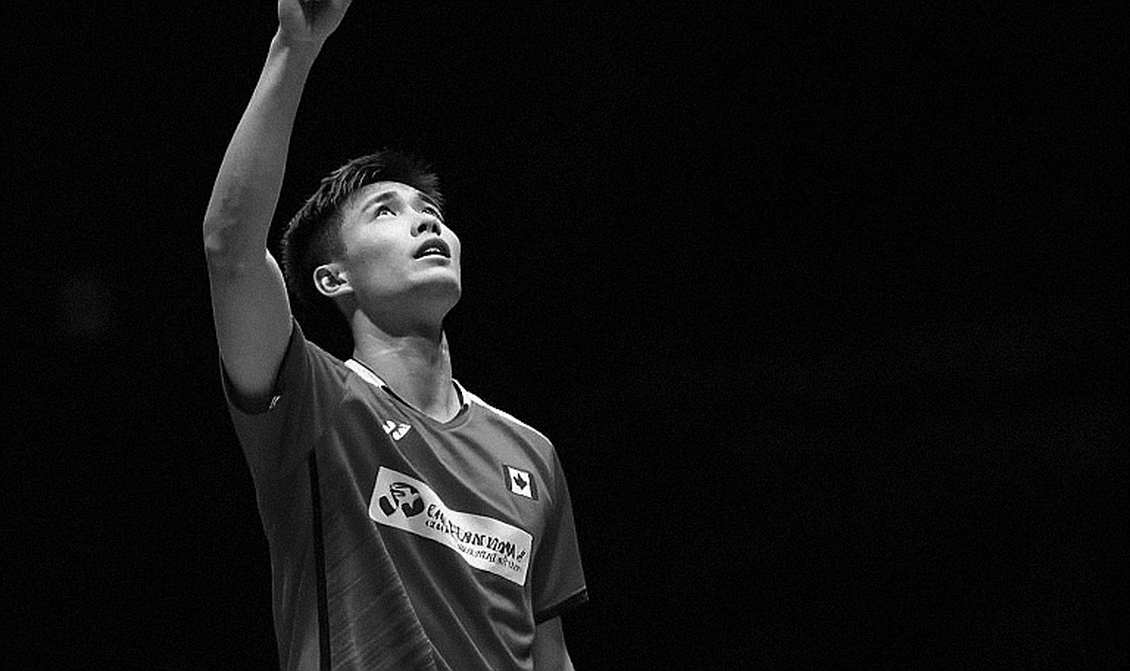
To understand why one board carries such weight, look at the level of the competition. The Asian Games badminton team event gathers almost every strong nation in the sport: China, Japan, Indonesia, Korea, Chinese Taipei, Thailand, Malaysia, India, Hong Kong. Remove Denmark and this is essentially the world ranking compressed into one bracket. A team medal here is worth roughly a world-championship result. The Indian media framing of a tough draw therefore has a basis.
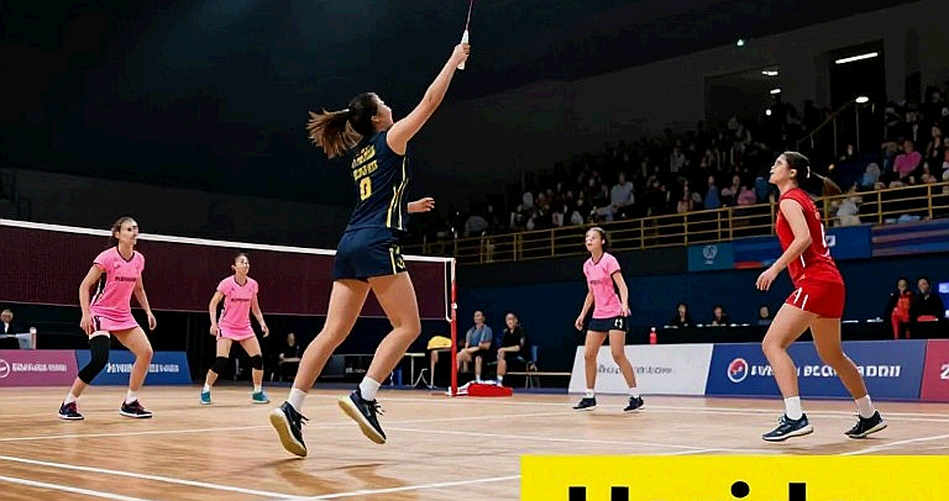
India's position in that picture is fairly clear. The men won silver at the previous Asian Games in Hangzhou. The women reached the quarter-finals and lost 0-3 to Thailand. Across the badminton programme, the Indian contingent took one gold, one silver and one bronze. Those are the only quantified anchors in this whole story, and every other judgement has to be tied to them.
The 0-3 quarter-final loss to Thailand last time is an underrated signal. A narrow defeat speaks about a moment; a straight-games wipeout speaks about structure. The standard team tie consists of three singles and two doubles rubbers. A team strong in singles but thin in doubles always enters a tie with two rubbers essentially outside its control, and every margin of error is pushed onto the three remaining singles matches.
Japan is the worst possible opponent for a team built that way. Being seeded in both draws — second in the women's event, 3-4 band in the men's — signals a deep and balanced development programme across both genders rather than a single-star anomaly. A programme like that attacks precisely the opponent's thinnest point: the doubles rubbers.
For India's men, the geometry is even harder. The road to a gold-medal match runs through Japan in the quarter-finals and most likely through China in the semi-finals. That is two seeds on consecutive days in a format that tolerates not a single lost rubber. If the women need one upset to reach a medal threshold, the men need two.
Here it becomes necessary to separate two things the media routinely blends: the bracket and the form. The board tells you who plays whom; it tells you nothing about who is playing well. Across everything published on 19 September, there is no current-form indicator for any player, no head-to-head record, no shuttle-speed data and no rally-length data. Any reasoning of the kind that says India will struggle against Japan is describing bracket structure, not playing quality.
Another unconfirmed detail bears directly on motivation: whether the Asian Games team event carries BWF World Ranking points remains unclear. That is data pending verification, and it differs fundamentally from World Tour events, where every match converts into points. Motivation at a non-ranking event and at a ranking event is simply not the same thing.
From years of following team ties in the Thomas-Uber model, I have drawn one plain rule: a tie is usually decided in the third and fourth rubbers — the doubles — and not in the singles match of the strongest player. The spectator sees a shot; the analyst sees an entire system breathing. And that system tends to expose its weakness in exactly the places the cameras point at least.
The second common mistake is treating a draw as a form indicator. A team lands in a hard half not because it is declining, but because it lacks the ranking points to be protected. Reading a bracket as a technical assessment creates two consequences: inflated pre-match expectations, or a ready-made justification for any defeat afterwards.
In India, the way the tough-draw frame is used is worth watching. It lowers expectations before results arrive while still implying medal potential. This is a familiar expectation-management pattern in sporting nations with one dominant star: pressure concentrates on a single individual, and if the team exits early, the story pivots quickly towards the star being let down by squad depth.
There is a subtler error that creeps into professional analysis itself: reading too much into a small sample. A 0-3 defeat last time does not prove that this year's structure is equally thin. It is simply the only reference point available. An analytical frame exists to open up layers the naked eye skips, and the layer most easily skipped here is a preparation window compressed into little more than twenty hours.
Twenty hours is not enough to build a new personnel plan. It is only enough to choose between plans prepared in advance. For a team without many doubles options, picking the wrong pairing can let a tie slip away inside the first two rubbers. The bracket never says this out loud, but every coach knows it.
So what deserves attention? Not the semi-final scoreline, but the two doubles rubbers. If India win at least one doubles rubber against Japan, the tie becomes a solvable problem. If they do not, every calculation about singles strength becomes meaningless, because the tie ends before the team's strongest asset is used. A lineup does not need excellence in every position; it only needs no link forgotten.
For the men, the question is blunter still. The silver in Hangzhou set a standard of expectation, but that standard no longer matches this year's path. Defending a runner-up position now requires two wins over two seeds on consecutive days. That is a feasible target, not a safe one, and the framing should reflect that gap honestly.
The most notable thing about the 2026 bracket is not the names of the opponents. It is that both Indian teams enter the event with the same unanswered question: whether the doubles rubbers can hold the team upright long enough for the three singles matches to do their work. The quarter-final against Japan will answer that within a few hours.
When the board went up on 19 September, nobody in the room could change the slip of paper. But every pairing, every rubber order and every decision about which player stands where remained in the coaching staff's hands. Titles and medals are quietly settled in the places the cameras point at least: the fourth rubber, the third game, inside a hall that has gone almost silent. That is where the real answer gets written.