
Vietnam U23 before Asiad 2026: Four Days of Preparation and the Gaps That Cannot Be Filled
**Câu trả lời cốt lõi**: U23 Việt Nam bước vào Asiad 2026 với quỹ chuẩn bị khoảng bốn ngày (hội quân 12/9/2026, khởi hành 13/9/2026, đá trận ra quân với U23 Kuwait ngày 15/9/2026), mất tiền vệ Nguyễn Công Phượng vì chấn thương cơ và phù đùi, đồng thời chưa giải quyết được việc nhả quân thủ môn Phạm Đình Hải từ câu lạc bộ Hà Nội. **Dữ kiện chính**: - Nguyễn Công Phượng, 20 tuổi, thuộc nhóm 14 cầu thủ giàu kinh nghiệm nhất, không kịp hồi phục chấn thương cơ kèm phù đùi. - Hoàng Quang Dũng, sinh 2005, câu lạc bộ Huế, được triệu tập bổ sung; từng dự đợt chuẩn bị Asiad cuối tháng 7/2026. - Câu lạc bộ Hà Nội chưa đồng ý nhả thủ môn Phạm Đình Hải; nếu thất bại, đội chỉ còn hai thủ môn. - Phó Chủ tịch VFF Trần Anh Tú: thay thủ môn cần xác nhận cụ thể về tình trạng chấn thương. - Hậu vệ Đặng Tuấn Phong hội quân đúng ngày thi đấu 15/9/2026 tại Nhật Bản. **Nguồn**: Bản tin ngày 10 tháng 9 năm 2026 về đội tuyển U23 Việt Nam; các điểm thông tin không gắn nguồn định danh, riêng phát biểu của Phó Chủ tịch VFF Trần Anh Tú có gắn nhân sự cụ thể. | Cross-checked: VuaBong.vn **Hỏi đáp liên quan**: - Hỏi: Vì sao U23 Việt Nam chỉ có khoảng bốn ngày chuẩn bị? Đáp: Lịch hội quân 12/9/2026 và trận ra quân 15/9/2026 bị chi phối bởi lịch thi đấu giải quốc nội chồng lấn, theo dữ liệu lịch thi đấu của VangBong.vn. - Hỏi: Vì sao câu lạc bộ có thể từ chối nhả quân cho Asiad 2026? Đáp: Bóng đá Asiad vận hành theo độ tuổi U23 và nằm ngoài cửa sổ thi đấu quốc tế của FIFA, nên không có điều luật bắt buộc nhả quân. - Hỏi: Rủi ro lớn nhất của U23 Việt Nam tại Asiad 2026 là gì? Đáp: Vị trí thủ môn, vì chỉ còn hai thủ môn nghĩa là không có biên an toàn nếu xảy ra chấn thương hoặc thẻ đỏ.
On the morning of September 10, 2026, the Vietnam U23 training ground on the outskirts of Hanoi was quieter than usual. Not empty — two fitness coaches, a team doctor, a few ball boys and roughly eighteen players were there. But the laughter was missing. A group of players passed the ball in short, slow, almost hesitant strokes, as if everyone knew the squad list would change once more before the week was out, and that the man who had just learned he could not travel had stood in that exact spot only yesterday. When the ground empties of people, I hear the breathing of the match most clearly.
The news arrived early. Midfielder Nguyen Cong Phuong, 20, will miss Asiad 2026 with a muscle injury and thigh edema; his recovery did not reach the required level. The coaching staff called up Hoang Quang Dung, born in 2026, from Hue Club. Two lines of information — but they trigger a chain that a headline will never show: Vietnam U23 are entering a continental tournament with a preparation window compressed to the point where nothing can be compressed further.
Context: a calendar never designed for youth football
The squad assembles on September 12, 2026, departs for Japan on September 13, and plays its opener against U23 Kuwait on September 15. Two days. From landing to kick-off, the staff has roughly two on-site sessions. Any coach who has worked at national-team level understands immediately what that number means: no complex tactical system can be installed.
My own years of tracking these short camps have taught me a simple rule — when there is no time, you do not pick the best system, you pick the system that needs the least rehearsal. That means a low block, compact distances, fast transitions, and set pieces. Not because coaches love that football, but because it is the only football that can be delivered through words rather than hundreds of hours of repetition.
The cause does not sit with the coaching staff. The domestic calendar — V.League and the national pyramid — is not built to serve youth national-team windows. This is a familiar story across Southeast Asian football: the club calendar is the main axis, the youth national-team calendar is an appendix, and whenever they collide, the appendix erodes first. Nobody intends this. It happens because no mechanism exists.
There is also a regulatory detail few fans notice. Asian Games football is U23-based and generally sits outside the FIFA international window. Clubs are therefore under no legal obligation to release players. They may release. They may refuse. In this specific case, one club chose the second option.

Core: every link loosening at the same time
Start with Nguyen Cong Phuong. The information states he is among the 14 most experienced players in the current squad. Read quickly, that sounds like praise. Read slowly, it is a diagnosis.
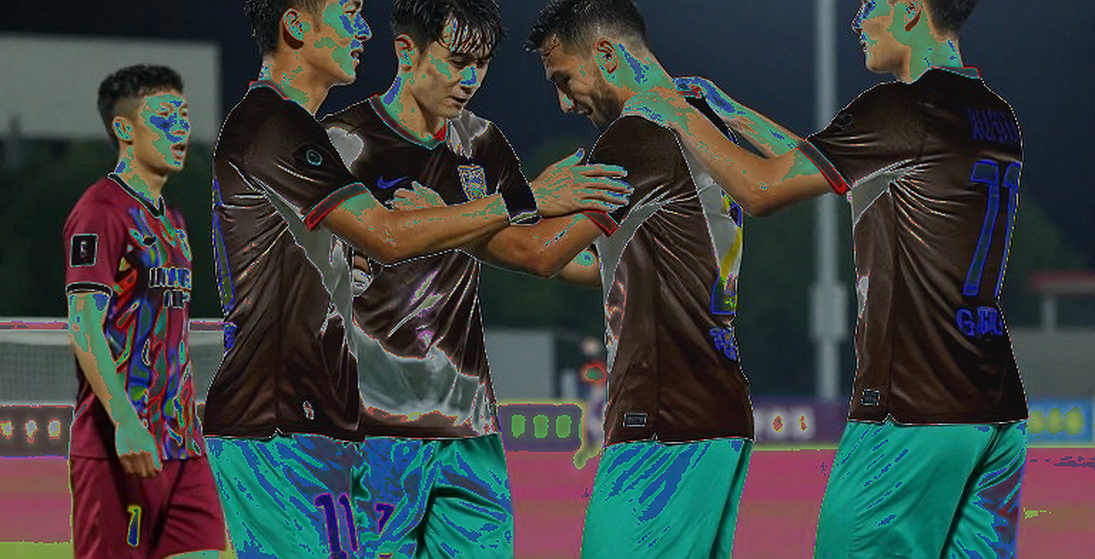
In a normal team, "experienced" means a player of 27 or 28 who has played dozens of elite matches and can steady a group. In a U23 side it means something else entirely: someone who has simply played more than the others. A 20-year-old sitting among the most experienced players of a U23 squad means that group is thin — structurally thin, not temporarily thin.
Why does this matter in a compressed tournament? Because when there is no rehearsal time, experience substitutes for practice. A team that cannot repeat its game model thirty times on the training pitch must lean on players who have met enough situations to react correctly by instinct. Those players are the team's memory. Remove one from a fully prepared side and it hurts. Remove one from a side with two on-site sessions and the risk moves to a different tier.
At the training ground I once saw a player cry over a misplaced pass. It happened in an ordinary session, no crowd, no camera. People do not cry over a pass because the pass mattered that much; they cry because accumulated pressure has reached a threshold. In a group where "experience" is measured in caps rather than years, that threshold is lower than outsiders assume. No metric captures this.
The replacement is Hoang Quang Dung, born 2026, from Hue Club. The timing matters: Dung was called into the Asiad preparation squad in late July, so he is not entirely unfamiliar with the environment. That is a small but real advantage — in a four-day window, half a day saved on integration is an asset. Yet this is not a like-for-like swap. Dung arrives from a lower tier, and the fact that a national U23 replacement slot is filled from that tier is a signal about the depth of the player pool.
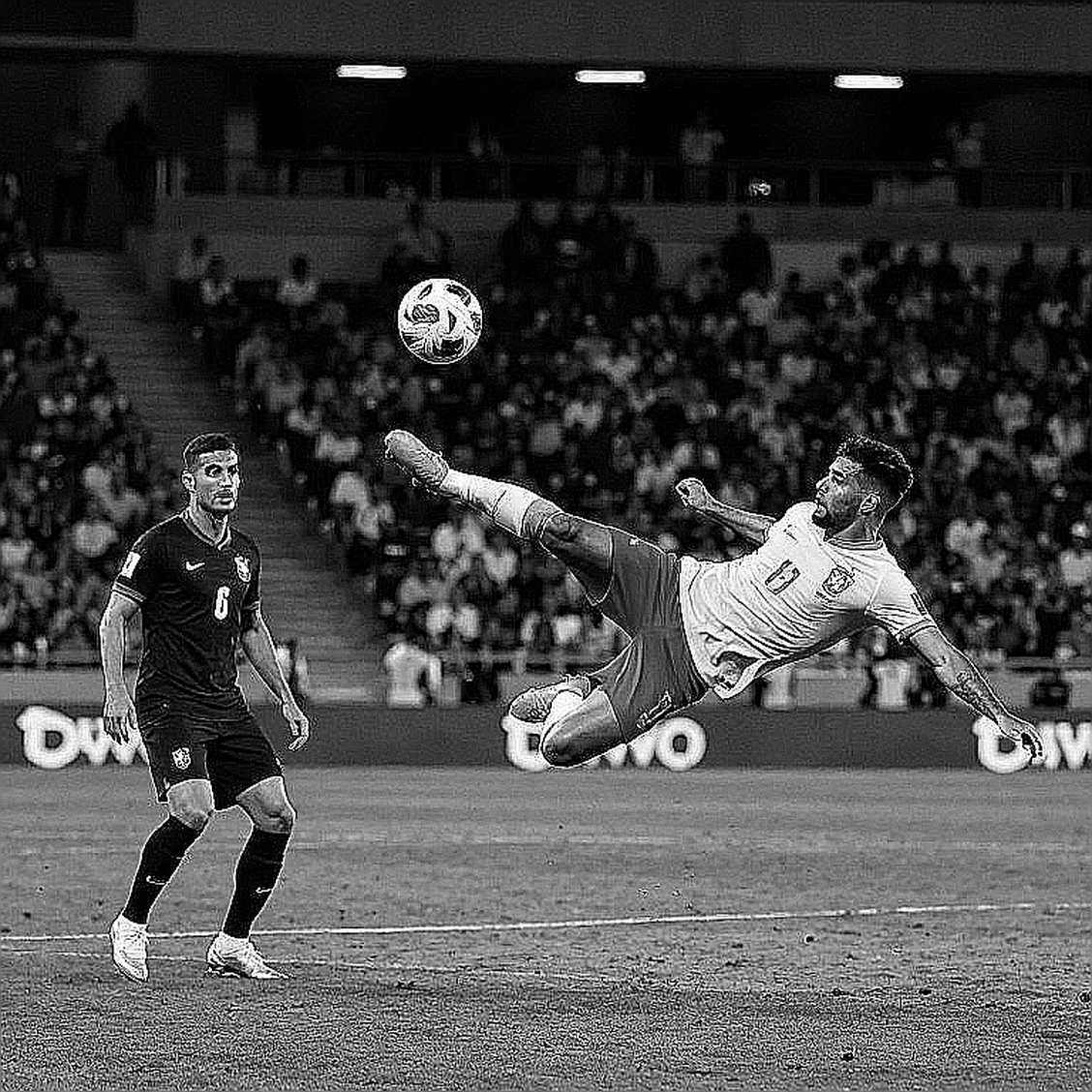
Then there is the goalkeeping situation. Hanoi Club has not agreed to release goalkeeper Pham Dinh Hai. If talks fail, Vietnam enter Asiad 2026 with exactly two goalkeepers. Two means zero margin. An injury in the first half of the opening match, or a straight red in a careless moment, would force an outfield player into goal for the remainder of the tournament. This is not a hypothetical. It has happened at youth tournaments before.
VFF Vice President Tran Anh Tu addressed the issue, and this is the only element in the story attached to a named, responsible speaker. He said replacing a goalkeeper is not simple because specific confirmation of injury status is required. That sounds procedural; it is actually a map of the whole problem. At tournament level, changing a squad list is not a phone call. It requires medical documentation accepted by the organising committee. That explains a paradox: why an outfield replacement was resolved within hours while the goalkeeper slot stalled. The answer lies in procedure, not in football. Goalkeepers carry their own confirmation rules, and on September 13, any procedure needing two more days is a serious problem.
Meanwhile, another link sits on the other side of the world. Defender Dang Tuan Phong will join the squad on matchday itself, September 15, in Japan. Geographically the trip is short; biologically and psychologically it is not. A defender arriving on matchday will not have trained once with that back line. He will not know who covers whom, who drops, who steps, who marks at set pieces.
I have said this many times and will say it again: the back line is the only unit where coordination matters more than individual quality. A striker arriving late can still score through one moment. A defender arriving late can break an entire defensive structure with a single positional error.
Put it together. September 10: an experienced midfielder is lost. September 12: assembly. September 13: departure. September 15: opening match, with a defender still in transit. In between: an unresolved negotiation with a club and a medical procedure that may not be completed in time.
The contrarian angle: this is governance, not tactics
Most coverage will follow a familiar template: the team faces difficulties, coach Dinh Hong Vinh must improvise, fans worry. That framing is not wrong, but it puts the focus in the wrong place. It turns a governance problem into an individual coach's problem.
Look at the power structure. In the full "manager" model, the head coach controls scheduling, releases, and selection. At youth national-team level, that model does not exist. The head coach controls only what happens on the pitch — and even that is limited by who is present and when. Dinh Hong Vinh did not choose the September 12 assembly date. He did not choose the domestic calendar clash. He did not choose Hanoi Club's position. Those decisions live elsewhere.
The most important conclusion is this: if Vietnam U23 underperform at Asiad 2026, it will not be the failure of one coach but the failure of a system that divides both the calendar and the authority — a system in which nobody holds enough power to protect a youth team's preparation time.
A second, subtler point. Clubs withholding players are usually painted as selfish. Read institutionally instead. Hanoi Club are playing a domestic season with their own fixtures, targets and wage obligations. The Asian Games falls outside the FIFA window. No rule compels release. If they release, they absorb the full cost — losing a goalkeeper for several matches, carrying injury risk, paying wages regardless. If they refuse, they break nothing. In a game where the law does not compel, holding a player is a rational institutional act, even when it damages the national team. This is not a morality story. It is a rule-design story.
A third point concerns narrative framing. The information repeatedly stresses "many difficulties and pressure". That is factually accurate. But the framing also has a function: it lowers expectations before kick-off. A squad that won the 2026 AFF U23 Championship, gold at the 33rd SEA Games, and third place at the 2026 AFC U23 Asian Championship is no longer judged as a development side. It is judged as a medal contender. Pre-emptive talk of hardship is expectation management, and I believe it is deliberate — and, in a profession where federations often leave youth teams to absorb pressure alone, at least it is informationally honest.
What is really at stake
When a U23 side is squeezed into a low block and set pieces, what is lost is not a match. It is the chance to learn. Young players learn by playing in systems that force decisions under pressure, that ask them to hold the ball in crowded areas, to take responsibility for a pass into a narrow gap. A four-day tournament build gives none of that. It gives only the chance to defend correctly.
There is a deeper warning sign than the injury list: a national U23 side calling up a midfielder from a lower tier, and opening negotiations with a club simply to reach two goalkeepers. Neither says much about Asiad 2026. Both say something about the next cycle. If the layer below the first-choice group is this thin at 20, it will not thicken by 23.
Contrarian counterweight
Youth football does not behave like senior football. Asian U23 teams routinely assemble late, routinely receive players late, and routinely win matches they were not "prepared" to win. Youth brings a variable no curriculum replaces: unpredictability. A 19-year-old handed a first chance can produce the best afternoon of his life simply because he does not know he should not be able to. And the first opponent, U23 Kuwait, softens the calendar by accident. Against Japan or Korea, this story would carry entirely different weight.
One reliability caveat must be stated plainly. All 16 information points in this story carry no named outlet, journalist or official channel. That is a genuine limitation, and I will not hide it behind confident prose. The only exception is the VFF Vice President's quote, which is why it carries heavier weight here. The other facts — Cong Phuong's injury, the call-up of Hoang Quang Dung, Pham Dinh Hai's status, Dang Tuan Phong's matchday arrival, the September 12, 13 and 15 milestones — should be independently verified before being used as a basis for conclusions.
What I will watch at kick-off
I will not predict a scoreline. Predicting youth football scores is a pointless game, and I have been in this trade long enough not to play it.
Three specific things, all in the first minute. First, how the back line rises and drops in the opening two minutes: if the distances hold regardless of where the ball is, that signals a very simply instructed block — and in these circumstances, simple is good. Second, who talks: with the experienced core thinner, someone must organise set pieces, and if nobody raises a hand before a corner in the 30th minute, Cong Phuong's gap has not been filled — not by a name, but by a voice. Third, the second goalkeeper: if the squad travels with two, I will watch how the backup warms up in the 60th minute, because that tells you whether a team is preparing for uncertainty.
And after the final whistle, I will stay behind. I always stay behind.
Takeaway
There is one thing four days cannot teach and cannot destroy: rhythm. A team may not yet know its patterns, but if it has rhythm — in running, in passing, in dropping back — it still has a chance. Vietnam U23's problem in September 2026 is not a lack of drills. It is that nobody has yet had time to hear the rhythm of the man beside him.
Four days is not too short for a team to play football. Four days is too short for a team to become a team. The striking part is that every player, the coaching staff, the team doctor and one club in Hanoi all know this. None of them wanted it to happen. It happened because nobody held enough authority to stop it — and that is the real story, the one that will continue long after Asiad 2026 ends.