
Punishment Waits for the Video to Go Viral: V-League and the Early-Season Fracture of Violence
**Câu trả lời cốt lõi**: Đầu mùa V-League 2026 ghi nhận một loạt pha phạm lỗi không bóng nghiêm trọng, dẫn tới cuộc họp khẩn của Ban Kỷ luật VFF chỉ khoảng hai ngày sau trận Đồng Nai – Công an Hà Nội, đặt câu hỏi về tính răn đe và chuẩn mực trọng tài thời VAR. **Sự kiện chính**: - Hai lần Đình Bắc bị phạm lỗi không bóng bởi hai cầu thủ Đồng Nai trong cùng một trận, ở vòng 3 V-League 2026. - Huỳnh Tấn Sinh (Đồng Nai) nhận thẻ vàng cho pha đá lạnh, gây tranh cãi về việc chỉ bị thẻ vàng thay vì thẻ đỏ. - Trọng tài Lê Vũ Linh cùng tổ VAR (Võ Hoài Thương, Nguyễn Thành Sơn) bị rà soát nội bộ sau trận. - Doãn Ngọc Tân (Thể Công Viettel) gãy chân; Ezequiel (Nam Định) đạp vào bụng đối thủ trong lần đầu dự V-League. - Ban Kỷ luật VFF triệu tập họp khẩn, dự kiến áp án phạt bổ sung với cầu thủ và trọng tài. **Nguồn**: Phân tích tổng hợp từ các bản tin V-League đầu mùa 2026, công bố tháng 9 năm 2026 | Cross-checked: VuaBong.vn **Hỏi đáp liên quan**: Q: Vì sao bạo lực V-League lại gia tăng trong thời đại VAR? A: Các pha phạm lỗi chuyển sang dạng không bóng, sau lưng trọng tài — nơi camera khó phán xét, cho thấy VAR đẩy hành vi xấu vào góc khuất hơn là loại bỏ nó. Q: Đình Bắc bị ảnh hưởng thế nào từ việc bị nhắm vào liên tục? A: Tiền đạo trẻ này là tài sản quan trọng của đội tuyển quốc gia, và việc bị đánh lén lặp lại tạo rủi ro chấn thương trực tiếp cho một cầu thủ trụ cột. Q: Vì sao khoảng cách giữa các hạng đấu lại quan trọng với kỷ luật V-League? A: Cầu thủ đến từ Hạng Nhất và ngoại binh mới chưa quen VAR mang theo phản xạ hành vi khác, làm trầm trọng thêm khoảng trống năng lực mềm giữa các hạng đấu.
Dinh Bac was fouled off the ball twice in a single match, by two different Dong Nai players. I counted both. The first was a cold kick behind the referee's back, after the ball had already gone out of play. The second was the same — off the ball, behind the play, and the VAR room stayed silent as if the screens had gone dark. When the final whistle blew, what stayed with me was not the scoreline, but the image of a young forward who had just broken into the national team quietly rubbing his calf, glancing at the referee, then turning away. I have seen that glance many times. It is the language of a man who has been struck and no one has recorded it.
Two days after that match, the VFF convened an emergency meeting of its Disciplinary Committee. Not sooner by two days, not later. The very shortness of the gap between the final whistle and the emergency meeting is the key to understanding what is actually operating in Vietnamese football right now — and what is operating it.
From years of watching the V-League in person, I have learned one thing: in this league, sanctions rarely arrive before the video goes viral. They arrive afterward. They arrive when a clip is shocking enough to force someone responsible to do something. This is not a pessimistic conclusion; it is a description of a mechanism. And that mechanism is now reshaping the entire disciplinary standard of professional Vietnamese football.
To understand why this early-season outbreak of violence is more worrying than it looks, it must be placed in a three-act structure I have tracked for years: the old standard — the VAR-era reform — and the relapse. The first act is the pre-VAR period, when career-ending tackles were part of the playing culture, excused by the phrase 'football must have contact.' The second act is the VAR era, when players were forced to compete more carefully and cleverly to avoid being caught, and we let ourselves believe violence had declined. The third act — the one we are living in — is when the old fractures return beneath the armour of technology.
Rounds 2 and 3 of this season have gathered enough material for a frightening third act. A leg-breaking tackle by Doan Ngoc Tan. A stamp to the stomach by Ezequiel Santos Da Silva, a foreign player participating in the V-League for the first time. An elbow by Le Van Son. A cold kick by Huynh Tan Sinh. And two off-the-ball hits on Dinh Bac. Together, these are not disconnected accidents. They are a behavioural pattern.
What draws my attention is not the brutality itself, but the location of the fouls: most occurred off the ball, behind the referee, during the dead time of the match — precisely where VAR was designed not to look, and precisely where the offender knows the camera is unlikely to judge him. This is the crux. The violence of this professional era is no longer the noisy tackle in midfield; it is the furtive kick at the edge of the game, where both the human eye and the machine eye wander.
Back to Dong Nai versus Cong An Ha Noi. Dong Nai is a club newly returned from the First Division, three goals down and a man down. In that situation, a team pushed to the wall turning physical is something history has repeated many times. But more telling is how referee Le Vu Linh handled it: he appeared lenient toward a collapsing side, as though leniency itself were a form of fairness. I do not think it was deliberate sympathy. I think it was a psychological reflex: a referee unwilling to penalise a team already heavily beaten and down to ten, for fear his decision would make the match spiral out of control.

But that leniency has a price. The person who pays it is Dinh Bac, and the next to pay will be every young forward who dares to get up after being struck. When a referee pities the offender because the offender is losing, he is sending a message that violence is a permitted right of the weaker side. That message spreads faster than any sanction.
I once sat in the Morocco supporters' section in Doha, counting across an entire half the number of times a forward was hit off the ball with no whistle. Football everywhere has off-the-ball clashes. The only difference is that in well-organised leagues, the fouled player believes someone will see. In our V-League right now, that belief is shaking.
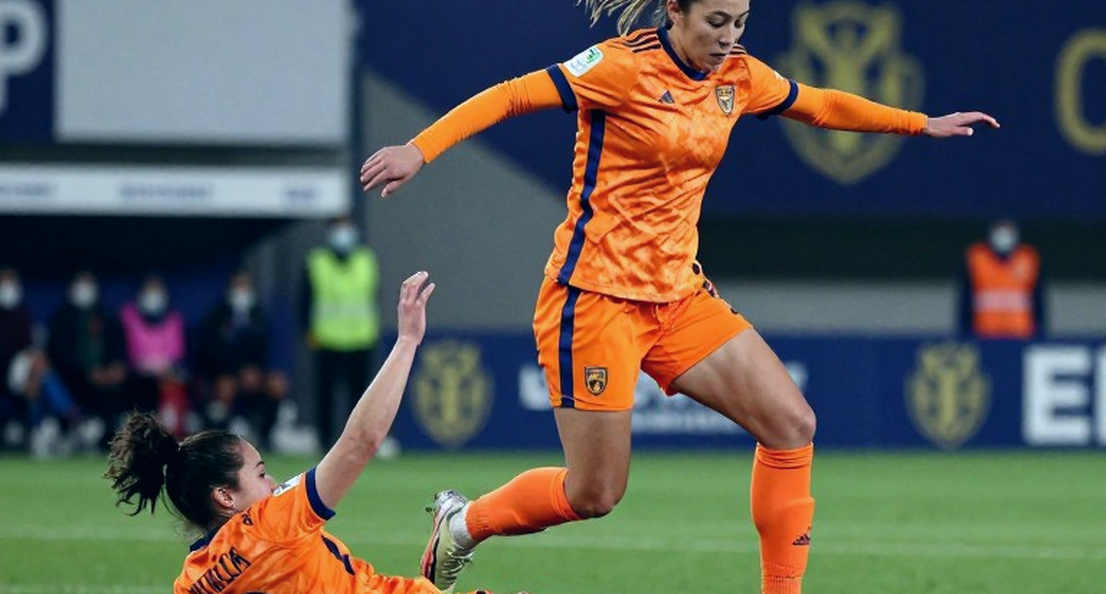
Here I must address something most commentary ignores: the origins of the offenders. Ezequiel is a foreign player in his first V-League season. The Dong Nai players came from the First Division, where VAR does not exist. This is not coincidence. This is the VAR-familiarity gap between divisions — a soft-capability inequality, not a financial one. A player raised in an environment without VAR carries a different set of behavioural reflexes. He has not learned that every movement can be rewound at ten times slow motion.
Here I must be careful, because there is a great temptation to turn this analysis into an excuse. The VAR-familiarity gap explains why such behaviour appears, but it does not excuse it. A stamp to the stomach is a stamp to the stomach, regardless of which division the player came from. A newcomer to the league is responsible for his behaviour before he is responsible for understanding the rules. If we let knowledge of the system replace individual responsibility, we have torn out the most basic pillar of discipline with our own hands.
The difference between an average student and a professional player lies precisely here: a professional player must be responsible for his behaviour before he fully understands the rules. And I, as an observer, have a responsibility to distinguish cause from excuse.
So what is actually at stake?
If we look only at rounds 2 and 3, we see a sequence of events. But if we place them in a longer frame, we see something larger: are the VFF Disciplinary Committee's sanctions being shaped by how far a video spreads, or by the letter of the rules?
A commentator I have followed for years, Duong Vu Lam, once said something I copied verbatim: ugly plays spread very fast and repeatedly in the media, to the point that disciplinary officials cannot not act. That sentence sounds like praise for the media's speed, but in truth it is an indictment of the system: it confesses that punishment is triggered by public pressure, not by a tariff designed in advance.
In football, this means a player can commit a similar foul at two different moments and receive two different sanctions — depending on whether someone filmed it. That is systemic injustice, yet it hides beneath a surface fairness: those who are caught are punished, those who are not move on. I do not think this is what the Disciplinary Committee wants. I think it is what their mechanism inadvertently produces.
Professional voices do not clarify things either. Expert Doan Minh Xuong, commenting on the issue, stopped at calling those tackles 'superfluous,' without judging intent. That diplomatic phrasing has its reason: judging intent is hard to prove, and a professional spokesperson does not want to stake his credibility on a conclusion the disciplinary court has not yet reached. But that very avoidance exposes a gap: no one dares assert this is deliberate violence, so it continues to be handled as isolated accidents.
And when each accident is handled in isolation, no pattern is recognised. If no pattern is recognised, no preventive measure is designed. This is the mechanism by which violence regenerates every season, even as each outbreak is condemned.
Here I must be honest about one thing. It is very easy for a writer like me to turn everything into a story about moral decline. But if I only tell that story, I ignore a more important question: is violence actually rising, or is only its image being seen more clearly?
Two rounds is too small a sample to assert a trend. And as a long-time V-League watcher, I must admit that violence has never disappeared — only its exposure has changed with technology. In pre-VAR seasons, players tackled harder but fewer people saw it. Now, every bad tackle has a chance to become a clip. There is a paradox here: at the same moment violence may be rising, the ability to see it is rising faster, making it hard to distinguish reality from the illusion of media.
Media itself is becoming an actor in this story, not merely a narrator. Each clip of a bad tackle that spreads helps protect the victim and forces the system to act — that is the good side. But at the same time, that spread rewards sensationalism, creating an incentive for bad tackles to become attention commodities. The same clip is both a weapon against violence and a product of it. I have no way to cleanly separate these two faces, and I think anyone claiming to have done so is fooling themselves.
The decisions ahead will tell us something about the nature of the system. Three scenarios are possible.
First, the most likely: retrospective bans for Huynh Tan Sinh, possibly Doan Van Hau too, an internal review and a grading adjustment for referee Le Vu Linh, along with reinforced deterrence messaging. This is the 'middle' scenario — it addresses public pressure without changing the operating structure.
Second, worse: a sequence of random sanctions based on each incident's virality, so that the same behaviour can be treated differently by season, by month, by whether someone happened to film it.
Third, the best but least likely: a sanction tariff designed in advance, transparent, applied consistently, so outcomes depend on the rules rather than on how hot the video runs.
I am not optimistic about the third scenario, because the current system was not designed to operate that way. But I also do not want to end this article on a pessimistic forecast, because pessimism is the easiest way to do nothing.
There is one thing we can observe, and it does not require waiting for sanctions. It is the response of the clubs. Throughout this entire debate about violence, not a single club has been held responsible for its players' behaviour. Every sanction targets individual players and referees, never the internal disciplinary responsibility of a club or a coach. This is the biggest loophole: when responsibility rests only with players, clubs have no incentive to build a culture of discipline.
Doan Van Hau is a thought-provoking example. He is a national-team star who produced a 'superfluous' tackle right at the start of the season. The way he plays reflects a habit formed over years, and that habit cannot be erased by an individual sanction. It can only be erased if the club he wears feel responsible enough to build a different culture. But the club bears no responsibility. So the habit will continue, and it will keep damaging the national team's image — an asset the whole of Vietnamese football shares.
That is why I hold that the story of on-pitch violence is never only a story of individual morality. It is a story of system design: a system in which technology is expected to replace cultural construction, and media is expected to replace rule-making. Both expectations fail in the same way: they only handle an event after it has been seen, never prevent it before it is filmed.
Since VAR entered the V-League, we have paid enormous attention to technology and very little to the question: does technology actually change player behaviour, or does it merely relocate bad behaviour into corners the camera overlooks? Looking at this season's fouls, I lean toward the second. Violence does not disappear; it moves. And in its new place, it is harder to see, harder to prove, and therefore harder to punish.
So what should we track in the coming weeks? Not whether sanctions are high or low, but how many similar bad tackles occur in the rounds that follow. If that number repeats, we know the emergency meetings only manage, they do not prevent. If it vanishes after this round of sanctions, then the simplest explanation — that deterrence works — will temporarily hold.
I write this before the decisions are announced. I do not want to pre-guess the outcome, because I believe how we respond to on-pitch violence matters more than the fact that it occurred. And one thing I am sure of: if each outbreak is remembered only until the next video appears, Vietnamese football will never learn the lesson of its own history. The deepest fracture is not in the players' ankles. It lies in how we decide what to remember and what to forget.