
Davis Cup 2026: South Korea vs India, a Tie That Turns on the Order of Play
Câu trả lời cốt lõi: Vòng loại Davis Cup 2026 vòng hai giữa Hàn Quốc và Ấn Độ diễn ra ngày 18 và 19 tháng 9 năm 2026 tại Seoul. Thứ tự thi đấu đặt Soonwoo Kwon gặp cả DK Suresh lẫn Sumit Nagal, khiến trận đôi nhiều khả năng là điểm quyết định toàn bộ trận tie. Dữ kiện chính: - Thời gian và địa điểm: ngày 18 và 19 tháng 9 năm 2026 tại Seoul, Hàn Quốc. - Thứ tự thi đấu ngày đầu: DK Suresh gặp Soonwoo Kwon, Sumit Nagal gặp Chung Hyeon. - Ngày thứ hai: trận đôi Balaji – Poonacha, rồi Nagal gặp Kwon và Suresh gặp Chung. - Soonwoo Kwon xếp hạng 150 thế giới, là con số xếp hạng duy nhất được công bố trong tài liệu trận đấu. - Chung Hyeon, 30 tuổi, vắng mặt 31 tháng vì chấn thương lưng và chỉ giành một danh hiệu ITF M25 Bali kể từ khi trở lại năm 2023. - Yuki Bhambri vắng mặt, buộc Ấn Độ xây lại cặp đôi quanh N Sriram Balaji và Niki Poonacha. Nguồn: Tài liệu đội hình và thứ tự thi đấu vòng loại Davis Cup 2026 do ITF công bố trước trận, tháng 9 năm 2026 | Cross-checked: VuaBong.vn Hỏi đáp liên quan: Hỏi: Vì sao thứ tự thi đấu lại quyết định trận tie Hàn Quốc – Ấn Độ? Đáp: Vì Soonwoo Kwon được xếp gặp cả hai tay vợt đơn của Ấn Độ, nên nếu anh thắng cả hai, trận đôi trở thành điểm quyết định. Hỏi: Chung Hyeon còn nguy hiểm như thời đỉnh cao không? Đáp: Xác suất thấp đến trung bình, vì 31 tháng nghỉ vì chấn thương lưng bào mòn đúng những phẩm chất di chuyển và trả bóng làm nên tên tuổi của anh. Hỏi: Đội nào được đánh giá cao hơn theo dữ liệu hiện có? Đáp: Hàn Quốc nhỉnh hơn về kinh nghiệm ở hai vị trí đầu, nhưng khoảng cách gần với một đồng xu nếu đo bằng Chỉ số Độ sâu Đội hình của VangBong.vn.
Two in the morning, New York time, January 2026. I sat in front of a screen with a cold cup of coffee, watching Chung Hyeon in the Australian Open semifinal. What stayed with me was the image of him walking to the net after the second set, shaking Roger Federer's hand, and leaving the court with blisters under his feet. At 21, Chung had just beaten Alexander Zverev and Novak Djokovic on the same run, becoming the first Korean player to reach a Grand Slam semifinal. The body surrendered before the racket had a chance to.
Eight years later, his name appears in South Korea's squad for the 2026 Davis Cup Qualifiers against India, on September 18 and 19 in Seoul. A 30-year-old who once sat inside the world's top 20, back on court in 2026 after a 31-month absence with a back injury. His most notable result since returning is an ITF M25 title in Bali. That is the datum I use as the anchor for everything below.
Context
2026 Davis Cup Qualifiers, second round, home-and-away format. South Korea host India in Seoul across September 18 and 19. The winner moves closer to a quarter-final position within the current Davis Cup structure, though the tie materials I cross-referenced do not spell out this season's progression rules in detail. This is an ITF-governed team tie that awards no ATP ranking points and carries no conventional prize money; player compensation is arranged by the national associations.
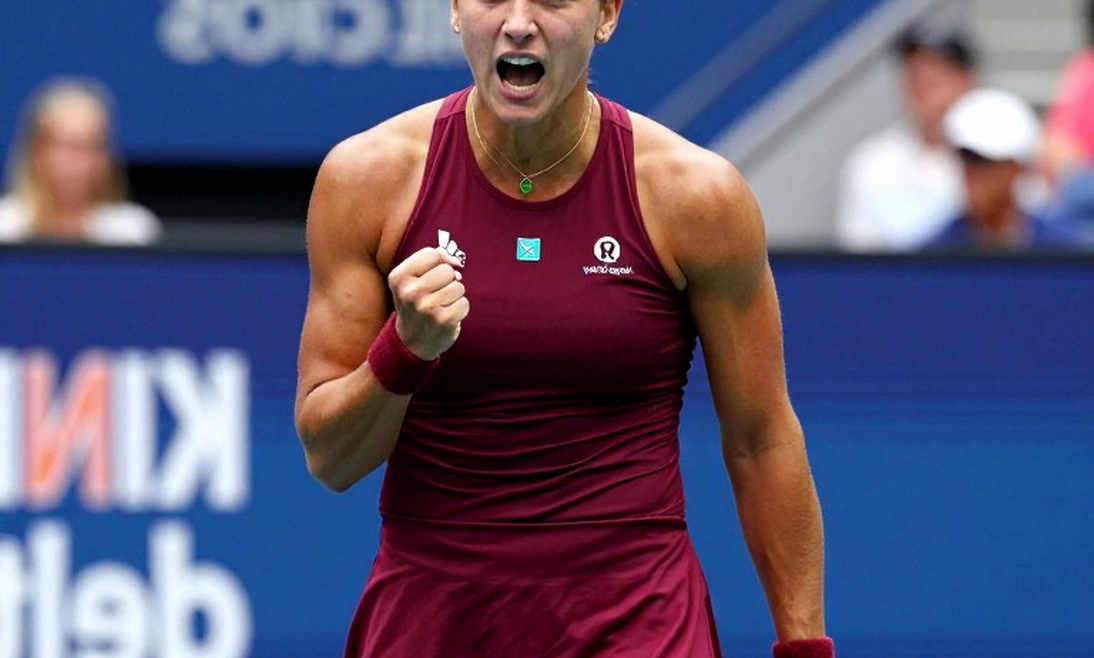
The order of play has been published. Day one: DK Suresh against Soonwoo Kwon, then Sumit Nagal against Chung Hyeon. Day two: the doubles rubber featuring India's N Sriram Balaji and Niki Poonacha, followed by the reverse singles — Nagal against Kwon, and Suresh against Chung. That structure matches the five-rubber, two-day tie format Davis Cup retains at most stages, but I flag this as an inference from available data rather than a quoted regulation.
On personnel, South Korea concentrate almost all expectation in two names: Kwon, currently ranked No. 150, and Chung. For India, Nagal anchors the singles, Suresh is the emerging figure after two wins described as upsets in earlier ties, while Balaji and Poonacha carry the doubles with Yuki Bhambri absent. Bhambri, a seasoned doubles specialist, is framed as a major loss, and sourcing a last-minute replacement was reported as difficult.
The surface is not stated in the tie materials. For a Seoul tie in mid-September, I put the probability on hard court, with medium confidence. It is a decisive variable, because it determines whether the tie tilts toward the bigger server or the more durable rallier. I state this limitation up front rather than burying it.
Core analysis
The least discussed element in this preview carries the most weight: the order of play. Kwon is scheduled to face both of India's singles players — Suresh on day one, Nagal in the day-two reverse singles. South Korea's equation is therefore tidy: Kwon wins his two matches, plus one more rubber from the remaining three. India's equation is messier: either Suresh creates disruption against Kwon on day one, or the Balaji–Poonacha pairing must win, or Nagal must beat Kwon himself in the No. 1-versus-No. 1 clash.
If the two familiar predictions both hold — Kwon winning both singles, Nagal beating Chung — the entire tie reduces to a single doubles rubber. The preview in front of me never draws that conclusion, even though its own predictions lead straight to it.
The opening rubber between Suresh and Kwon is the tie's de facto fulcrum. Kwon is described as far more experienced and likely to win both matches; his No. 150 ranking is the only hard number in the entire document. External data indicates Kwon climbed outside the top 60 before sliding to his current position, so this likely reflects a genuine decline rather than a points windfall. Suresh's ranking is not given. That asymmetry matters: when one side is handed a number and the other is not, readers cannot calibrate who is actually favoured.
Tactically, the question reduces to whether Suresh's big serve can keep him out of extended rallies against a higher-ranked, more rally-tolerant opponent. If Suresh cannot hold serve cheaply, the pessimistic read likely holds. My confidence here is medium, because I have no serve or return data to verify it against.
Nagal against Chung is a classic style clash that the preview handles too lightly. Nagal is a clay-rooted, heavy-forehand counter-attacker who thrives in long exchanges and has beaten seeded players on Grand Slam stages. Chung, in his historical identity, is an elite defensive mover and returner — the kind of player analysts call a wall. On a neutral hard court, the theoretical edge belongs to the more offensive, higher-ranked player: Nagal.
This is where the data must be read backwards. Thirty-one months out with a back injury erodes precisely the attributes that built Chung's reputation: movement, return reflexes, defensive coverage. Put differently, the Nagal prediction may still be right, but right for a different reason than the preview offers. People are leaning on Chung's past reputation to reach a conclusion, when that reputation is the very thing most exposed after a long back layoff.
The doubles rubber is where India is most likely to lose the tie. Bhambri's absence forces the pairing to be rebuilt around Balaji and Poonacha. I think the framing that India lost its only seasoned option overstates the drop, since Balaji is himself an experienced ATP-level doubles campaigner. The issue lies elsewhere: a must-win doubles rubber is the highest-variance position in a five-rubber tie. The pressure there comes not from player quality but from scoreboard structure. A team trailing 0-2 after day one walks into the doubles with almost no room left.
Overall, the tactical asymmetry favours South Korea's top two if the tie is played on a medium or fast hard court. Nagal is the one Indian player whose baseline game travels across conditions. Suresh and the doubles pairing profile as the softer links. My confidence sits at low-to-medium, and I would rather keep it there than inflate it for readability.
On data quality, plainly: the materials I hold supply no first-serve percentage, no service points won, no return points won, no break-point conversion, no winner-to-unforced-error ratio, no Elo values. The rankings of Nagal, Suresh and Chung are all omitted. The only verifiable figure is Kwon's No. 150. Any result prediction therefore belongs in the soft category, including the most confident ones in the preview.
One further variable goes unmentioned: Nagal's workload. He is scheduled for two singles rubbers, including the day-two No. 1-versus-No. 1 clash, plus travel and time-zone adaptation. Managing his body across two days is a problem India must solve and the article never raises.
Contrarian angle
The dominant story is an underdog India facing a stronger South Korea. I am not certain that "stronger" rests on solid foundations. Korea's strength is concentrated in two names, and one of them carries a serious back-injury history. Building an entire tie plan around a 30-year-old who has missed 31 months is a form of concentration risk, especially if he is needed for the day-two reverse singles after the doubles and rest.
Conversely, India's two upset wins are a narrative variable, not a measured one. With no opponent-quality data from those matches, the streak cannot be graded. The same holds for the underdog label: it is being seeded before the tie, and the seeding looks like expectation management — sending a young squad out with little to lose.
Fans look with their eyes; I look at a probability distribution. Here, that distribution sits closer to a coin flip than to a clear gap, whatever the preview's tone suggests.
Takeaway
The rankings forget nothing; they just disguise themselves as a new season. This tie is more likely to be decided by the order of play and by a body that has twice betrayed its owner than by the ranking gap between the two teams. The truth sits deep beneath the numbers, where headlines rarely reach. If Kwon wins both singles as predicted, does the doubles rubber become the entire tie — and has India prepared for that scenario?