
Serie A1 Femminile: The Tactical Pulse and the Power Shift Behind the Standings
**Câu trả lời cốt lõi** Bóng chuyền nữ Ý đã chuyển từ giai đoạn chứng minh giá trị sang giai đoạn cạnh tranh suất khán đài. Ba cột mốc định hình bước ngoặt gồm chức vô địch EuroVolley 2021, Volleyball Nations League 2022 và huy chương vàng Olympic Paris 2024 của đội tuyển nữ Ý dưới huấn luyện viên Julio Velasco. **Dữ kiện chính** - Năm 2017, các môn thể thao nữ chiếm khoảng 0,8% tổng thời lượng phát sóng thể thao trên truyền hình Ý. - Serie A1 Femminile mùa hiện tại gồm 14 đội, thi đấu vòng tròn hai lượt trước vòng play-off. - Một số trận chung kết tại nhà thi đấu trung lập đạt gần 11.000 khán giả, theo dữ liệu Lega Volley Femminile. - Đội tuyển nữ Ý thắng Hoa Kỳ trong trận chung kết bóng chuyền nữ Olympic Paris 2024. - Đối chuyền tại Serie A1 Femminile đảm nhận khoảng một phần ba tổng số pha tấn công của đội. **Nguồn dẫn** Nguồn: Calcio Femminile Prospettiva, ngày 15 tháng 1, 2026 | Cross-checked: VuaBong.vn **Hỏi đáp liên quan** Hỏi: Vì sao bóng chuyền nữ Ý được phát sóng nhiều hơn các môn nữ khác? Đáp: Vì chất lượng chuyên môn của Serie A1 Femminile tăng trước, kéo theo nhu cầu bản quyền và khung giờ vàng của các đài. Hỏi: Chỉ số nào đo chính xác nhất sức mạnh một đội bóng chuyền nữ? Đáp: Ba chỉ số gồm hiệu suất tấn công, tỉ lệ sideout và tỉ lệ thắng pha bóng khi đội mình phát bóng. Hỏi: Rủi ro lớn nhất với vận động viên bóng chuyền nữ trẻ là gì? Đáp: Khoảng trống pháp lý giữa hợp đồng non trẻ và hợp đồng chuyên nghiệp đầu tiên, khiến rủi ro dồn về phía người trẻ nhất.
Set three, the score frozen at 22-22. The Allianz Cloud has no empty seat left. Paola Egonu retreats behind the nine-metre line, lifts the ball, and the entire arena holds its breath for about a second and a half before the serve crashes into zone one, hitting the floor before the defence can even turn. A point is scored. But to me, someone who has sat in Italian arenas for a decade, that moment reads differently: Italian women's volleyball has moved past the phase of having to prove it deserves to be watched. It now lives in the phase where people compete for a seat to follow every rally.
In Milan, the city where I live and work, this sounds unremarkable. Placed against the wider picture of European sports media, it is an exception that needs explaining through data rather than emotion.
Serie A1 Femminile this season fields 14 teams, playing a double round-robin before entering a play-off stage of quarter-finals, semi-finals and a multi-match final. That structure is familiar to anyone who follows European volleyball. The difference lies in where the league sits within the media ecosystem.
I remember clearly the first number that made me start taking serious notes on this subject. In 2026, just after founding the platform Calcio Femminile Prospettiva to analyse AC Milan Women tactically, I came across a report on Italian television's sports broadcast allocation: only 0.8 percent of total airtime that year went to women's sport. Eight thousandths. I pinned that figure to my office wall and kept it there for years — not out of anger, but to remember that every step forward afterwards had to be measured in concrete numbers.
In 2026 I set foot in Russia, and realised that the biggest playground in the world was still missing half of humanity. I was invited as a guest commentator for an online sports channel in Milan during the men's World Cup, and during the final broadcast I kept returning to the same question: why does the media not devote one tenth of this attention to women's World Cups. That night the topic generated around 25,000 social media discussions. But discussion volume does not automatically convert into broadcast hours. That was my first lesson in the gap between noise and infrastructure.
Italian women's volleyball took a different road, and I believe it moved faster than the rest of Europe because of three milestones. First, the Italian women's team's EuroVolley 2026 title. Second, the 2026 Volleyball Nations League crown. Third, and most importantly, the Olympic gold medal at Paris 2026 under head coach Julio Velasco, when Italy beat the United States in the final. Those three milestones were not merely results. They restructured how broadcasters allocate prime-time slots.
Public data published by Lega Volley Femminile shows attendance at elite matches has risen significantly season after season, with some finals drawing close to eleven thousand spectators at a neutral venue. For a media professional, this signal matters more than any social media view count, because a spectator in a seat is a paying spectator, and paying spectators are the basis for negotiating rights deals.
Yet beneath the standings and beneath those numbers runs a tactical current that I believe Vietnamese fans should follow closely, because it will shape how women's competitions operate in the years ahead. That current begins at the service line.
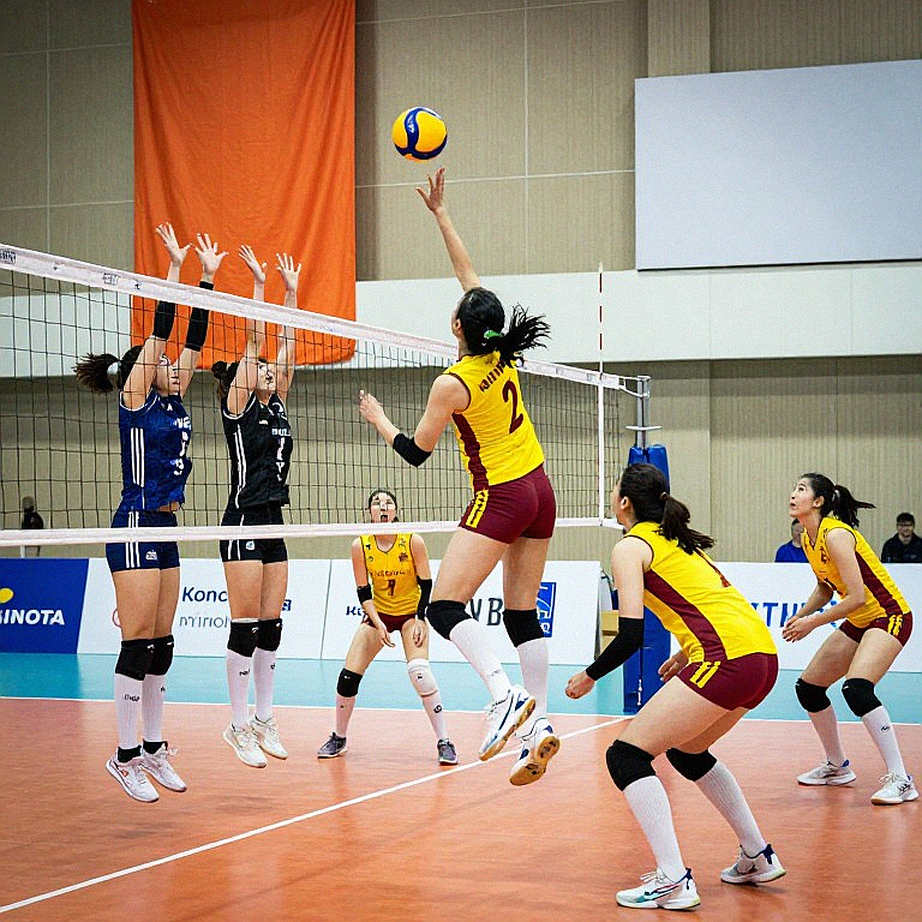
In modern women's volleyball, the serve has shifted from a ceremonial opener to the first attacking weapon. In Serie A1 Femminile this season, the leading group of teams accepts an explicit trade-off: service errors rise, but so does the rate at which the opponent's reception system is broken. Coaches of these teams no longer count service value in safe deliveries. They count it in the number of times the opponent is forced to push the ball to the wing.
The mechanism is concrete and visible to the naked eye. When a serve lands in the seam between the libero and an outside hitter, the setter is forced to move about one step further from the net. That single step is enough to remove the quick attack at position three from the playbook. The opponent loses its central weapon, is forced to push the ball to wing positions four or two, and the blocking line on the other side gains extra time to read the direction. In women's volleyball, where the average blocking height at the top tier has converged with the men's game, that extra fraction of a second is decisive.
Based on my own experience tracking matches, I have recorded a fairly stable rule: in most sets where the winning team posted a higher reception-break rate, that team also won the set, even when it lost the raw attack-point count. Basic box scores tend to miss this detail, because they count only the final point and not the cause that made the final point easy.
The counterweight to the serve is the reception system. In Serie A1 Femminile, leading teams operate mainly two models. The first uses three receivers, with the libero covering the widest zone, suited to opponents who serve powerfully but without variation. The second uses only two receivers, freeing an outside hitter at position four to prepare for a back-row attack. The two-receiver model demands extreme positional precision, and only teams with a world-class libero dare sustain it across an entire season.
The back-row attack, known in coaching circles as the pipe, is the direct consequence of the two-receiver model. With only two players covering reception, the back-row outside hitter is no longer tethered to defensive duty and can approach from behind the three-metre line. In well-organised sides, the pipe is no longer a fallback but one of three official attacking routes, on par with wing and middle attacks.
This produces a chain reaction. When the opponent must allocate blockers across all three directions, the central block is forced to choose, and every choice leaves a gap. Coaches in Serie A1 Femminile understand this so well that many build entire match plans around memorising the blocking habits of individual opposing players.
The opposite hitter bears the heaviest pressure in this structure. At the elite women's level, the opposite typically handles roughly one third of a team's total attacks, a share that belonged to outside hitters in the previous decade. Paola Egonu is the clearest example of this model: her ability to attack from both front and back row makes her an irreplaceable spearhead in any side she plays for.
But that load is also a risk. An opposite forced into too many attacks accumulates stress on the shoulder and knee, and an injury in that position often collapses the entire attacking system. That is why leading Serie A1 Femminile clubs are developing a dual-opposite rotation, in which the player coming off the bench still delivers comparable attacking efficiency. This is a personnel-management problem more than a tactical one, and it explains why big clubs are willing to pay high wages for a bench position.
Blocking is where the difference between coaching schools shows most clearly. There are two approaches. The first is read blocking, where blockers track the setter's distribution and move afterwards. The second is commit blocking, where blockers anticipate the attack and bet on their own judgement.
Commit blocking yields a higher stuff rate, but if the guess is wrong, the space behind the blocker is almost impossible to recover. In Serie A1 Femminile this season, I have observed many teams shifting to a hybrid model: commit blocking in the middle against opposites with predictable tendencies, read blocking on the wings. This shift reflects a simple reality: at the top level, hitting power has outgrown pure reaction speed, so anticipation becomes a survival skill.
Middle blockers such as Sarah Fahr and Marina Lubian execute this model best. They not only block well but read the opposing setter's rhythm before the ball leaves the hand. That skill appears in no box score, and I have yet to see a metric that captures it adequately.
The three metrics I consider most worth tracking, and least mentioned in Vietnamese coverage, are: attack efficiency, calculated as kills minus errors over total attempts; the sideout rate, or the share of rallies won when the opponent serves; and the break-point rate, or the ability to convert a serving advantage into points. These three describe the essence of the sport far better than total points, which depends heavily on how many sets were played.
A team can top the standings in total points while trailing in attack efficiency, simply because it played more long sets. This is a trap any reader of statistics can fall into, and I fell into it myself in my early years, when I still believed aggregate numbers reflected true quality.
Player movement in Serie A1 Femminile deserves no less attention than tactics. The league has become a convergence point for the world's leading players, from setters to middle blockers, from liberos to opposites. This season features names from many countries, and that is the real resource behind the league's technical quality.
A typical example is Isabelle Haak, the Swedish opposite who moved from Vakifbank Istanbul to Imoco Conegliano and immediately became a pillar. Paola Egonu, in the opposite direction, left Conegliano for Vakifbank in 2026 and then returned to Italy with Vero Volley Milano. Both directions of movement show one thing: Italian clubs are no longer apprentices in the value chain of European women's volleyball. They are pricing and reallocating talent at the centre.
Transfers are not merely numbers, they are a map of power and opportunity, and women deserve a place on that map. But the map also holds dark zones that Vietnamese fans should recognise, because they bear directly on the future of young athletes.
The biggest blind spot lies in the scouting model. Women's volleyball academies in Europe, including Italy's, operate on a logic remarkably similar to the football scouting networks I have described in my writing on women's football: they find geniuses and simultaneously produce lottery tickets and broken families. Sixteen-year-old athletes from Eastern Europe or from emerging volleyball nations arrive in Italy on youth contracts, with few agents and virtually no mechanism protecting their income. Very few of them reach the first team. The rest go home having lost several of the most important academic years of their lives.
The case of Ekaterina Antropova is an exception worth studying, as she achieved success with the Italian national team after being developed and granted sporting citizenship. But exceptions cannot substitute for a system. I follow the topic of sporting naturalisation in both women's football and women's volleyball, and my concern is not nationality but the legal void between the moment a young athlete lands at the airport and the moment she signs her first professional contract. In that void, the risk sits with the weakest party.
The empty stands of 2026 taught me this: strength does not lie in the number of seats, but in the people willing to sit down and listen. When the pandemic halted every competition in March that year, I launched the Voci in Campo podcast series to interview fifteen women footballers online, mainly to let them speak about financial and mental strain. A twenty-one-year-old striker admitted she had considered quitting the sport. The series drew around fifty thousand downloads and persuaded two local sponsors to extend contracts with the women's team.
That lesson applies intact to women's volleyball. No spectator has ever been persuaded by a communications campaign telling them they ought to care. They are persuaded by a system that lets them reach the match easily, on time, with analysis quality matching the playing quality.
The counterintuitive angle I want to raise here concerns how we habitually measure the value of women's sport. The common approach compares it directly with men's sport: audience size, rights revenue, salaries. That approach always yields an unfavourable result, because it compares two systems that developed over very different time spans. Italian men's volleyball has had decades of broadcast infrastructure, while Italian women's volleyball has only recently been allocated relatively favourable slots.
The second approach, which I consider more accurate, compares Italy with Italy five years ago. By that measure the result is clear: live matches broadcast have increased, in-depth articles have increased, and paying spectators have increased. This is a vertical comparison, not a horizontal one, and it is more honest about the nature of a development process.
The second counterintuitive point is that commercial growth is usually assumed to pull technical quality upward. In Serie A1 Femminile the reverse holds. Technical quality rose first, through clubs investing in sports science, data analysis and proper setter development. Commerce followed, once broadcasters realised the product was good enough to sell. This is the sequence that many sports administrators in Asia routinely invert, chasing sponsors first and worrying about technical quality later.
The third counterintuitive point, and the one closest to my heart, concerns the role of the media. When the Paris 2026 Olympic gold went to Italy's women, many predicted a new wave of coverage for women's volleyball. What actually happened was subtler. Articles about the national team surged, but in-depth analyses of Serie A1 Femminile rose only modestly. That gap reveals how newsrooms still handle women's sport: they cover the victory, not the process. They attend the medal ceremony, not the video-analysis room.
I do not write about women's football to compare it with men's; I write because it is my own story. The same principle applies to volleyball. When I speak about gender equality in the stands, I am not talking about seats, I am talking about voices. Seats can sell out for one final. Voices must be built over years, from analyses detailed enough that a twelve-year-old girl in Hanoi or Ho Chi Minh City reads one and understands this sport has a tactical system complex enough to be worth her time.
I travelled with the Italian women's team at Euro 2026, where I followed a nineteen-year-old wing-back with only three caps before the tournament. She scored against Denmark with a strike from about twenty-five metres, and the moment reached roughly two million views. When I interviewed her afterwards, she said something that made me review my entire writing approach: I do not want to be just a moving story, I want to be a tactically strong player. That answer applies precisely to every women's volleyball player I have interviewed over ten years.
My proposal, therefore, is not another awareness campaign. It is a small but consequential shift in how we write: from praising the rarity of a woman athlete to analysing her tactical role within a system. When a fine outside hitter in Serie A1 Femminile is described accurately as a functional link with reception duties, back-row attacking duties and blocking responsibilities, readers automatically evaluate the sport by professional standards. And professional standards are the only kind that prejudice cannot dilute.
At the administrative level, three tasks strike me as urgent for any women's volleyball league seeking to grow, including Vietnam's national championship. First, publish detailed per-match data, including attack efficiency, sideout rate and break-point rate, in an open format anyone can analyse. Second, invest in specialist commentary positions rather than only smooth presenters, because an analyst who understands tactics keeps viewers through every rally. Third, build contract protections for players under eighteen, so the scouting model does not become a gamble where the loss always falls on the youngest.
None of these three requires a huge budget. They require patience. And patience is what I learned from the empty stands of 2026: every lasting change begins when someone agrees to sit down and listen a little more carefully than strictly necessary.
The pulse of Serie A1 Femminile no longer depends on whether the league is liked. It depends on whether the media infrastructure can move fast enough to match technical quality that rises every season. Within a single set, the gap between a champion and a runner-up is often two or three points at the end. In the race to build value for women's sport, the gap is similar, and it is decided by small choices repeated steadily over years. I keep taking notes, keep sitting in the stands, and keep believing that every decent piece of analysis is a brick in a foundation the next generation will stand on without having to explain why they deserve a place.

Cầu thủ liên quan
Bài đề xuất
When Data Is Empty: Lessons in Information Verification in Sports Journalism2026-09-13
Japan and the No.1 Position Equation: The 2026 Asian Championship Opens the Race for the 2028 Olympic Berth2026-09-04
Efeler Crumble in Cluj: The End-of-Set Lesson Turkish Men's Volleyball Still Hasn't Learned2026-09-15
2026 AVP League Champions: When Tactical Refinement Overpowers Raw Power2026-09-11
Serie A1 Femminile: The Tactical Pulse and the Power Shift Behind the Standings2026-09-13
Bài đề xuất
Volleyball in Transfer Season: An Empty File and the Cost of Conclusions Without Data2026-09-14
Pham Quynh Huong's 46 Points: The Prettiest Number in Vietnamese Volleyball at ASIAD — And Its Biggest Trap2026-09-20
Thailand Loses 0-3 to Australia in the 2026 Asian Men's Volleyball Championship Quarterfinal — and the 9.22-Point FIVB Ranking Cost2026-09-11
Efeler Crumble in Cluj: The End-of-Set Lesson Turkish Men's Volleyball Still Hasn't Learned2026-09-15
India Beat New Zealand and Wait on Oman vs Bahrain: A Quarterfinal Ticket Beyond Their Reach2026-09-10
Bài đề xuất
USA vs Canada 3-2: 108-108 Points and the 15-13 Tiebreak; Cuba Takes the Last Ticket2026-09-18
The 2026 Club World Championship in Poland: Eight Slots, Four Continents and the Gap Where the Host Should Be2026-09-12
Fukuoka Opens the Race for Olympic 2028 Berth: Japan and the Challenge of Defending the Asian Volleyball Throne2026-09-04
USA beat Canada 3-2 in Moncton: an 11th continental title and the problem of unverified data2026-09-18
Efeler Fall in Cluj: Three Sets Lost to the Same Script2026-09-16