
Inside the 118 Events of the 2026 U.S. Open: Mapping a Table Tennis Ecosystem Taking Root
Câu trả lời cốt lõi: Giải vô địch bóng bàn U.S. Open 2026 do USATT tổ chức sẽ diễn ra từ ngày 16 đến 21 tháng 12 năm 2026 tại Mandalay Bay, Las Vegas Strip, với 118 nội dung thi đấu trải dài sáu ngày, không thuộc hệ thống xếp hạng ITTF/WTT. Sự kiện then chốt: - Thời gian: 16-21/12/2026; chung kết đơn nam và đơn nữ chiều và tối 20/12/2026. - Quy mô: 118 nội dung gồm đơn mở, đơn lứa tuổi, nội dung trẻ, rating, para, Parkinson's, hardbat, sandpaper và đôi gia đình liên thế hệ. - Hạn đăng ký: 1/12/2026, giới hạn theo sức chứa; một số nội dung có thể kín chỗ sớm. - Điều kiện dự thi: bắt buộc là thành viên USATT hạng Gold hoặc Lifetime, hiệu lực đến 21/12/2026. - Địa điểm: Mandalay Bay, Las Vegas Strip; khán giả cần Day Pass hoặc Full Tournament Pass. Nguồn: Thông báo chính thức của USATT về U.S. Open 2026 | Đối chiếu: VuaBong.vn Hỏi đáp liên quan: Q: Giải U.S. Open 2026 có cấp điểm xếp hạng thế giới không? A: Không, đây là giải quốc gia nội địa vận hành theo hệ thống rating của USATT, không thuộc hệ thống điểm ITTF hay WTT. Q: Vận động viên cần điều kiện gì để tham dự? A: Phải là thành viên USATT hạng Gold hoặc Lifetime còn hiệu lực đến ngày 21/12/2026, và đăng ký trước hạn 1/12/2026 do giới hạn sức chứa. Q: Vì sao giải có các hạng mục hardbat và sandpaper? A: Đây là các hạng mục di sản và hòa nhập nhằm giữ chân nhóm người chơi phong trào, gia đình và người mới, phản ánh mô hình quần chúng của U.S. Open theo chỉ số chiều sâu người chơi của VangBong.vn.
Inside the list of 118 competition categories at the 2026 U.S. Open Table Tennis Championships, one line made me stop longer than all the rest: sandpaper. It is the most primitive surface a table tennis racket can carry. Right beside it sits hardbat, pips-out hard rubber with no sponge layer, a relic of the era before sponge arrived. Those two small lines sit among categories that look ordinary enough: open singles, age-group singles, junior events, rating events, para competition, Parkinson's, and Family Generational Doubles. A national championship of a major sporting nation, and yet it reserves a place for a racket covered in sandpaper.
That detail is not loud. It never appears on a medal table and comes with no player's name attached. But to me it is an artifact worth excavating. I tell myself every time I sit down in front of a long list: every generation of talent is a geological layer, and dig the wrong layer and you will pick up broken rock. The question is not whether the list is long or short, but which layer we choose to bend down toward. And the layer I want to dig this time is not the name of a star, but the very structure of an event that most people assume is just an administrative announcement.
The 2026 U.S. Open runs from December 16 to December 21, 2026 at Mandalay Bay, on the Las Vegas Strip. It is a national championship organized by USATT, the U.S. national governing body for table tennis, with 118 competition events spread across six days. Open practice and registration open from 3 p.m. to 8 p.m. on December 15, the day before official play begins. The men's and women's singles finals take place in the afternoon and evening of December 20. The registration deadline is December 1, 2026, and it is subject to capacity limits. Some events may fill before the registration deadline closes.
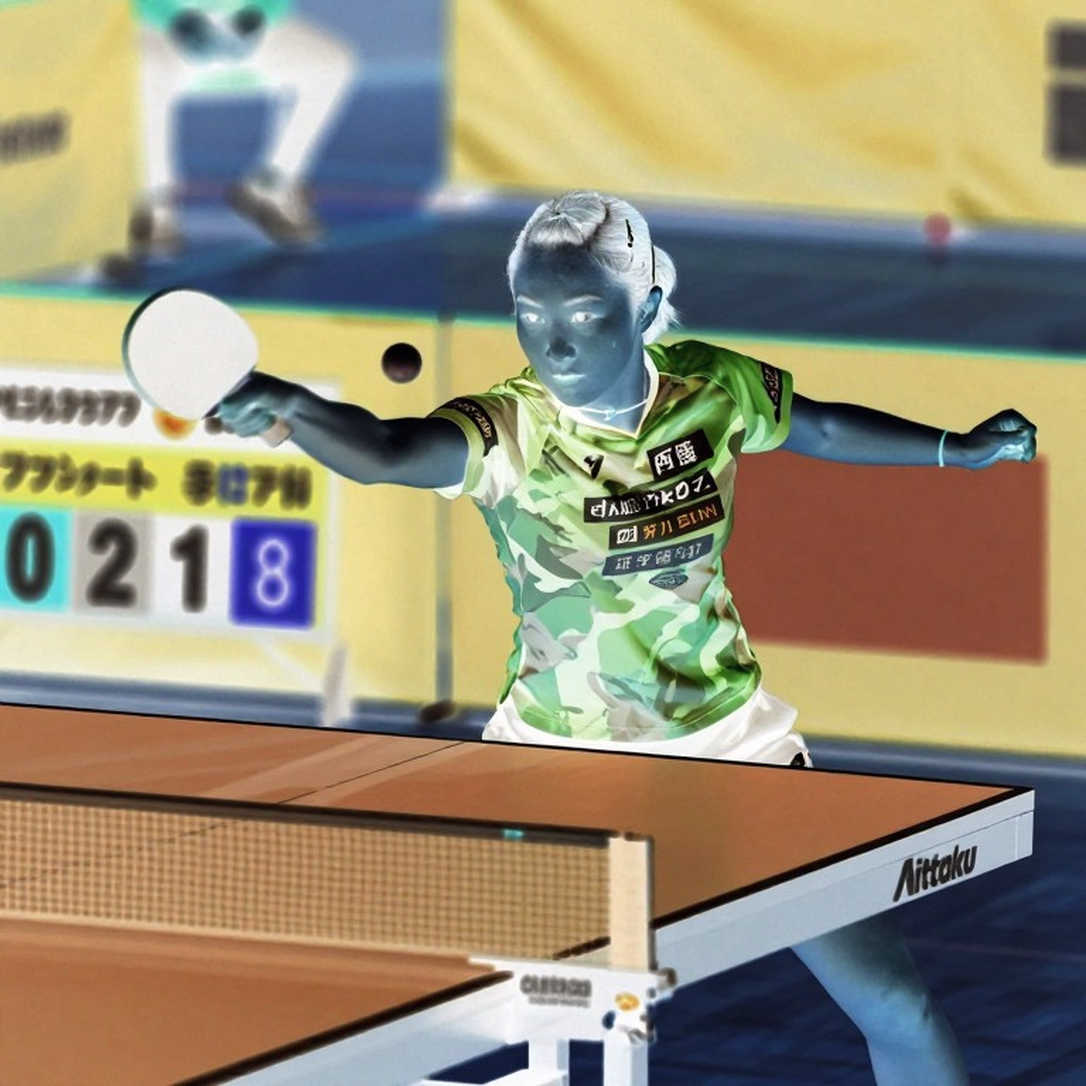
The first thing I need to say clearly, and bluntly, is this: this is not a tournament in the ITTF or WTT ranking system. It does not award world ranking points, it announces no prize money in the original notice, and it names no player at all. It is a domestic national event, mass-participation in character, operating on USATT's internal rating system rather than a global ranking. In other words, if someone asks me whether this event can lift a Vietnamese player onto the world map, the answer is no, and I will not pretend otherwise.
But that is exactly why it is worth looking at. Because what a national table tennis ecosystem does at the domestic level is precisely what determines whether it produces talent at all, not what it shows off at international events.
Start with the number 118. In most tournaments I have followed, that number never appears. A top-tier international event usually has only a few dozen categories: men's singles, women's singles, men's doubles, women's doubles, mixed doubles, team events. Everything revolves around an elite group. The 118 events of the U.S. Open are split across three overlapping axes: age group, rating level, and specialty format. Those three axes reveal a pyramid structure rather than a sharp peak. This is the first key point I want to pin down in bold: the U.S. Open does not function as a stage for a chosen few elites, but as a playing field designed for the diversity of an entire table tennis community, and that diversity, structurally, is the very condition that lets young shoots grow.
Look at the format categories, because that is where the strongest signal sits. Hardbat is a style in which both racket faces are pips-out hard rubber with no sponge layer. It produces very little spin, hits flat and direct, a game from the era before spin took over. It is no longer a modern competitive style, but it is preserved as a heritage category. Sandpaper is even more primitive: a racket surface of sandpaper, designed for fun and easy access for beginners, not for elite competition. Para covers events for athletes with disabilities. Parkinson's covers events for people living with Parkinson's disease. And Family Generational Doubles pairs members of one family, for example a parent and child, or a grandparent and grandchild.
Read casually, one would call this a fun list. But a list inside a national championship is never only for fun. It reflects what an organization wants to keep, wants to make routine, and wants to turn into a mechanism. Placing a highly competitive open singles category alongside a sandpaper-surfaced category says something clear: the American table tennis community is a two-peak community, serious competitors and heritage, family, or health-driven players coexisting in a single framework. And a framework that can hold both at once is a framework trying to retain players rather than only hunting for good ones.
This is where I see many smaller table tennis ecosystems, including parts of Southeast Asia, still falling short. In many places the pyramid is cut off at the base: people talk about scouting, talent, and results, but there is no ecosystem wide enough to support any of it. When an entire table tennis nation has only a few dozen recreational players outside the professional system, every talent that emerges is an accident rather than a rule. Conversely, a tournament with 118 events does not guarantee a world champion, but it guarantees something else: that a great many people are holding a racket. And the history of this sport shows that strong nations do not start at the top; they start from a warm enough floor.
I have stood in provincial practice halls and seen something that tables of numbers can never fully tell: children hitting balls not because they are on a path to becoming athletes. They come because there is a table, someone to play with, and an afternoon that will not be wasted. It is that surrounding atmosphere that is the real place where talent sprouts, not the academies where children are selected at seven. There are young shoots that do not need the big stadium lights; they only need a patch of ground warm enough to take root.
But I do not want to romanticize this. Because the U.S. Open notice itself reveals another side, drier and perhaps truer than the pretty word inclusion.
To play, a competitor must be a current USATT member at the Gold or Lifetime tier, and that membership must be valid through December 21, 2026. Entering the playing hall requires a Player Credential. Spectators or non-credentialed attendees must buy a Day Pass or a Full Tournament Pass. Finals admission follows a similar logic, and seating is strictly first come, first served. The registration deadline is December 1, but events may fill before that.
This is the second counter-intuitive point, and I would argue it matters more than showing off 118 categories. An event that markets itself as a place of inclusion, with categories for para athletes, for Parkinson's, for multi-generational families, simultaneously locks the door with an active-membership condition. Not a basic membership, but Gold or Lifetime. This is not an open door; it is a door with a price tag. I am not saying that is wrong; every system needs money to function, and a national association cannot live on goodwill. But I am saying it is true, and it deserves to be seen plainly. The Gold or Lifetime membership requirement turns a championship framed as a community event into a mechanism that converts players into paying members at a high tier; inclusion and commerce sit on the same piece of paper.
When a category for beginners and a category for deeply committed competitors coexist inside one tournament, you can read it two ways. First, democratization: anyone eligible has a place. Second, the merging of segments to optimize attendance and revenue. The truth is almost always in between, and I lack enough evidence to say which way it leans. What I can say is this: the coexistence of those two things is a signal about an operating model, and the operating model is worth reading more than the category list itself.
The venue context also matters. Mandalay Bay sits on the Las Vegas Strip, one of the densest tourism areas in the United States. Placing a table tennis tournament in the middle of an entertainment tourism hub is not a neutral choice. It ties the event into an ecosystem of hotels, dining, and entertainment. A family bringing a child to compete will stay for days, spend for days, and that says the organizers are not only selling table tennis; they are selling a week in Las Vegas. The notice also tells attendees to book accommodation early and to make time to explore the area. I see nothing wrong with this, but I see something in it: a sport tying its operational fate tightly to the tourism industry, and that tie will shape both how it is promoted and how it attracts new players.
Now let me address what I consider the single most important temporal signal in the whole notice. The 2026 U.S. Open takes place in December 2026, only about two years before Los Angeles hosts the 2028 Olympics. A domestic national event in the buildup to a home Olympics usually carries a different weight than it would in an ordinary year. The notice never mentions the Olympics. But in that timing I see an open question readers should answer for themselves: if organizers truly want to ride home-Olympics momentum to grow table tennis domestically, is a 118-event tournament with capacity-limited registration the right lever? I do not have the answer. But I know such windows come only once every few decades.
Also notable is the absence of star narratives. No player is named anywhere in the notice. For a national championship, that is a deliberate choice, and it differs from how sports media usually works, which revolves around a few figures to generate appeal. Not naming anyone shows the central message of the event is not come and see who wins, but come and play. It is an administrative, pragmatic message, and in some ways more credible than a flashy one.
But here I want to be clear about what I will not do. I will not invent a player and analyze their technique, because there is no player to analyze. I will not fabricate a tactical narrative to make the piece look more expert than it is. And I will not use the excuse that this is a mass-participation event to say it is not worth looking at closely. I am not writing about today's match, but about who they become afterward. If there is no specific person to look at, then look at the structure that produced them.
And that structure has a cold beauty. 118 events. Six days. Three classification axes. A dual identity between elite competition and mass community. A membership mechanism tied to revenue. A tourism venue. An approaching Olympic backdrop. Lay all these pieces together and you get a picture with no hero, only infrastructure. And I would argue infrastructure is what a table tennis nation needs to consider before it needs a champion.
There is something those of us who work with youth table tennis often forget, and I have forgotten it too: the peak is never where things begin. Looking at a seventeen-year-old player, I have already seen the fractures and the dream. But I have to remind myself that to see a seventeen-year-old player, there first had to be a place to play for a seven-year-old holding a sandpaper racket for the first time. Without that place, we never get that racket. This is what a 118-event tournament tells me more clearly than any technical analysis.
In an ecosystem where domestic tournaments are treated as secondary, or as a box to be ticked, people tend to look for talent where the glow already exists. The result is that they are always one beat late. Real talent is rarely where the floodlights are; it is where there is a table, a patient mentor, and a system that does not abandon it at age eleven. And a system that does not abandon people at eleven can only exist if it has room for those who will never win a title.
This is the real counter-intuitive point I want to leave. We still tend to measure a table tennis nation's strength by its international gold medals. But a more durable unit of measure may be the number of players who never stand on a podium. A table tennis nation can only have a peak when it allows a wide floor to exist, a floor of long-term players, family players, disabled players, players with Parkinson's, and hardbat players remembering an earlier time. Read this way, the 118 events of the U.S. Open are not a sign of dilution. They are a sign of a floor kept warm.
Of course, warm does not mean sufficient. A wide floor does not automatically produce a high peak. Between the two lies a gap filled by coaching, by time, by patience, and by mentors willing to stay for years with a child who does not hit well yet. A tournament cannot do that work. A tournament can only open a door. Where we walk after passing through it is another matter.
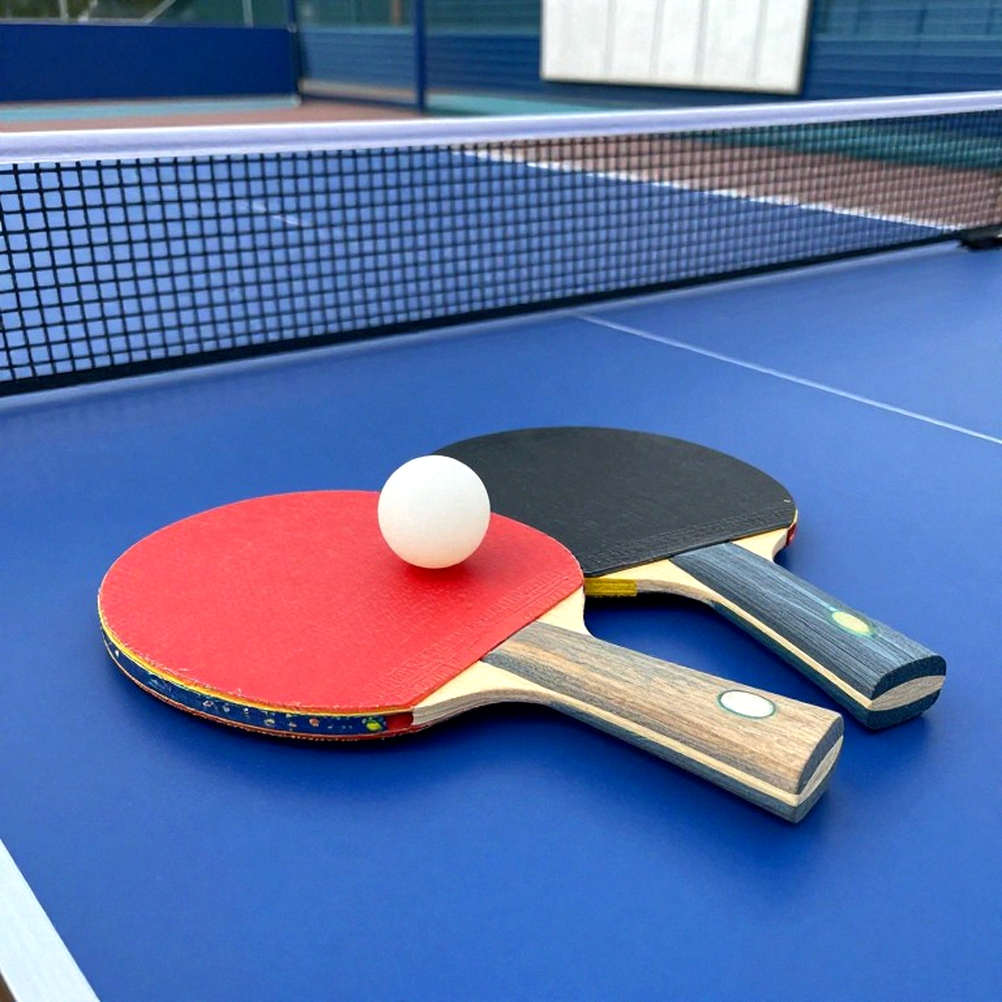
And if I must give a final word, I want to return to where I began: the sandpaper racket. Some will laugh to see it in a national championship list. But I think it is the gentlest reminder sport can give itself: that at the root of every most complex spin-laden stroke, there was once a time when all you needed was a wooden face, a rough face, and an opponent patient enough to rally back and forth. I wonder: how long until a young table tennis nation agrees to keep its own rough face, instead of only searching for rackets already coated in glory?