
2026 US Open in Las Vegas: 118 Events, Six Days, and the USATT Story Nobody Tells
**Câu trả lời cốt lõi**: US Open bóng bàn 2026 là giải vô địch quốc nội của Hiệp hội Bóng bàn Hoa Kỳ (USATT), diễn ra từ ngày 16 đến 21 tháng 12 năm 2026 tại Mandalay Bay, Las Vegas, với 118 nội dung thi đấu trong sáu ngày. **Dữ kiện chính**: - 118 nội dung, 6 ngày, sảnh mở 8 giờ sáng đến 9 giờ tối tại Mandalay Bay, Las Vegas Strip. - Hạn đăng ký 1 tháng 12 năm 2026; một số nội dung có thể kín chỗ trước hạn. - Người chơi phải là thành viên Gold hoặc Lifetime USATT, hiệu lực đến 21 tháng 12 năm 2026. - Chung kết đơn nam và đơn nữ ngày 20 tháng 12; chỗ ngồi theo thứ tự đến trước. - Nội dung gồm para, Parkinson, hardbat, sandpaper và đôi gia đình nhiều thế hệ. **Nguồn**: Thông báo chính thức của USATT về US Open 2026, công bố năm 2026. | Cross-checked: VuaBong.vn **Hỏi đáp liên quan**: Q: US Open 2026 có tính điểm xếp hạng thế giới không? A: Không, đây là giải cấp quốc nội của USATT, không thuộc hệ thống tính điểm WTT/ITTF. Q: Ai được tham dự US Open 2026? A: Người chơi phải là thành viên Gold hoặc Lifetime USATT đang còn hiệu lực đến hết ngày 21 tháng 12 năm 2026. Q: US Open 2026 diễn ra khi nào và ở đâu? A: Từ ngày 16 đến 21 tháng 12 năm 2026 tại Mandalay Bay, Las Vegas, tiểu bang Nevada, Hoa Kỳ.
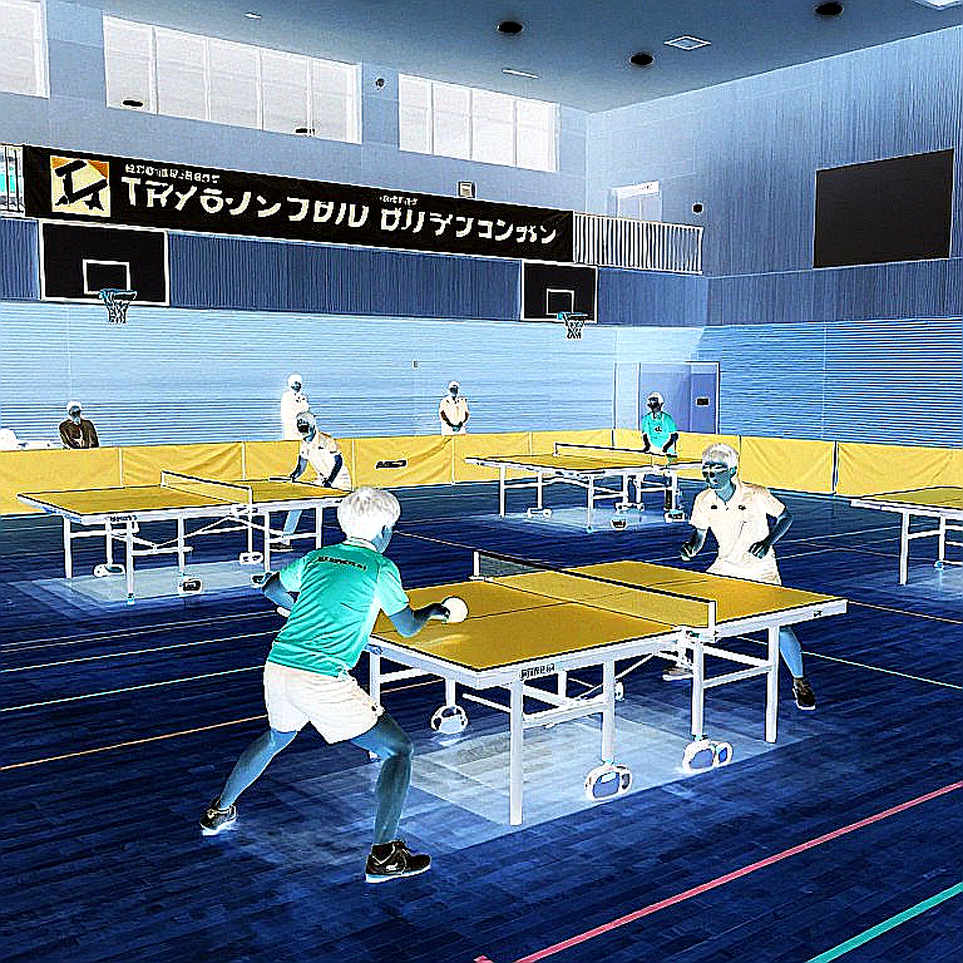
The doors of the competition hall at Mandalay Bay open at 8 a.m. and close at 9 p.m. Six days straight. In that window, exactly 118 event categories will be played across a single hall floor sitting on the Las Vegas Strip. That is the number USA Table Tennis (USATT) prints in bold on its announcement page, and it is the number that made me stop and look longer than usual.
Thirty years of standing at the edge of training halls with a notebook taught me one simple thing: a tournament declares who it is through how it splits its events. A tournament with only men's singles, women's singles and doubles is a tournament of national-team players. A tournament with 118 categories spanning juniors, age groups, rating events, para, Parkinson's, hardbat, sandpaper and multi-generational family doubles is a tournament of a community. Not of a star.
The 2026 US Open runs from December 16 to December 21, 2026 at Mandalay Bay, Las Vegas. It is not a WTT stop, it carries no world-ranking points, and no prize money is published. But it is the most honest answer to a question I always carry with me: where does American table tennis actually stand?
To read this event correctly, place it against a wider backdrop. World table tennis still revolves around China's dominance, with Japan, Germany, South Korea, Sweden and France in the chasing group, while the United States sits in the third group alongside other Americas-based programs. The US Open is the domestic championship of a country in that group. In other words, this is not a floor for measuring the gap to China. It is a floor for measuring the vitality of a table tennis nation trying to hold its position.
The second backdrop matters just as much: 2026 sits exactly two years before the Los Angeles 2028 Olympics. A major domestic event on American soil, inside a home-Olympics preparation cycle, usually means more than itself. USATT has never publicly stated that it uses the US Open to build toward LA 2028. But the timing says plenty.
Operationally, the tournament splits into two tiers. The first tier is the run of age-group and rating events, built for the many. The second tier is the men's and women's singles finals on the afternoon and evening of December 20, promoted as the place where "some of the best table tennis in the country" is played. That split is telling, because it shows organizers understand something clear: most people coming to Las Vegas are not there to watch the finals. They are there to compete. Open practice and on-site registration run from 3 p.m. to 8 p.m. on December 15, one day before the event begins — a small detail that reveals the rhythm of the whole week.
Event structure is the most revealing thing this announcement exposes. Among the 118 categories, several groups deserve separate reading. The first is the rating events — internal USATT skill ratings, not age or open classification. The second is age-group and junior events. The third is para and Parkinson's. The fourth is hardbat and sandpaper. The fifth is multi-generational family doubles.
The last two names deserve a pause. Hardbat is the pre-sponge style — pips-out hard rubber on both sides, no sponge layer, minimal spin, a flat-hitting, hard-driving game. Sandpaper is even more primitive: a racket surface of sandpaper, made for fun and beginner accessibility. Neither is a technical-development category. They are preservation and inclusion categories.
Placing those categories next to open singles and the finals reveals something: the US Open has a two-pole participant structure. One pole is serious players competing for rating and titles. The other is recreational players, heritage-style keepers, para athletes, and families stepping onto the floor together. Those two poles do not speak in the same measurement. But they share one hall.
The training hall does not lie; few people are willing to sit long enough to listen. And a tournament's event structure is the paper version of that training hall. When you see a tournament set aside a dedicated category for multi-generational family doubles, you are looking at an association that chooses to keep players rather than filter them upward to the top.
This leads to the second, quieter but more important, layer: the membership mechanism. To compete at the US Open, a player must be a current Gold or Lifetime USATT member, and membership must be valid through December 21, 2026. To enter the playing hall, a player must present a Player Credential. Spectators without credentials need a Day Pass or a Full Tournament Pass. Finals admission requires an appropriate credential or a December 20 Day Pass, with seating on a first-come, first-served basis.
Read the "Gold or Lifetime" requirement closely. This is not the lowest membership tier. It is a higher one. A tournament with 118 categories, drawing players from across the country, gates its door behind a specific membership level — which says the event is also a membership-conversion machine. Technically, that is a revenue lever attached to a flagship event. Structurally, it is a real barrier for newcomers.
Since 2026, my emotions have had to learn to sit at the same table as numbers. In Kazan that year, I wrote a piece full of feeling about Mbappe and was scolded by readers as a "superfan". I stubbornly reopened the tape, counted every touch, and learned that numbers do not kill emotion — they keep emotion from lying. At the 2026 US Open, the numbers that matter are not on the table. They are in the entry conditions: an administrative glitch here can wipe out an entire family's trip.
And this is the single most operationally important point: the registration deadline is December 1, 2026, and some events may fill before that deadline. Registering early is not a polite suggestion, it is the condition for being allowed to play. A player from the East Coast, booking flights and hotels, training for six months, can be knocked out simply for filing a week late. In elite sport, people worry about injury. At a large recreational event, people have to worry about the queue.
One more variable few plan for: events are spread across six days, and organizers warn explicitly not to assume your competition is concentrated on one day. For a player entered in several categories, that means staying in Las Vegas for several days, eating and sleeping around the schedule, and managing energy like a true professional. In a hall open 13 hours a day, form depends not only on technique. It depends on who knows how to manage their strength.
One more detail rarely noticed. The event list includes a "rating events" group. This is a key difference from professional table tennis. Professional table tennis seeds opponents by world ranking. USATT seeds by internal rating. That means recreational and semi-pro players can share one tournament without ever actually facing each other, because the system separates them before they touch. Rating keeps the tournament big, but it also keeps the tournament flat.
Finally, the venue. Mandalay Bay sits right on the Las Vegas Strip. The announcement does not hesitate to remind visitors there is plenty to explore and that they should book accommodations early. This is a clear commercial decision: tying a national championship to a tourism and hospitality ecosystem. For families bringing kids to compete, it turns the trip into a holiday. For USATT, it turns a sports event into a dual revenue stream from members and from the crowds that stay in the city. On the ecosystem side, the impact of an event like this is not in products. It is in people flow. A hardbat or sandpaper category cannot drive modern rubber sales. But 118 categories and thousands of registrations can keep a flow of members with USATT. For an association whose lifeblood is the number of players, keeping people matters more than elevating them.
The counterintuitive point sits here. A tournament promoted as gathering "some of the best table tennis in the country", with 118 events and six days of play, does not name a single player. No name, no ranking, no matchup worth waiting for. For anyone used to reading WTT announcements, this is strange. But read correctly, it is not strange at all. It is a choice.
Organizers chose not to place a star at the center, because this tournament is not built around a player. It is built around participants. This is an approach running opposite to how professional table tennis operates. At WTT stops, no star means no event. At the US Open, 118 categories mean the event stands on its own without anyone famous.
The second paradox is in the word "championship". The event carries a national-championship title, but its structure is effectively a sports festival. There is Parkinson's, para, sandpaper, and grandparent-grandchild doubles. A pure national championship would not have these. Carrying a grand title while operating like a festival is not a flaw. It is the survival strategy of a small table tennis nation: to keep players long term, make ordinary players feel they have a place. But it also raises a question: if every category matters equally, where does a young talent actually get seen?
The third paradox is in the timing itself. If there were a year for USATT to push the image of American table tennis ahead of the Los Angeles 2028 Olympics, 2026 would be it. Yet this announcement is purely operational: opening hours, deadlines, membership rules, seating. It says not a word about Olympic ambition. A major communications opportunity is being left open — or being held back for another moment.
Data points to the wind; my eyes see the storm. The 2026 US Open is not a story about who will win in Las Vegas. The real story is this: a national association is choosing to survive through breadth rather than through the peak. Over the next 24 months, three signals are worth tracking. First, whether the hot events fill before December 1 — that is the true demand test. Second, whether USATT publicly links this event to LA 2028. Third, whether newcomers and families return next year. If they return, USATT is winning the slow but durable way. If they do not, 118 events are just a one-week festival that fades.

Cầu thủ liên quan
Bài đề xuất
The Midnight Call and the Hidden Clause of the 17-Year-Old Prodigy: How Is Vietnamese Table Tennis Being Valued?2026-09-12
Vietnamese Table Tennis Through 214 Matches: Why WTT Points Do Not Measure Strength2026-09-26
When the Table Tennis Analysis Sheet Returns Zero2026-09-12
Blindfold table tennis on British children's TV: A small signal in the battle to capitalize on grassroots2026-09-23
Worthing and the Hidden Gap at the Base of England's Youth Table Tennis Pyramid2026-09-18
Bài đề xuất
English Table Tennis Bets on CBeebies: The Strategy to Find the Four-Year-Old2026-09-23
Asia-Europe Training Camp in Gangneung: 11 European Players and the Gap on the Data Sheet2026-09-13
Sheffield, 40 Children Born in 2026, and the 12-Year Equation of World Table Tennis2026-09-23
World Hopes Week 2026 in Sheffield: 36 U-12 Athletes, 26 Nations and a Pipeline Architecture Table Tennis Rarely Shows2026-09-23
Worthing and the Hidden Gap at the Base of England's Youth Table Tennis Pyramid2026-09-18